

pongbot-official-partner-webtennis24

First AI Tennis Robot

use code WT24 for a 5% discount
Outcome-Oriented Tennis Practice

Outcome-Oriented Tennis Practice

“Whatever you do, don’t say anything to me about my serve. If I think about it, I’m in trouble.” Andy Roddick said this when he first met Patrick McEnroe, his Davis Cup coach.

In a tennis world where the emphasis is on the technical aspect, there is one area that very few tennis players dare to adopt – and it pays off big time for their game. That is… letting things happen naturally. 

What I’m about to tell you is directed to your tennis improvement by getting you out of the normal and popular tennis culture. 

As a tennis player and coach, I have been experiencing many frustrations and successes in my own lessons with all kinds of players. 

One thing that’s certain is that all players are different and you cannot teach the same technical aspect to everyone. I have to pay very much attention to what works for each of my students individually.

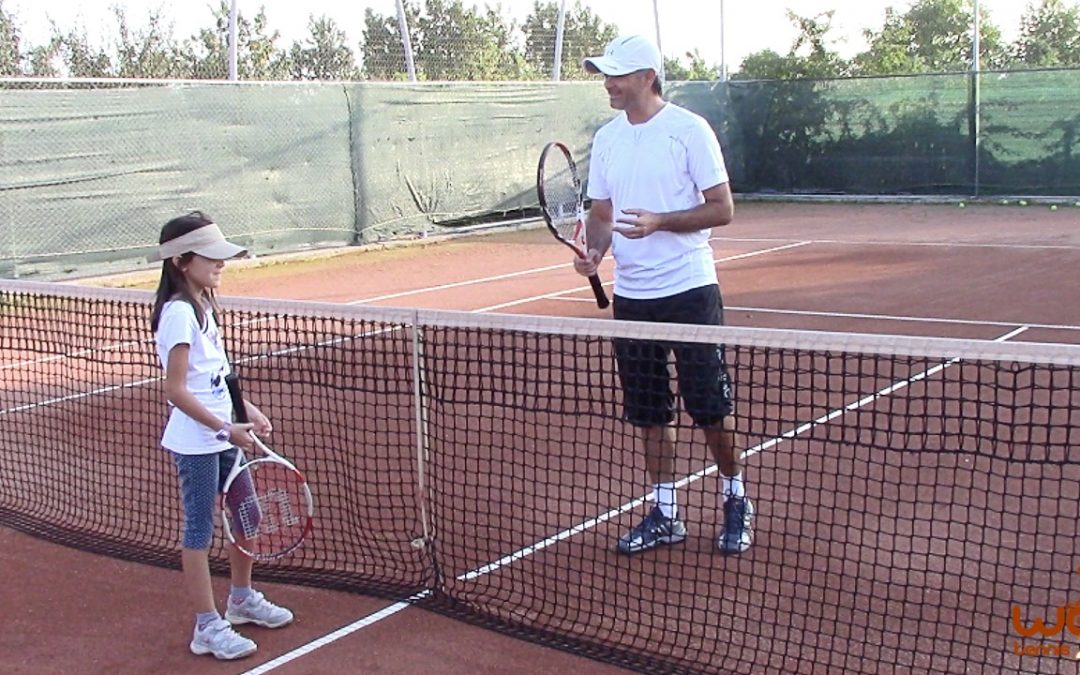
For example, in teaching my two daughters, Cezara (8 years old) and Bianca (6 years old)…

Cezara, on the serve, prefers the pinpoint stance (when during the toss the back foot joins up with the front foot) whereas Bianca likes the more traditional platform stance (when both feet are not moving during the toss and stand fairly close to each other). 

Cezara’s dominant elbow must elevate during the forehand ground-stroke preparation to avoid opening her racquet too much during contact; Bianca has a natural way of controlling the racquet face at contact without having to focus on the set-up. And so forth…

But my ultimate point for this letter is that players should be allowed to forget about all the technical overload and focus on the outcome. 

When serving, the outcome could be just getting the ball in (for beginning players), sending the ball with lots of slice or topspin, or placing it powerfully in the corner of the service box. 

As Andy Roddick did when he was a junior – he got fed up with all the technique that was imposed on him when serving and then one day he just threw the ball up and hit it as hard as he naturally felt. And it worked great. 
Just imagine if someone would have tried to change his serve technique!
Or if some coach would have told Nadal to not hit his forehands with that looping finish! (he was so fortunate to have such an open-minded coach like his uncle Toni)

You can only imagine what damage you can do when you want to impose one kind of technique on every single player that you coach. 

We should always be paying attention to what works for each player. 

As a tennis player, you should listen to your body and how it reacts to every stroke you execute…

In my teachings, I get the best results when I give my kids tasks that are goal-oriented. Examples:
– hit 40 serves in
– send 25 forehands cross-court
– rally 50 balls over the net with your partner
– etc.

When goal-oriented tasks are given, the mind and body work together to accomplish them successfully.

Next time you go to practice, forget about the technique. Instead, focus on what you want to accomplish: is it more slice on your serve? is it more power on your backhand? more penetrating volleys?

Then here’s what you need to do: 
– before you start hitting the balls visualize (or tell yourself) what you want: more power, more spin or to get it in
– let your body loose and the racquet do its work
– clear your mind of any technical thoughts and keep in there only the outcome you aim for (more power, spin, placement, etc.)

When you practice without the technical details cluttering your mind you will see better things happening.

Tailor your training to your specific needs with our customizable ball machine drills. Join the Best Ball Machine Tennis Drills program and create your perfect practice!

Cosmin Miholca

Cosmin Miholca

Certified Tennis Coach

Check out my work at WebTennis24 where I share with you my best video tennis lessons, drills and tips for players, coaches and tennis parents.

Serving With Confidence in Tennis

Serving With Confidence in Tennis

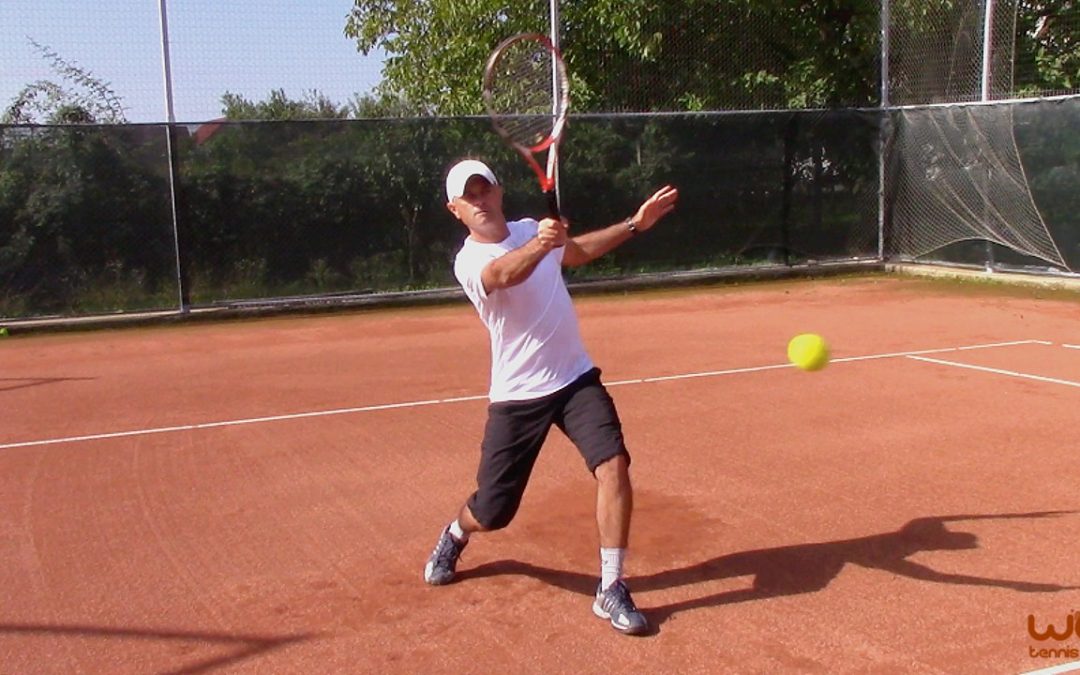
I’ve always found that my tennis serve delivery depends on my mental attitude.

As I prepare to hit the second serve, thoughts of “I’m going to hit it into the net”, “My opponent will attack me” or “I’m going to miss” often distract and impede me from hitting it with confidence.

It took me years of playing and analyzing to realize that what was happening on the court was the result of what was going on in my mind.

You see, when we get ready for the first serve, most of the time there’s just the excitement of hitting the ball hard or placing it strategically. But when the second serve is about to be delivered that’s when the nerves take over. It is then that you must be in control of what happens in your mind.

One must understand that the serve is very sensitive to negative thinking: your racquet becomes heavy, the hand is tense, and the whole body gets shaky…

To avoid these feelings when you are about to serve (second serves in particular) practice these:

1. Think positive thoughts (“I know I can”, “I have confidence”, “I can do this”).

2. Visualize positive outcomes (ball going over the net and inside the desired service box).

3. Have a ritual (bounce the ball a certain number of times, etc.)

4. Relax your body (exhale slowly).

5. Take your time… Position your feet, adjust the grip and hold the racquet in the most comfortable way. Take one more look toward your opponent’s position and the service box that you are about to send the ball to.

“If you believe you can, you might. If you know you can, you will.” ― Steve Maraboli

Learn tennis techniques with crystal-clear explanations and visual aids. Join Visual Tennis Lessons program and simplify your learning journey!

Cosmin Miholca

Cosmin Miholca

Certified Tennis Coach

Check out my work at WebTennis24 where I share with you my best video tennis lessons, drills and tips for players, coaches and tennis parents.

Short Ball Put-Away: A Must-Have Tennis Shot

Short Ball Put-Away: A Must-Have Tennis Shot

One opportunity to attack and be aggressive in tennis is when the ball lands mid-court at a pace that allows the player to step inside the baseline and set up with their most aggressive wing (which is, for most players, the forehand).

The ball that lands in your court anywhere around the service line at a slow to medium pace should be taken advantage of.

Considering the shorter court you have ahead of you and the net is taken into account, you should have two main tasks on your mind: clear the net and make the ball roll into the opponent’s court. 

For that, you need to think: “Up and Over”…

“Up” is for getting the racquet under and lifting it against the back of the ball so that, as a result, it clears the net.

“Over” is for rolling the racquet over the top of the ball for extra spin – this (extra rotation of the ball) will bring the ball down into the court.

You might say that the contact between the racquet and ball is so short that it will be impossible to achieve the two tasks. Indeed, unless…

You visualize your racquet doing it and then letting it happen. 

Many players fear swinging hard on the short ball because of the possibility of hitting it too deep. But if you practice visualizing the “up and over” technique you’ll become more confident to go for your shots when closer to the net. 

By the way: technically, the finish/follow-through for the “up and over” swing is a low one – at the waist or non-dominant hip level.

Apply this (mental) technique first in practice by using either a ball machine (set it to feed the ball slow and short into the court), a practice partner, or doing it yourself by tossing the ball in front of you (while standing at the service line).

One more word of caution: make sure you keep the arm and wrist relaxed and do not go for too much power from the beginning.

Learn tennis techniques with crystal-clear explanations and visual aids. Join Visual Tennis Lessons program and simplify your learning journey!

Cosmin Miholca

Cosmin Miholca

Certified Tennis Coach

Check out my work at WebTennis24 where I share with you my best video tennis lessons, drills and tips for players, coaches and tennis parents.
How to Return Against a Serve-And-Volley Player

How to Return Against a Serve-And-Volley Player

Returning against a serve-and-volley player can be a difficult task, mostly because this type of opponent possesses a good court coverage knowledge, has a great serve (some of them are masters at spinning the ball), and because the following rally is played at a faster pace due to the short distance between the baseline and net players.

The following tips will help you understand how to play and eventually control the point against this aggressive player:

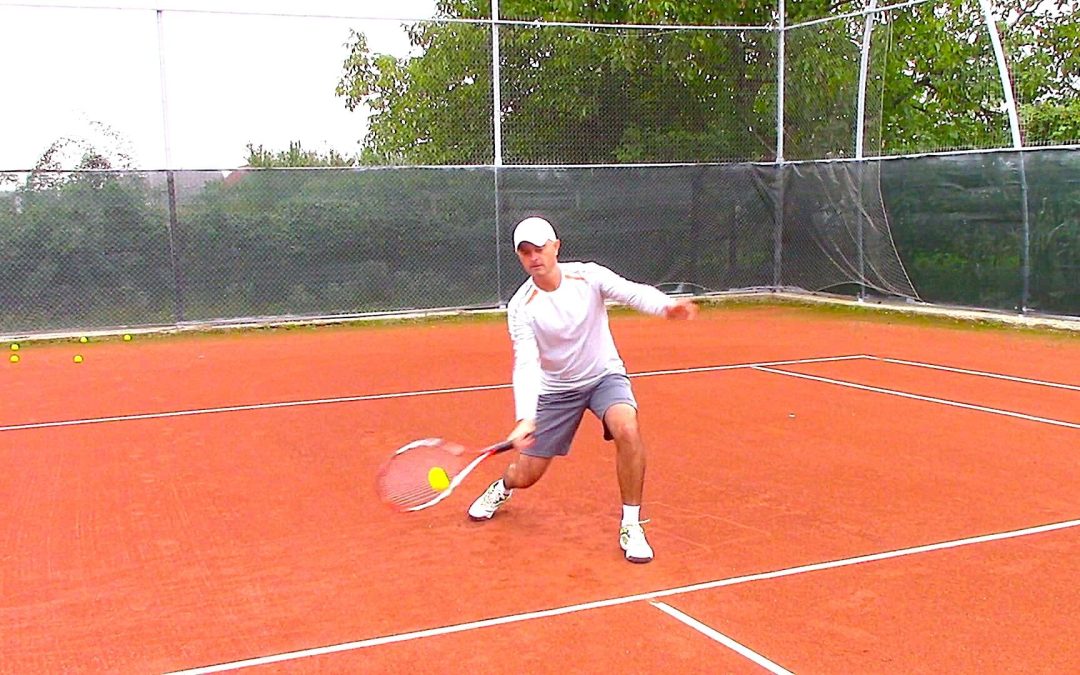
– When serving with the intention of moving up to the net, the server takes some pace off of the serve so they can have more time to get closer to the net. Considering the slower serve, you will have more time to step into the ball and attack it either cross-court or short into the service court (to the server’s feet). 

– You will have to hit the ball aggressively to counteract the spin that is usually imparted on the serve by the approaching player. A smart serve-and-volley player knows that a spin serve will buy them more time to advance and is more difficult to control by the returner. You, as the returner, should not try to block the serve as the player charges the net. Contact should be made early and hit through it with confidence to counteract the spin.

– Don’t rush into finishing the point too early – avoid going for winners on the first two shots. Build the point to where you get the net player either off-balance, stretching, or to you getting a short ball.

Ready to take your tennis game to new heights? Join Ultimate Training for Tennis Players and unlock your potential!

Cosmin Miholca

Cosmin Miholca

Certified Tennis Coach

Check out my work at WebTennis24 where I share with you my best video tennis lessons, drills and tips for players, coaches and tennis parents.

When and How to Approach the Net in Tennis

When and How to Approach the Net in Tennis

half-volley tennis technique lesson

Recently, as I was watching a local tennis tournament, I noticed that many players did not know how and when to attack or move up to the net.

Many kids grow up over-practicing serve and groundstroke techniques but unfortunately, get little instruction on how to recognize opportunities for attacking their tennis opponents.

Therefore, below, I have listed some of the situations that should allow you to move up to the net and what kind of shots to play to put yourself in an advantage for the next shot:

1. When your opponent’s serve return is slow and high over the net.
Even if you don’t like to serve and volley you should step inside the baseline and attack your opponent’s weak wing. Don’t be passive when facing a weak return!

2. When you have a powerful serve and know the returner will have trouble with it.
In this case, you should serve and volley. Hit your first volley to the open court and get your opponent stretching to hit the ball.

3. When you hit a good drop shot and see your opponent will barely get to the ball.
You must move forward (or at least step inside the baseline) to close the angles and defend against an eventual drop shot return.

4. When your deep groundstroke makes your opponent stretch to get it back (or you get them off the court).
Most of the time, the ball will sail high and slow back to you. A drive or high volley will make the job of finishing the point easy for you.

5. When you receive a mid-court “sitter” and possess an aggressive attacking forehand.
Do not return to the baseline! Rarely your opponent will be able to reply with an aggressive shot back if you attack from the mid-court.

Technically, you should consider the following:
– If your approach shot is a slice (low), you will get a better chance for a high first volley. The problem with the topspin approach shot is that it can bounce high for your opponent to hit down at your feet.
– There is a good reason why the slice approach is the choice for most experienced players: the low bounce and backspin force the opponent to hit up on the ball and make the passing shot difficult.
– If you do decide to approach the net behind a topspin groundstroke, make sure your opponent struggles to reply: either force them to hit the ball on the run (send it to the open court) or aim right at your opponent (in this case they hit the ball off-balance and do not have many angles to pass you).

Transform your tennis game and achieve your goals with Ultimate Training for Tennis Players!

Cosmin Miholca

Cosmin Miholca

Certified Tennis Coach

Check out my work at WebTennis24 where I share with you my best video tennis lessons, drills and tips for players, coaches and tennis parents.

6 Ways to Use the SLICE Groundstroke to Your Advantage

6 Ways to Use the SLICE Groundstroke to Your Advantage

In today’s game, dominating and finishing points with aggressive topspin groundstrokes is the norm for most tennis players. However, I would like to emphasize the many advantages of practicing slice (underspin) groundstrokes and using them more often in your matches.

Here are six reasons why you should add slice spin to your repertoire:

1. Slice groundstrokes keep the ball low to the ground, making it difficult for your opponent to attack you with an aggressive shot. This is especially effective when playing against players who have a big topspin forehand or backhand. 

2. Slice approaches keep you away from receiving balls down at your feet. This is because your opponent will be forced to hit up on the ball, which will give you more time to react and hit a good ‘high’ volley.

3. Slice groundstrokes are great for doubles play. When playing against a team that loves to lob, a slice approach will make it almost impossible for them to send the ball high over your head.

4. Slice groundstrokes add variety to your shots. Mixing up your shots with slice and topspin will help to disrupt your opponent’s timing and make it more difficult for them to read your next shot.

5. Slice groundstrokes can give you time to recover when you are pushed wide by an aggressively angled groundstroke or serve. The slower pace of the slice will give you more time to get back into position and be in balance for the next shot.

6. Slice spin is essential for hitting drop shots. The backspin on a slice shot will cause the ball to drop quickly and sharply, making it difficult for your opponent to reach.

Quick Technique Tip:
When executing a slice groundstroke, remember to begin the downward motion with the racquet high above the point of contact. This will help you to generate more underspin and keep the ball low to the ground.

Practice slice groundstrokes as often as possible. There will be times in the match when you will need them.

Cosmin Miholca

Cosmin Miholca

Certified Tennis Coach

Check out my work at WebTennis24 where I share with you my best video tennis lessons, drills and tips for players, coaches and tennis parents.
The Body Serve Is the Best – Here’s Why!

The Body Serve Is the Best – Here’s Why!

In the quest for an effective start to a tennis point, it is crucial to explore various strategies and techniques.
One strategy that stands out as a game-changer is the body serve.
As I recently concluded shooting the videos for Strategic Serve Practice I realized the immense value of practicing, improving, and utilizing the body serve.
In this article, we will delve into the advantages and reasons why incorporating the body serve into your game can give you an edge on the court.

Jamming the Returner
When executed with sufficient pace, the body serve has the power to jam the returner, resulting in a floating return that lands in the middle of the court. This favorable outcome enables the server to take control and launch an aggressive attack, setting the tone for the point.

Eliminating Angle Opportunities
Unlike a wide serve that offers the opponent multiple options, the body serve restricts the returner from creating angles. By aiming directly at the opponent, you limit their ability to exploit open spaces on the court. This forces them to contend with a narrower target and reduces their chances of executing a precise return.

Challenging the Returner’s Movement
The body serve poses a unique challenge to the returner by requiring them to hit the ball while moving away from it. This situation often leads to weaker returns, as most players are accustomed to hitting balls while moving toward them. By creating this unfamiliar scenario, the server gains an advantage by forcing the returner into uncomfortable positions and potentially inducing errors.

Serve-and-Volley Advantage
Serve-and-volley players, in particular, benefit greatly from utilizing the body serve. The weak returns resulting from the aforementioned factors set up ideal conditions for an effective serve-and-volley strategy. With a weak return, the server can confidently approach the net, capitalizing on the opportunity to close out points swiftly.

Incorporating the body serve into your arsenal of tennis strategies can significantly enhance your game.
Its ability to jam the returner, restrict angle opportunities, challenge movement, and benefit serve-and-volley play make it a powerful weapon on the court.
Remember to practice and refine your body serve technique to maximize its effectiveness.
By mastering this strategic serve, you will gain a competitive edge and elevate your overall performance on the tennis court.

Ready to take your tennis game to new heights? Join Ultimate Training for Tennis Players and unlock your potential!

Cosmin Miholca

Cosmin Miholca

Certified Tennis Coach

Check out my work at WebTennis24 where I share with you my best video tennis lessons, drills and tips for players, coaches and tennis parents.