pongbot-official-partner-webtennis24

First AI Tennis Robot

use code WT24 for a 5% discount
Pickleball or Tennis: A Coach’s Perspective

Pickleball or Tennis: A Coach’s Perspective

I recently returned to Southern California after 14 years in Europe, and what I witnessed took me completely by surprise: the massive rise of pickleball as a social phenomenon.

Having coached tennis for over 20 years, my first instinct was to reconnect with old friends for a hit.

When I arrived at my favorite local courts, I saw a crowd gathered on the grass with lawn chairs, clearly waiting for something.

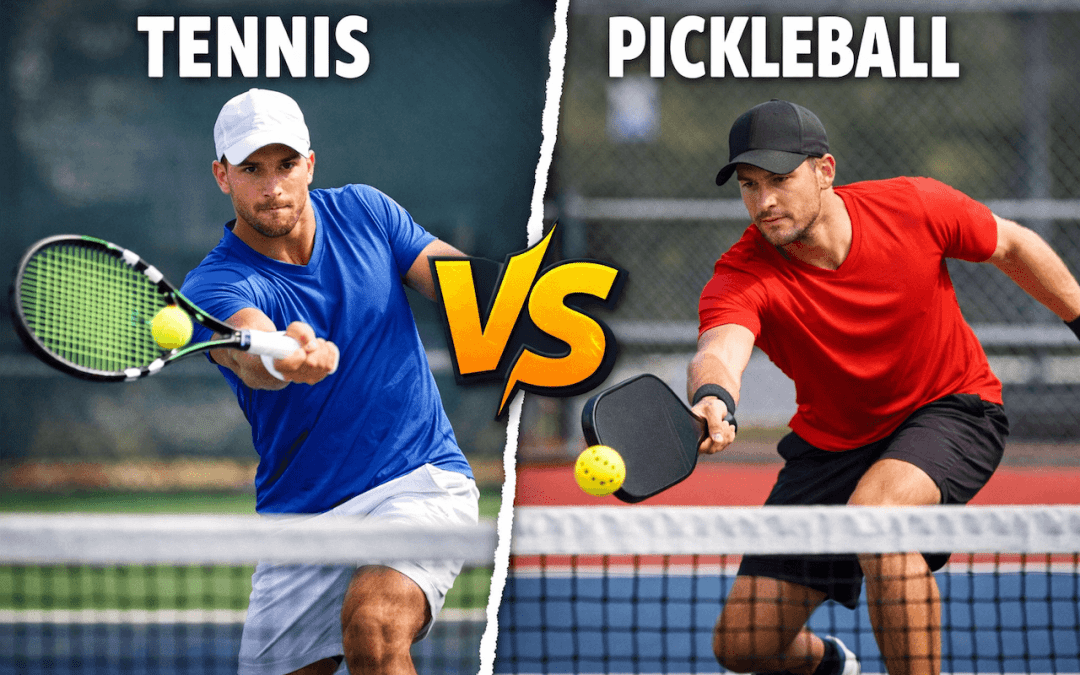
As I got closer, I realized the tennis courts were actually empty. The action was happening on “miniature” courts nearby. On each one, four players were engaged in fast-paced doubles. They used solid paddles and a ball that made a distinct popping sound, traveling slower through the air but requiring fast reactions.

The Appeal of the “Smaller” Game

I’ve heard of pickleball, but seeing its popularity in person was eye-opening. Players told me they loved it because it was accessible. For some, tennis had become too physically demanding due to injuries; for others, the steep learning curve of tennis was a barrier.

To me, it looked like “standing table tennis.” The movement is minimal, often just 2 or 3 steps, but the focus on hand-eye coordination is intense. It offers immediate gratification without the years of technical training tennis requires.

Can Tennis Compete?

As a coach, I see the writing on the wall. Tennis will continue to lose players to these “easier” racquet sports because modern society craves fast results and has a shorter attention span.

However, I believe tennis can thrive if it embraces evolution. To stay competitive, we must consider:

  • Implementing “no-ad” scoring.
  • One serve per point and “no-let” rules to keep the momentum.
  • Reduced match length.

While tennis is rooted in deep tradition, it must adapt to a world that is moving faster. We don’t have to lose the soul of the game to make it more accessible.

What do you think? Should tennis modernize its rules to keep up with the changing times, or should it remain a “purist” sport?

Let me know in the comments.

Cosmin Miholca

Cosmin Miholca

Certified Tennis Coach

Ready to improve your tennis further?
Let’s get started!

How to Start Tennis Coaching: Real Lessons After 23 Years

How to Start Tennis Coaching: Real Lessons After 23 Years

What 23 Years of Tennis Coaching Actually Taught Me

If you are thinking about tennis coaching, you probably have one of two feelings. Either you are excited, but overwhelmed, or you have the skills and the passion, yet you are worried you do not “know enough” to coach.

I get that question constantly. People email me asking where to start, what it takes to become a tennis coach, and what coaches actually learn after 20 plus years on court, off court, and now online.

Here is my story and the lessons that stuck. Not the theory you find in certification manuals. The real lessons you only get by teaching, failing, adjusting, and helping different kinds of players day after day.

How It Started: “You are going to be a tennis coach”

When I was 12, my father put a racket in my hand and told me: you are going to be a tennis coach.

I did not ask what that meant. I just did what kids do when someone believes in them. Tennis became our daily routine, and my father’s teaching method was simple, even rough. No big technical explanations. Warm up a little, then play matches, again and again. Most days, we played two or three sets. Often, I was beating my brother, even though we were not being taught technique the way you would expect today.

At the time, I did not understand what my father was building. He was training competitiveness, rhythm, and confidence. He was also giving us something that looked like freedom compared to office life. He had a vision that one day we would work outside in fresh air, stay active, and teach people who wanted to learn.
In his mind, that was one of the best jobs you could have.

What I Learned About Coaching Kids: Start in groups, not privates

One of the clearest tennis coaching lessons I learned over the years is about how kids should start. Parents often think: if my child is serious, they need private lessons.

My advice is the opposite.

Do not start tennis lessons with privates.

Start in a group environment where kids see their peers competing, rallying, and enjoying tennis. Group lessons matter because kids learn faster when they feel part of something. They also become more motivated when they are not the only beginner on the court.

Here is my general guideline:

  • For every private lesson, the player should have at least two group lessons.
  • Bring them to the coach once or twice when you need specific technical corrections.

That is how you combine the best of both worlds: social learning and real feedback.

My Coaching Philosophy: Teach fun immediately, then build the fundamentals

When I teach beginners, I do not delay fun.

I like to introduce game-based learning and rallies as soon as possible. Even in the first lesson, I include at least one fun game. The goal is not to “avoid technique.” The goal is to prevent the technique from becoming boring and fragile.

Kids do not need lectures. They need experiences that make them want to repeat the movement correctly.

The 5-Step Learning Order: Technique, Consistency, Placement, Spin, Power

As a tennis coach, I developed a simple framework that helps me structure learning. It goes like this:

  1. Technique
  2. Consistency
  3. Placement
  4. Spin
  5. Power

Technique comes first because a player needs a foundation. But technique is not everything. After that, consistency is what keeps improvement alive. Then placement gives the player control. Spin adds variety and a modern tennis identity. Finally, power is built on top of the skills that already work.

Even when I was learning as a teenager, I learned a lot “by feel.” Hitting with friends taught me what it feels like to struggle. That matters. Coaching is easier when you remember what it felt like to be a beginner.

Starting a Coaching Career: I had passion, but I did not know how to coach

By the time I was 14, I was already helping friends learn. But the real “coach moment” came when I was 19.

After high school, I tried to enter a sports college and failed two times. One part of the test was a 100-meter sprint, and I was terrible at sprinting. It hurt to fail, but it forced me into a new path. I studied kinesiology, and while I waited for another attempt, I started coaching tennis.

We approached schools, got permission to announce a tennis program, and recruited kids ages 7 to 12. I had no idea how many kids would show up. I had one indoor court, and it was cold, so we played indoors. About 20 to 25 kids showed up.

My father asked me, “Do you know what you are doing?” I did not. I did something practical instead. I went to the library and borrowed two books. I studied for only a few days, focusing heavily on the first lesson.

And this is a key coaching insight:

The first lesson is the first impression. If you want tennis coaching to “stick,” make the first session fun. Do not talk too much. Do not overload beginners. Prepare two or three beginner-friendly games and let them feel successful quickly.

That experience also taught me something important. Kids will forgive a lot, as long as you respect their energy and make tennis feel safe and enjoyable.

Moving to the USA Changed Everything: Skill opens doors

After studying kinesiology, I moved to the United States. I had coaching experience, but I still did not imagine I would become a full-time tennis coach. I thought I was mainly there to train and enjoy tennis.

Then I played at local clubs, networked, and kept improving. I learned one major lesson that applies to any career:

Every person needs at least one skill they are good at.

Do not settle for “okay.” Being above average or great creates opportunities. In my case, being a strong tennis player helped me connect with wealthy and educated doubles partners. They invited me to lunches and conversations where I could listen and learn about business and life.

That is not only a tennis lesson. It is a coaching lesson too. When coaches are credible, doors open. When coaches genuinely improve players, relationships become long-term.

Certification and the “American way” of coaching

After my early opportunities, I realized I needed to coach professionally in the American way. In Romania, my background was different. Coaching often had a tough, even harsh mentality. Yelling was common. Coaches did not always behave respectfully or gently.

In the US, that approach does not work the same way. So I pursued certification. At around 27, I became certified.

Certification helped, but the biggest change still came from mentors and daily teaching experience. For me, one of the most valuable steps was this: learn by volunteering.

How to learn tennis coaching faster: volunteer and shadow great coaches

When I wanted to learn the best coaching style around me, I did not sit and wait. I went to a large tennis club and spoke to an established coach.

I asked to watch him teach and offer assistance with junior groups. I volunteered at first, and later he offered to pay me because he saw I was dependable and serious.

If you are starting in tennis coaching, volunteering is the shortcut.

  • Find the best coach in your area.
  • Ask if they need help or if you can observe.
  • Show up early, be respectful, and learn their communication style.
  • Pay attention to how they explain, demonstrate, feed balls, and manage energy.

Money is useful later. Early on, time and attention are worth more.

What truly makes a great tennis coach: people, knowledge, and adaptability

After 23 years coaching on court, off court, and online, my list of what matters most is consistent:

1) Be a people person

You can be the best technician in the world and still fail if you cannot connect with students.

  • Smile when students arrive.
  • Make them feel welcome immediately.
  • Dress well and smell nice.
  • Respect people’s time and families.
  • Avoid gossip.
  • Learn the right balance of talking. Too much is bad, too little is also bad.

People trust coaches who feel safe, respected, and organized.

2) Know your stuff, then keep studying

Read, research, and practice. Early on, you focus on explaining and demonstrating technique. Later, you teach footwork, tactics, strategy, and the mental side of tennis.

But also test what you teach. If you cannot execute a shot yourself, you will struggle to diagnose your students.

3) You do not have to be a superstar, but you should be a tennis player

Being a good player helps a lot, but it does not have to mean you are top-tier professionally. Knowing how shots feel, where they break down, and what “struggle” looks like makes you a better coach.

4) Structure your lessons and adapt to the individual

One of the biggest coaching mistakes beginners make is teaching everyone the same way and at the same pace.

Players are unique. Some kids are naturally athletic. Some have strong hand-eye coordination from other sports. Some have never played sports much at all, and they struggle simply with contact and timing.

A great tennis coaching approach adapts the method, pace, and drills. You can still follow a structured path, but you must adjust the delivery.

Why coaching became online for me (and why groups still matter)

Eventually, I moved back to Romania and built a platform to share drills and coaching structure online. Coaching one-on-one or in small groups is great, but online allows you to reach more players and coaches at scale.

I still believe in group structure, though. Even with groups, I do not like too many players. I prefer small groups, because coaching details get lost when the group is too large.

Essential tips to start with tennis coaching today

  • Start in groups, for kids, whenever possible.
  • Introduce games early so beginners feel success from day one.
  • Use a clear progression: technique, consistency, placement, spin, power.
  • Volunteer to learn by shadowing a stronger coach.
  • Do not wait until you feel prepared. You will never feel fully ready. Improvement happens on the court, with students.
  • Adapt your pace to each learner’s coordination and athletic base.

FAQ

Do I need certification to start tennis coaching?

Certification is helpful, especially if you want to coach in clubs that require it. But you can still start learning by volunteering, assisting, shadowing, and teaching informal group sessions while you pursue credentials. The key is gaining real teaching experience, not only studying.

What should I do for my first lesson with beginner kids?

Keep it fun and simple. Prepare two or three beginner games, introduce a basic rally concept quickly, and avoid overwhelming technical talk. Focus on confidence first, then build technique and consistency gradually.

Is it better to coach kids privately or in groups?

In most cases, groups work better for beginners because kids learn by seeing peers and staying motivated. A good approach is group lessons first, and then private sessions occasionally to correct specific technique issues.

How do I structure progress as a tennis coach?

Use a foundation order: technique, consistency, placement, spin, and power. Within that structure, adapt drills and pacing to the student’s coordination and athletic background.

Do I need to be an excellent tennis player to teach well?

You should be able to execute the skills you teach, and you should understand the struggle of learning. You do not need to be a top professional, but you need enough playing experience to demonstrate and troubleshoot effectively.

Closing thoughts: start anyway

If you are serious about tennis coaching, here is the truth I learned the hard way: you will never feel fully prepared. There is always more to learn.

So start with what you have. Volunteer. Teach small groups. Use games. Study and adapt. Let your students’ needs guide your coaching process.

That is how you become good. Not by waiting for confidence. By earning it, one lesson at a time.

My Tennis Coaching Courses

How to Teach Tennis >>


Cosmin Miholca

Cosmin Miholca

Certified Tennis Coach

Ready to improve your tennis further?
Let’s get started!

How to Correct the Western Tennis Grip

How to Correct the Western Tennis Grip

How I Fixed My 9-Year-Old’s Western Tennis Grip: A Simple Coaching Guide

I noticed my daughter slipping into a western tennis grip and decided to correct it before it became a habit. Smaller kids often make contact with the ball higher, which pushes their hand under the racket and creates an overly extreme grip. The western tennis grip produces heavy topspin but can cost power, control, and a smooth transition between forehand and backhand.
I want to share the practical steps I used to reprogram her hands and a reliable practice progression you can follow.

Why the Western tennis grip becomes a problem for kids

When kids are short compared to the bounce, they naturally make contact above shoulder level. To reach that high contact point, they rotate their wrist and slide the palm underneath the handle. That change becomes a Western tennis grip.
It creates excessive topspin but often loses pace and makes grip changes awkward, especially for two-handed backhand.
The earlier you correct this, the quicker the player learns a more versatile grip.
I prefer a semi-western-ish hold on the forehand and a continental for the backhand hand placement when teaching two-handed backhands.

Understanding the handle: bevels and grips

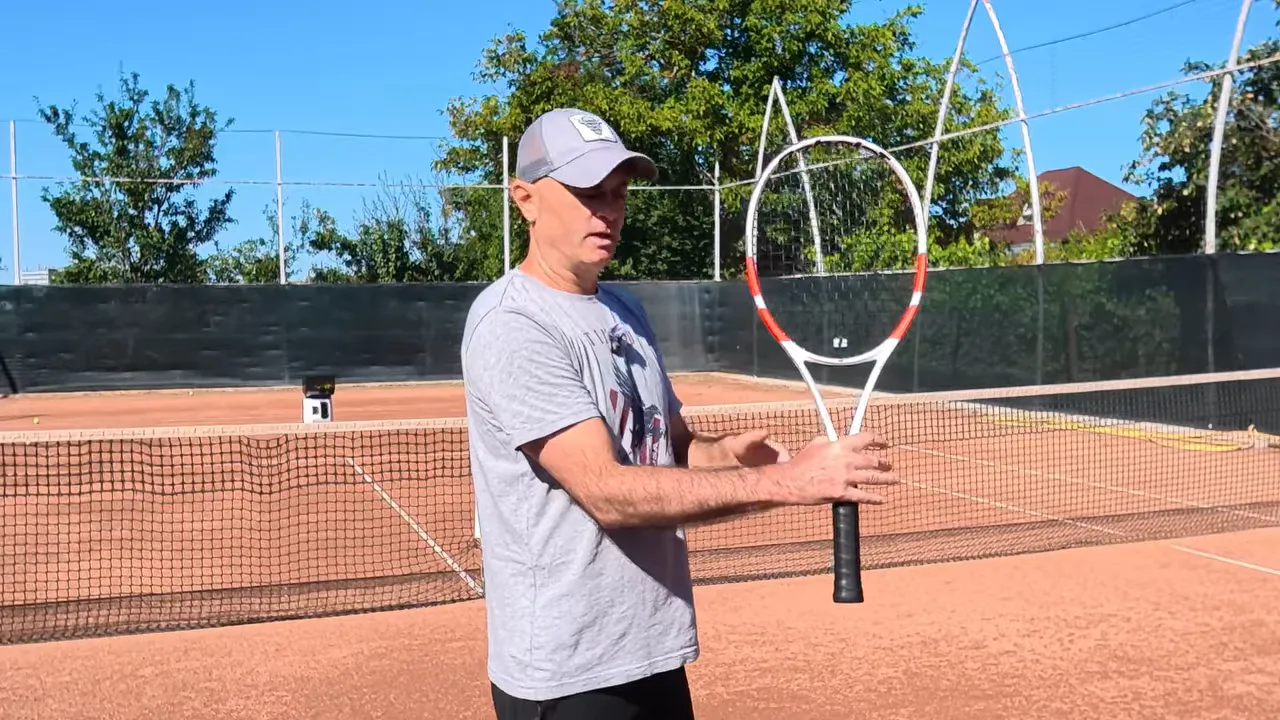
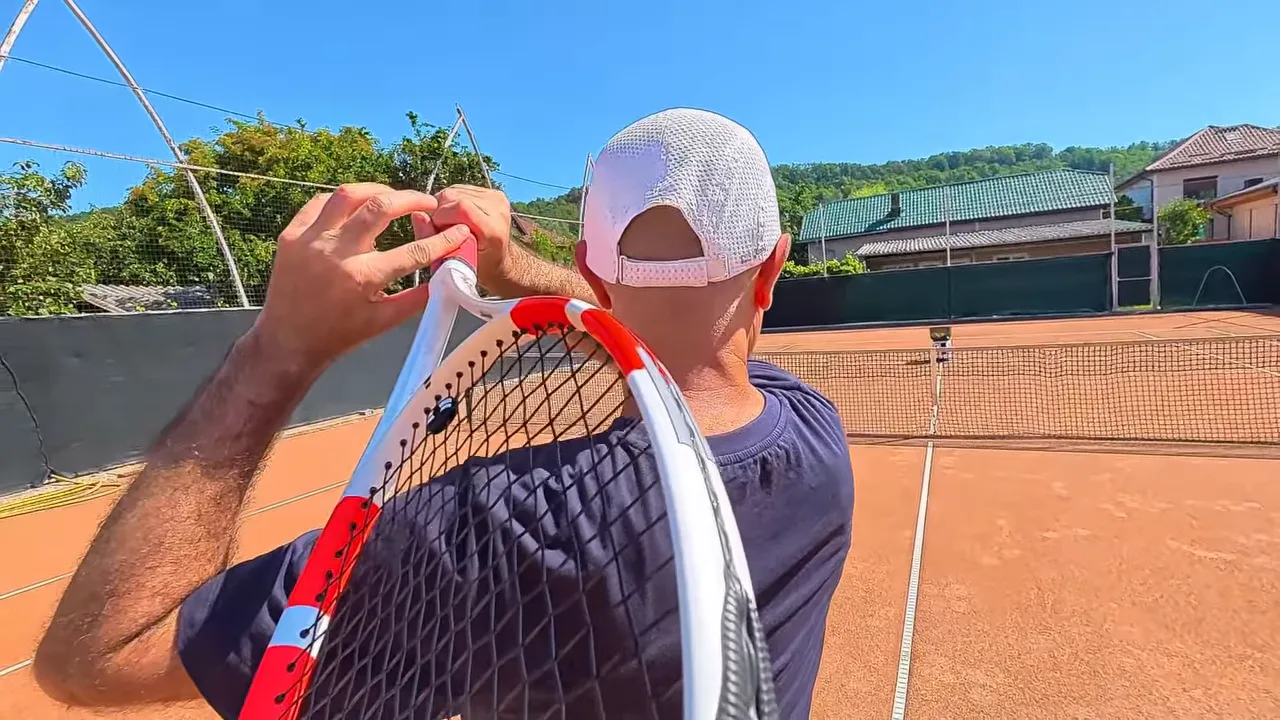
A tennis handle has eight bevels. I use the bevels to teach exact hand placement because saying “more to the right” is vague.
Think of bevel number one as the top bevel. From there, the numbers go around the handle.

Key placements I teach:

  • Bevel 1: continental or hammer grip. Great for serves, volleys, overheads, and as the bottom hand for a two-handed backhand.
  • Bevel 2 or 3: comfortable placement for the dominant hand on the forehand. I ask kids to be on bevel 2 or 3, never 4 or 5.
  • Bevel 7 or 8: position for the non-dominant (top) hand on a two-handed backhand.

By using bevel numbers, you can be precise: a semi-western is roughly bevel 3; a full western tennis grip is more like bevel 4 or 5. That specificity speeds up correction.

Step-by-step correction drill I used

I teach this sequence in stages. The core idea is to keep the top hand fixed and only switch the bottom hand between forehand and backhand positions.

  1. Grip identification: Have the player hold the racket so bevel 1 is on top. Place the dominant hand on bevel 2 or 3 for forehand groundstroke. Show where bevels 4 and 5 are so they understand what to avoid. Name the numbers out loud.
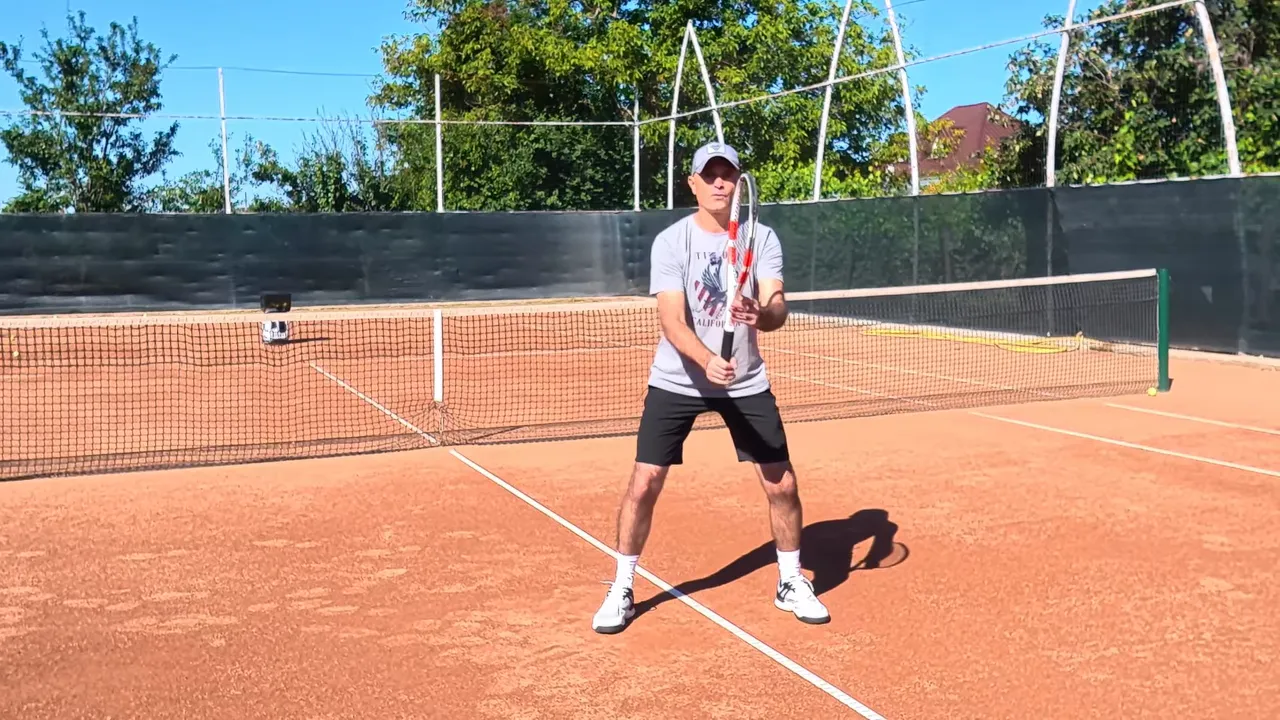
  2. Ready position checks: Get into ready stance with the dominant hand on bevel 2 or 3 and the non-dominant on bevel 7 or 8. Open the palms slightly so the hands face each other. Repeat until it feels natural.
  3. Grip changes without hitting: From ready, perform a forehand turn by keeping the top hand still and moving only the bottom hand into the forehand prep. Then return to ready. Do the same for backhand: move only the bottom hand to bevel 1 while top hand stays on bevel 7 or 8.
  4. Shadow swings: Execute slow forehand and backhand swings while focusing on the hands. Check elbow height and weight transfer. The dominant elbow should be slightly elevated during preparation, and strings should point down a bit at ready.
  5. Tossed ball reps: Once the grip change feels consistent, have someone toss slow balls. The player should step in, keep the top hand static, and swing through with the bottom hand switching only as needed.
  6. Repetition with feedback: Watch closely and correct the bottom hand when it drifts under the handle toward a western tennis grip. Encourage dozens of short repetitions rather than long hitting sessions.

Technical points to reinforce power and control

Correcting the grip is necessary but not sufficient. Reinforce these technical elements while practicing grips:

  • Weight transfer: Start weight on the outside foot during preparation, then step through the ball.
  • Elbow position: Slightly elevated dominant elbow helps get the racket into a good swing path.
  • Strings orientation: At prep, the strings should point slightly downward so the swing travels low-to-high without forcing the wrist into a western tennis grip.
  • Cradle the racket: Use the non-dominant hand to cradle the throat when preparing – this stabilizes the top hand and prevents it from moving under the handle.

Common problems and quick fixes

Problem 1: The top hand moves under the handle and creates a western tennis grip.
Fix: Freeze the top hand during drills and only allow the bottom hand to move. Use the cue “top stays.” Add exaggerated slow-motion reps.

Problem 2: Too much topspin and lack of pace.
Fix: Move the dominant hand to bevel 2 or 3 and emphasize a full body turn and step-through. Power comes from weight and rotation as much as wrist action.

Problem 3: Grip changes are slow during rallies.
Fix: Practice rapid grip-change drills from the ready position without hitting. Make it a game: how fast can you switch and still be ready?

Final thoughts

A western tennis grip is tempting for young players because it produces visible topspin, but it can limit development if it becomes the default. By using bevels, precise cues, and a focused drill progression that keeps the top hand fixed, I corrected the habit quickly and set my daughter up for more consistent, powerful strokes.
Keep drills simple, watch the hands, and celebrate small wins. Grip habits change with repetition and patience.

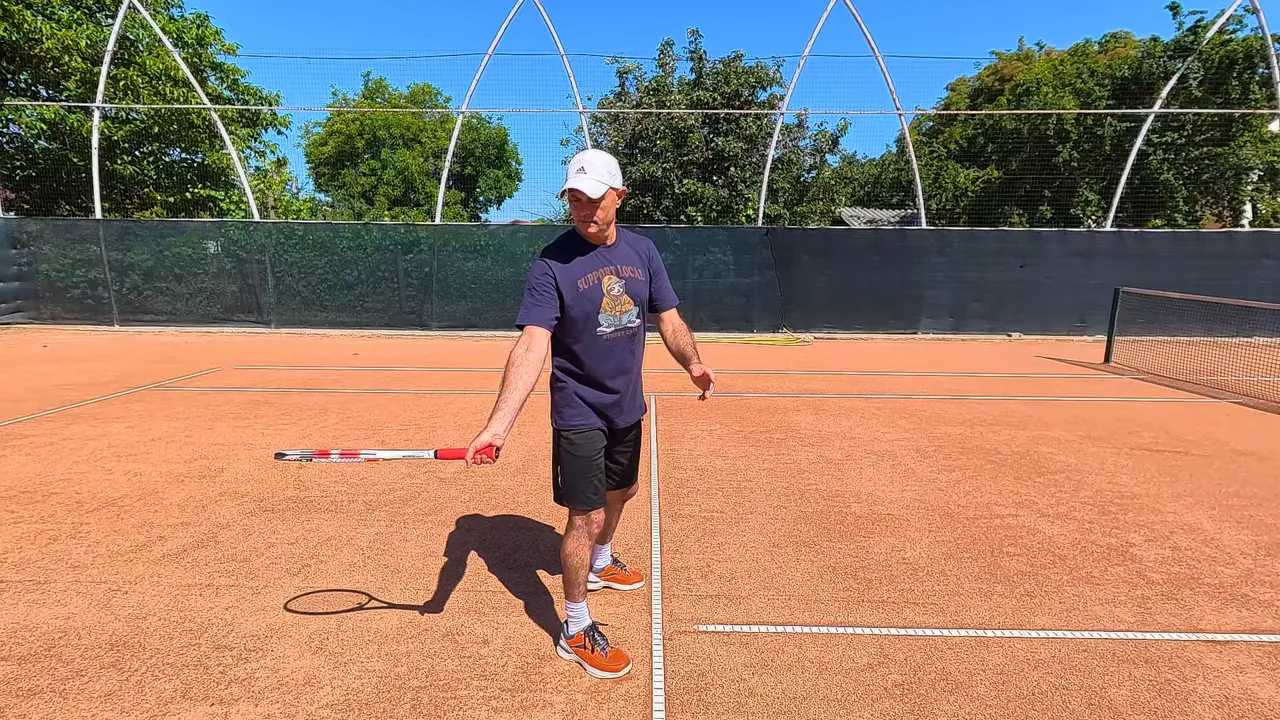
tennis coaching lesson - forehand preparation

FAQ

How can I tell if my child has a western tennis grip?

Look at the dominant hand: if the palm is underneath the handle and your player contacts the ball very high with extreme wrist closure, that is a sign of a western tennis grip. Check the bevel: a full western is around bevel 4 or 5.

Is the Western tennis grip always bad?

Not always. Advanced players who generate massive topspin can use a western grip effectively. For developing players, however, it limits versatility and makes grip changes harder. I recommend semi-western (bevel 3) for most juniors.

How long does it take to change a grip habit?

It depends on frequency and focus. With daily or thrice-weekly short drills, many kids show improvement in a few weeks. Expect occasional relapses; consistent feedback and repetition are the cure.


Cosmin Miholca

Cosmin Miholca

Certified Tennis Coach

Ready to improve your tennis further?
Let’s get started!

Practical Tennis Coaching Tips: Grips, Footwork, Depth and Power

Practical Tennis Coaching Tips: Grips, Footwork, Depth and Power

Tennis Coaching Q&A: Practical Answers Every Coach and Player Can Use

These clear, coach-friendly solutions focus on how to teach beginners, fix common technical issues, and build progressions that create reliable players.
Each section includes simple cues, drill ideas, and the reasoning behind common teaching choices.

Rallying with a Continental (Hammer) Grip

When working with beginners, use the continental or hammer grip while rallying. This grip produces flatter, lower-spin balls that are easier for new players to control. It reduces excessive topspin bounce that can make rallies unpredictable for students still learning timing.
Keep the swing compact. Aim to minimize spin on the ball. The goal is predictable, controllable rebounds so the student can feel consistent contact and start building rally rhythm.

Depth Control: How to Cue Short vs Deep

To teach short and deep shots, use two simple visual cues:

  • Brush up on the ball to create more topspin and shorten the landing point.
  • Swing through the ball to reach depth.

For drills, place a small portable net or a line of cones halfway between the baseline and the net. Ask players to land the ball in front of the cones for short shots and beyond them for deep shots. Repeat with emphasis on the upward or forward swing path.

Ready Position: Why the First Step Is a Step-Out

The initial action from the ready position should be a step-out toward the incoming ball while loading the outside foot. This is not just footwork – it is a unit turn that coils the shoulders and takes the racket back by body rotation rather than by arm pull.
Cue players to split, step out, and load the outside foot. Teach that the racket should go back through the torso turn. This creates a more efficient kinetic chain and cleaner timing for contact.

Loop Swing Drill: Which Way Should the Coach Hold the Racket?

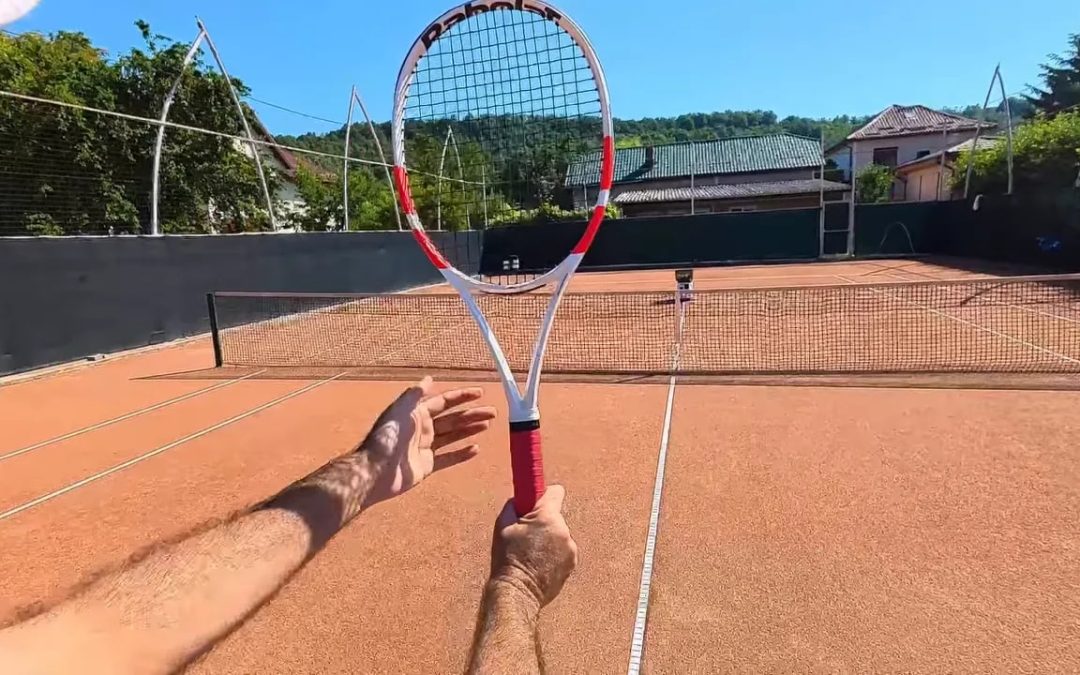
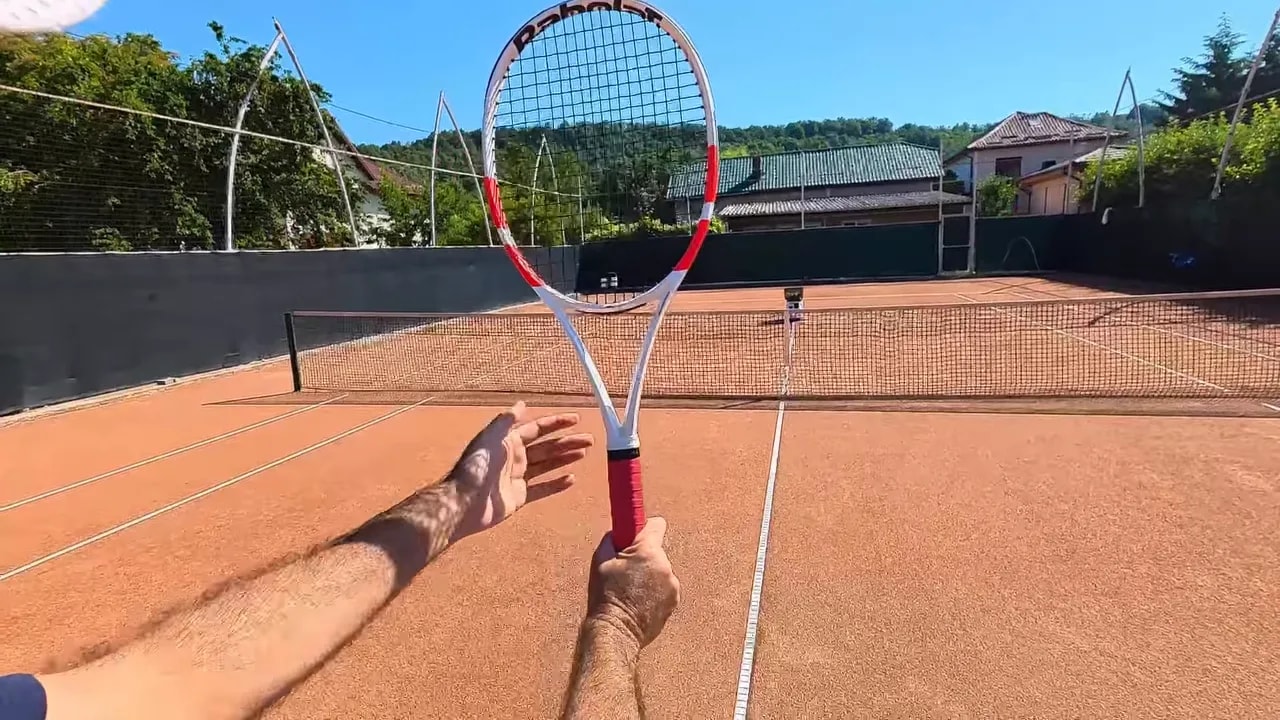
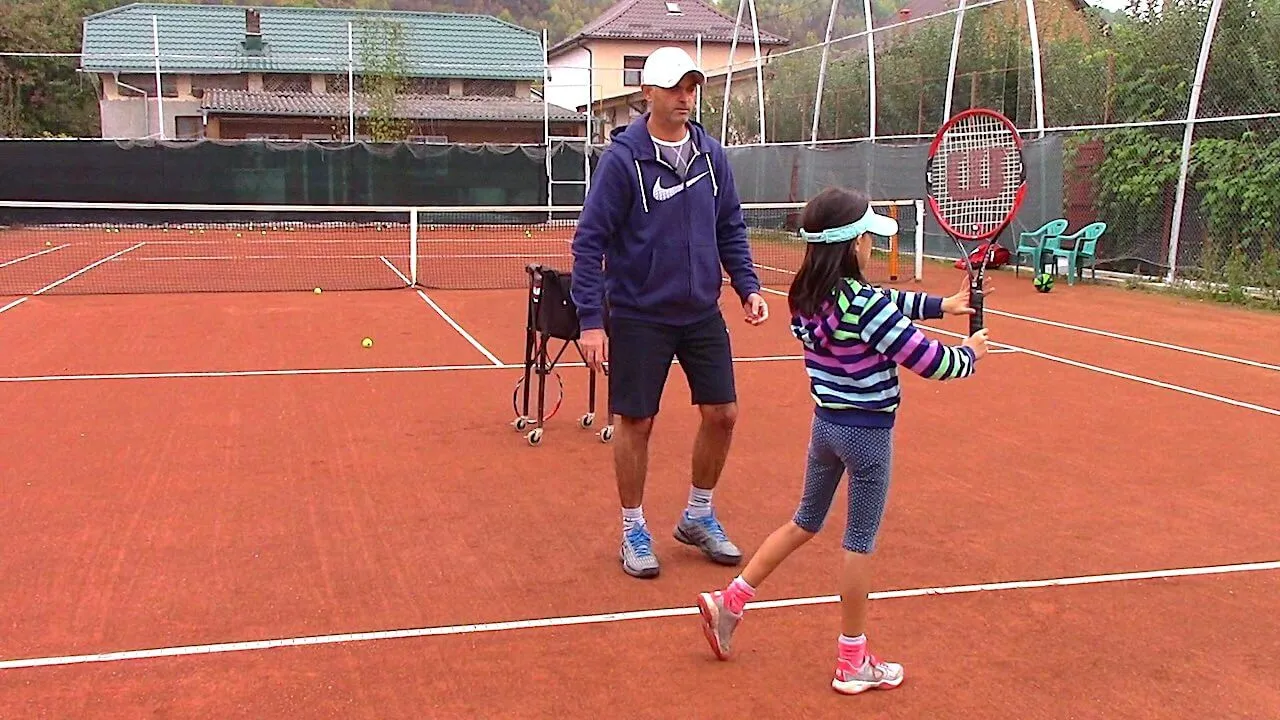
When assisting a loop swing drill, orient the coach’s racket so the handle points toward the player – see the above video. For children especially, this limits an exaggerated backswing and forces a compact loop – over, under, then low-to-high.

Fixing Shanks and Improving Ball Tracking

Shanks usually happen for a few reasons: timing errors, taking eyes off the ball, poor bounce anticipation, inappropriate grip, or a small racket head that reduces forgiveness.
Corrective steps:

  • Practice drills that start the racket just behind the contact point so the player learns the correct hand and racket position first.
  • Check grip: a semi-western orientation typically presents the strings more forward and reduces frame hits compared with an extreme western grip.
  • Encourage steady eye contact up to and through contact. If necessary, use short toss drills where the student watches the ball and punches through from the contact position.
  • Try a slightly larger racket head for less advanced players to increase the margin for error.

Generating Effortless Power

Power is a product of timing, a loose arm, body rotation, leg drive, and equipment choices. Emphasize these points:

  • Relaxed arm and wrist – imagine the arm like a whip or cooked spaghetti.
  • Legs and rotation – drop, coil, then accelerate up and through.
  • String tension – lower tension adds liveliness; higher tension favors control.
  • Coachable mindset: allow “good misses” that go long rather than short. Deep misses usually mean the player stayed relaxed and aggressive.

Serve Contact Point and the Role of the Small Jump

Teach the serve contact point so it is as high as the player can comfortably reach while fully extended. As the player adds leg drive and learns knee bend, a small jump often appears naturally.
The jump should not be deliberate. It is a byproduct of pushing up from the legs to reach the highest contact point. Cue players to bend, push, and reach, and the slight lift will follow.

Open Stance Forehand and Closed Stance Backhand for Beginners

Starting the forehand in an open stance encourages hip and shoulder rotation, making the stroke more natural and powerful for beginners. For the backhand, a closed or square stance simplifies body positioning when both hands are on the racket and gives better initial control.
Teach the backhand with a step in and allow the back foot to come around during the swing to gain freedom. As players progress, both strokes can be adapted to more advanced stances.

Teaching Progression: Technique to Power

A practical development sequence is: Technique → Consistency → Placement → Spin → Power. Technique first, then build the ability to repeat it. Once a player can consistently rally, work on placing the ball purposefully. Spin comes next, and finally introduce power once control is reliable.

Contact-First Teaching Philosophy

Start many beginner drills from the contact point plus follow-through. Have the student push the ball from the contact position to feel grip, racket face, and finish. This accelerates understanding of where the ball meets the strings and teaches a relaxed, long finish that shows fluid technique.

Volley Set Position: Preventing the Drop

Young players often drop the racket head because they cannot hold the wrist angle. Teach a locked wrist with roughly a 90-degree angle between the forearm and racket. A useful progression:

  • Choke up on the racket neck so the movement arm is shorter and wrist control is easier.
  • Practice short reps to hold the 90-degree angle and punch through the ball.
  • Gradually slide the hand down the grip as strength and stability improve.

Backhand Half-Volley: How to Introduce It

The half-volley is timing-intensive. Teach it later, after basic volleys and footwork are solid. For the backhand half-volley, start with a two-handed half-volley to give stability. Once timing and racket control are present, remove the non-dominant hand and work toward the one-handed version.

tennis questions and answers

FAQs

When rallying with beginners using a continental grip, can you still produce topspin or are you limited to blocks and slices?
Using a continental grip as a coach produces flatter, lower-spin balls that are easier for beginners to manage. It is possible to create a little topspin with a compact swing, but the main benefit is control and predictability while building basic feel.

What is the most effective cue for controlling shot depth in short-to-deep drills?
Tell players to brush up for shorter, higher-bouncing shots and to swing through for deeper, penetrating shots. Use a visual target like a small net or line of cones halfway to the net to help players internalize the difference.

Why teach a step-out from the ready position rather than just rotating the shoulders?
The step-out loads the outside foot and creates a unit turn. The racket is taken back by body rotation, not arm movement. This produces cleaner timing, better power generation, and safer mechanics.

How do I stop players from shanking the ball with the frame?
Start with drills from the contact point, check grip orientation (avoid extreme western if causing frame hits), increase racket head size if needed, and emphasize steady eye contact to improve timing and sweet spot consistency.

Should players visualize serve placement or focus on racket face and technique?
Both matter, but placement is largely built through repetition and feel. Encourage players to look at the target, serve, then adjust based on where the ball lands. Technical tweaks come later once feel is established.

How should I introduce volleys to young players who keep dropping the racket head?
Have them choke up on the racket neck to shorten the lever and practice holding a 90-degree forearm-to-racket angle. Gradually slide the hand down the grip as wrist strength and control improve.


Cosmin Miholca

Cosmin Miholca

Certified Tennis Coach

Ready to improve your tennis further?
Let’s get started!

Step-by-Step Overhead Tennis Lesson: Teach It Like a Serve!

Step-by-Step Overhead Tennis Lesson: Teach It Like a Serve!

Teach the Overhead Like a Serve

An overhead tennis lesson should feel familiar to players because the overhead shares most of its mechanics with the serve.
I coach it like a serve at the net: same grip, same arm shape, same pronation and follow-through. The differences are simple and important – the ball comes from the opponent, the player must move to it, and timing is tighter because the ball drops faster.
This article lays out a clear progression you can use to teach beginners or refine advanced players.

Why teach the overhead as a serve with footwork

Think of the overhead as a serve you hit while moving. The technical elements mirror the serve: use the hammer grip, turn the body sideways, form an L position with the racquet arm, point with the non-dominant arm, let the racquet drop, contact with pronation, and follow through. What changes are footwork and timing. The ball is coming from the opponent (often as a lob) and it drops quickly, so the player must position themselves slightly ahead of the ball and hit at the highest reachable contact.

Core elements to focus on

  • Hammer/Continental grip – same grip you use for serves and overheads.
  • Turn sideways – pivot on the non-dominant foot and step back with the dominant foot to create shoulder rotation.
  • L position – bring the racquet up with both hands, separate once above eye level to form the L (between the upper arm and forearm).
  • Point with the non-dominant hand – aim to catch the ball, which helps timing.
  • Let the racquet drop – as in the serve, allow a short drop before accelerating up and pronating at contact.
  • High contact – contact the ball as high as possible with a long arm extension.

Step-by-step progression for coaching an overhead

  1. Position: Start at the service-line area or slightly closer to the net. The overhead is usually hit from the net area, but deeper lobs may force players back toward the service line or baseline.
  2. Preparation: Split step, hammer grip, racquet up as if ready for a volley.
  3. Pivot and step back: Pivot on the non-dominant foot and step back with the dominant foot to turn the body sideways.
  4. Track the ball with the non-dominant hand: Bring both hands up, point to the ball, and practice “catching” the ball at the highest reach. This helps timing.
  5. Form the L: Once the racquet is above eye level, separate the hands and hold the L position (see the video above).
  6. Racket drop and contact: Let the racquet drop behind your back, then drive up with pronation, contacting the ball at the peak of reach, and finish with a serve-like follow-through.
  7. Progress to hitting: Start with taps or gentle contacts, then move to full overheads. Practice both taking the ball after one bounce and taking it in the air.

Simple drills to build confidence and timing

Use these drills in an overhead tennis lesson to teach tracking, footwork, and timing.

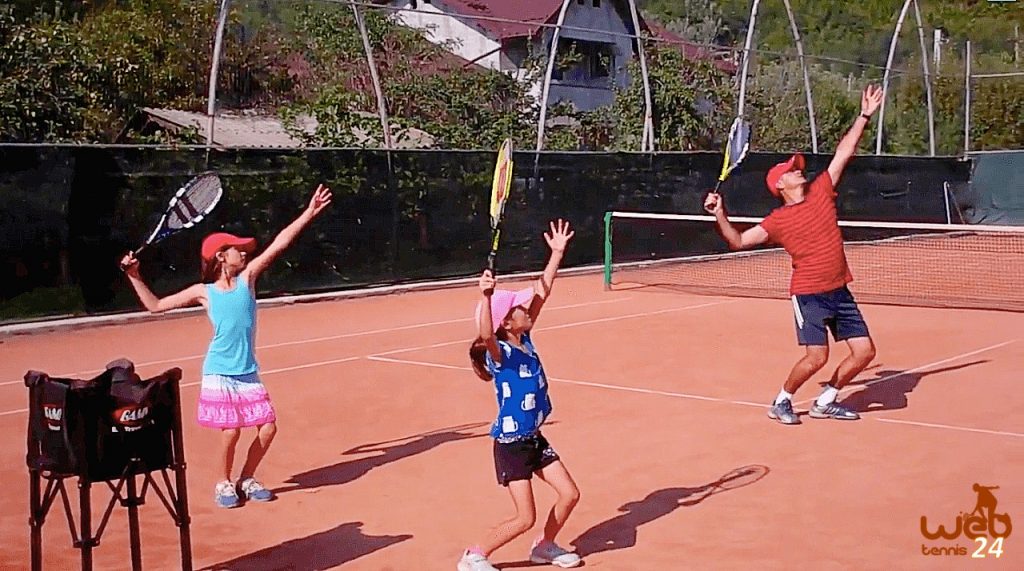
  • Catch-and-toss drill: Have the player turn sideways, track a tossed ball with two hands, separate into the L, and catch the ball at full reach (see the video above). Then toss and serve. This links the overhead to the serve feel.
  • Tap progression: Feed short, safe lobs. The player tracks the ball, taps it lightly to feel contact and high reach, then freezes in the L position. Repeat until timing improves.
  • Side-by-side toss: Coach stands slightly to the side and tosses the ball high. The player points up with the non-dominant hand, times the swing, and hits a clean overhead. Make sure the coach steps away after the toss to avoid being hit.
  • Footwork shuffle drill: Add movement by having the coach move around the court and feed lobs as the player shuffles to follow. This develops the habit of getting behind the ball and hitting slightly in front.
  • Across-court feeding: Feed from the opposite side of the net to simulate real match positioning and increase timing difficulty.

Key coaching cues and corrections

Use short, visual cues during an overhead tennis lesson.

  • Point to the ball – encourages tracking and timing.
  • Catch it high – emphasize reaching and contact at the peak.
  • Stay sideways – maintain shoulder turn to generate power and control.
  • Step back, then drop – footwork first, then racquet drop for a smooth swing.
  • Pronate – remind players to rotate the forearm at contact like a serve.

Common mistakes and how to fix them

  • Player moves too far behind the ball: Encourage earlier steps and lateral shuffles to position slightly ahead of the landing spot.
  • Ball gets over the head: Teach earlier tracking and catching drills to develop anticipation.
  • Elbow too low: Stop the player in the L position and correct elbow height so the racquet is ready to drop.
  • Hitting from flat feet: Reinforce the split step and push through the legs when taking the ball in the air.

How many lessons to allocate

The overhead is one of the trickiest shots because of timing and footwork. An effective overhead tennis lesson plan should span multiple sessions for beginners. Spend several drills and short repetitions across at least two lessons before expecting consistent results. For players with more experience, a focused single session with varied feeds can lead to rapid improvements.

Final coaching reminders

Keep corrections simple and positive. Progress from catching and tapping to full overheads, then add footwork and feeds from realistic positions.
Teach the overhead like a serve with movement and reinforce the two pillars: timing and footwork. When players consistently point, catch high, and pronate at contact, the overhead becomes a reliable weapon.

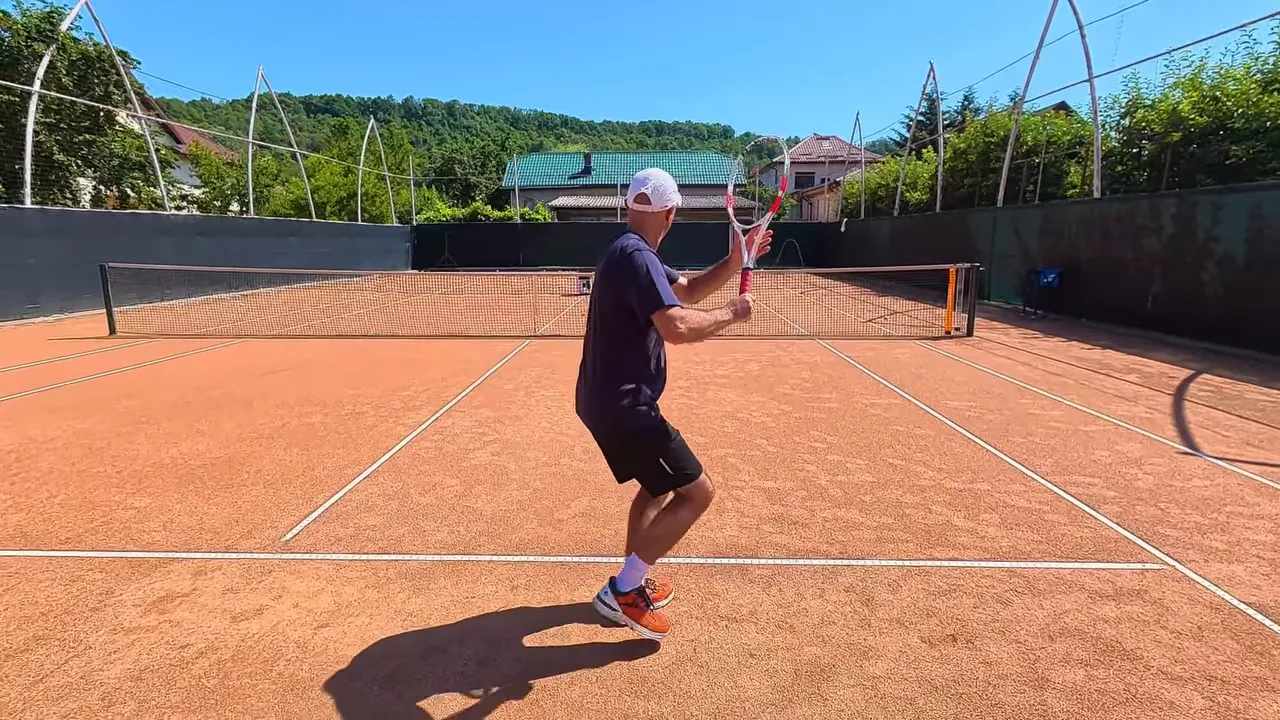
overhead tennis coaching lesson

FAQ

Q: Where on the court should a player attempt the overhead?
A: Most overheads are hit from the net area around the service line or closer to the net. Deeper lobs may require stepping back toward the service line or baseline. Always position slightly ahead of the ball’s landing spot.

Q: Which grip is best for teaching the overhead?
A: The hammer (continental) grip works best because it mimics the serve’s and allows comfortable pronation and extension on contact.

Q: Should beginners take the overhead in the air or after a bounce?
A: Start with the ball bouncing first so students can focus on footwork and the L position. Progress to taking the ball in the air once timing improves, using side-by-side tosses and point-and-catch drills.

Q: What are the two most important skills to develop in an overhead tennis lesson?
A: Timing to hit the ball at the highest reachable point and footwork to get in front of the ball.

Q: How long should coaches spend on this progression?
A: Spend more than one lesson. A couple of lessons with repeated progressions – catching, tapping, tossing, and footwork drills – will produce much better results than attempting to master the overhead in a single session.

“An overhead is like a serve with footwork: keep the same fundamentals, add movement and timing.”


Cosmin Miholca

Cosmin Miholca

Certified Tennis Coach

Ready to improve your tennis further?
Let’s get started!

Stop Losing Points! Practice These 2 Match Pressure Tennis Drills

Stop Losing Points! Practice These 2 Match Pressure Tennis Drills

Match Pressure Tennis Drills: 2 Realistic Practice Routines

If you want to simulate match intensity and stop losing easy points, these match pressure tennis drills are designed to recreate realistic scoring stress while building consistency, focus, and net play. I use them with a PongBot ball machine or a feeder, and they work whether you are a player, coach, or parent.

Why these match pressure tennis drills work

Both drills force you to treat every ball as a point-deciding shot. Missing any single ball hands the opponent a point, so you practice concentration, movement under fatigue, and shot selection exactly like in a match. They also condition you physically because the sequences include baseline rallies, approach shots, volleys, and overheads.

Drill 1: All-Court Six-Ball Sequence

Purpose: train baseline consistency, short ball recognition, approach timing, volley technique, and finishing with an overhead under pressure.

  1. Setup: Position the ball machine or PongBot robot at the baseline. Set it to feed a fixed sequence of six balls: forehand from the baseline, backhand from the baseline, a short ball for an approach, a backhand volley, a forehand volley, and an overhead.
  2. Rule: To earn one point (15), you must hit all six balls in. If you miss any of them, the machine gets the point. Continue accumulating points to 30, 40, and game.
  3. Coaching cues: Move forward aggressively on the short ball, take the ball early into the volley, and prepare your overhead with split-step timing. Pace yourself – this drill is physically demanding.
  4. Variations: Reverse ball order, add topspin or slice, shorten recovery time, or change feed pace to increase difficulty.

Drill 2: Serve-and-Volley Game Simulation

Purpose: train effective serving, quick approach, first volley control, and closing out points at the net under realistic pressure.

  1. Setup: Serve from the baseline. After an in serve, rush to the net. Program the machine or feeder to begin feeding volleys once you reach a designated recovery spot halfway between the net and service line.
  2. Rule: The point requires one in serve plus four volleys in to earn the point. Two serve attempts are allowed to simulate real match serving rules. Any miss gives the opponent the point.
  3. Coaching cues: Use the first serve aggressively, then take small steps, and controlled volleys. Focus on footwork, getting into the recovery trigger zone so the feed starts when you arrive.
  4. Variations: Practice from both deuce and ad courts, adjust serve type, or shorten the time between feed and approach to raise pressure.

Practical tips and programming

  • Use a ball machine app to save and repeat these exact drills; increase spin or speed as you improve.
  • Limit continuous reps if players get exhausted. Short sets recreate pressure without excessive fatigue.
  • Turn drills into short games to build competitive focus: best of 3 games or sudden-death game points.

volley tennis technique, Bianca, WebTennis24

Frequently Asked Questions

  • Can I do these drills with a partner instead of a ball machine?
    Yes. A coach or partner can feed the exact sequences. The key is consistent order and honest scoring so the pressure stays real.
  • How many repetitions should I do per session?
    Start with 6 to 12 games total, splitting into short sets. Quality over quantity. If accuracy drops, stop and rest or reduce speed.
  • What age or level are these match pressure tennis drills for?
    They are scalable. Beginners can slow the feeds and shorten sequences. Intermediate and advanced players can add pace, spin, and tighter recovery triggers.
  • Should I track scores or just count successful sequences?
    Track scores. The match-style scoring reinforces pressure and gives clear feedback on progress under realistic conditions.


Cosmin Miholca

Cosmin Miholca

Certified Tennis Coach

Ready to improve your tennis further?
Let’s get started!

Master Tennis Ball Feeding with Technique and Progression Drills

Master Tennis Ball Feeding with Technique and Progression Drills

How to Master Tennis Ball Feeding: Technique and Progression Drills

I teach tennis feeding the way I wish someone had taught me: simple, repeatable, and focused on control. In this article, I break down tennis ball feeding step by step so you can feed practice partners or students like a pro.
I use the continental grip because it gives me versatility – flat, light topspin, or even a touch of slice – while keeping feeds consistent and easy to control, especially during group drills.

Why I Use the Continental Grip for Tennis Ball Feeding

I call it Continental or ‘hammer’ grip because you hold the racket like you would a hammer. That grip keeps the racket face slightly open, which helps clear the net when you are close and prevents excessive topspin that can bury feeds into the net.
When you use a forehand grip like semi-western, the racket plane closes and naturally produces more topspin.
For starting rallies or teaching beginners, I prefer feeds with minimal spin so the receiver gets an easy ball.

Key Technical Principles

Before you start drilling, lock these technical cues into your routine. They are short and specific, so you can repeat them until they become automatic.

  • Grip: Continental, relaxed grip.
  • Wrist and forearm: Keep a roughly 90-degree angle between the forearm and racket with the wrist locked. No collapsing or excessive wrist flicking.
  • Elbow position: Keep the feeding elbow close to your body. Think of your arm as a pendulum with the elbow anchored.
  • Backswing: Short backswing. Start the racket just slightly behind the shoulder line – no big swing. The goal is a push, not a stroke.
  • Contact: Toss the ball with your palm up, lift it gently, and push it with the slightly open racket face (about 10 to 20 degrees open). Minimal follow-through.
  • Finish: Stop with the racket pointing toward the target. Do not finish with a full forehand follow-through.
  • Weight transfer: Start with the weight on your back foot and transfer to the front foot during the push.

Progression Drills I Use

Progression builds control and consistency. I use three simple stages so you and your students can feel success quickly.

  1. Close to the service line: Stand just behind the service line with a basket of balls. Continental grip, wrist locked, elbow close. Toss palm up, lift the ball gently, push it over the net – no swing. Aim to get the ball just over the net. Practice until you feel stable.
  2. Step-back routine: After you make three consecutive successful feeds over the net, take one step back. Repeat the three-feed step-back pattern until you reach the baseline. This gradual increase in distance forces a slightly longer preparation while preserving the short push action.
  3. Baseline feeds: From the baseline, you will take the racket a bit further back to give yourself room, but keep the short backswing and locked wrist. Maintain the slightly open racket face to produce a flat-ish feed with minimal spin. Aim for the feed to go about three feet over the net and land just beyond the service line so the receiver gets a comfortable first ball of the rally.

Common Mistakes to Avoid

Watch out for these pitfalls:

  • Letting the wrist collapse or using too much wrist action. That kills consistency.
  • Using a forehand grip for feeding. It often produces too much topspin and nets the feed – especially when close to the net.
  • Over-swinging and following through like a normal forehand. Feeds should be a controlled push with a short follow-through.
  • Elbow away from the body. That creates a big swing and less control.

How I Use Tennis Ball Feeding in Group Coaching

For rapid feeding in group lessons I rely on the continental grip because it lets me feed quickly and accurately without sending the balls into the net. When players need many reps, I keep feeds low-spin and flat so recipients can focus on rhythm and footwork instead of fighting varying bounce and heavy topspin.

tennis ball feeding

What grip should I use for tennis ball feeding?

Use the continental grip. It gives you versatility to feed flat, slightly spun, or sliced balls and helps you clear the net when you feed from close in.

How do I hold my wrist and racket?

Keep the wrist locked with about a 90-degree angle between the forearm and the racket. Maintain a relaxed but steady grip and avoid collapsing the wrist.

Where should I stand and how should I progress?

Start just behind the service line and feed until comfortable. After three successful feeds, move one step back. Repeat until you reach the baseline and can feed consistently from there.

How high and where should the feed land?

Aim for the ball to clear the net by about three feet and land just past the service line (see the video above). That gives the receiver an easy, low-spin ball to start the rally.


Cosmin Miholca

Cosmin Miholca

Certified Tennis Coach

Ready to improve your tennis further?
Let’s get started!