pongbot-official-partner-webtennis24
use code CTT5 for a 5% discount
Father vs. Daughter Lob Challenge | 10-Ball Tennis Game & Tips

Father vs. Daughter Lob Challenge | 10-Ball Tennis Game & Tips

Tennis Lob Game: Father vs Daughter — Who Wins the Challenge?

I set up a playful tennis lob game to see whether I or my 18-year-old daughter, Bianca, could hit more successful lobs out of 10 tries.
The idea was simple: she stays inside the service box and reaches up with her racket to block my lobs, while I start from the baseline and try to clear her racket. Then we swap places.
It turned out to be closer than I expected and a great way to sharpen an essential shot.

How this tennis lob game is set up

Keep the setup straightforward so the drill runs fast and stays competitive. Here’s how we organized it:

  • Players: Me and my daughter, Bianca, age 18.
  • Positioning: Challenger from the baseline; defender inside the ad service box (cannot cross the service line).
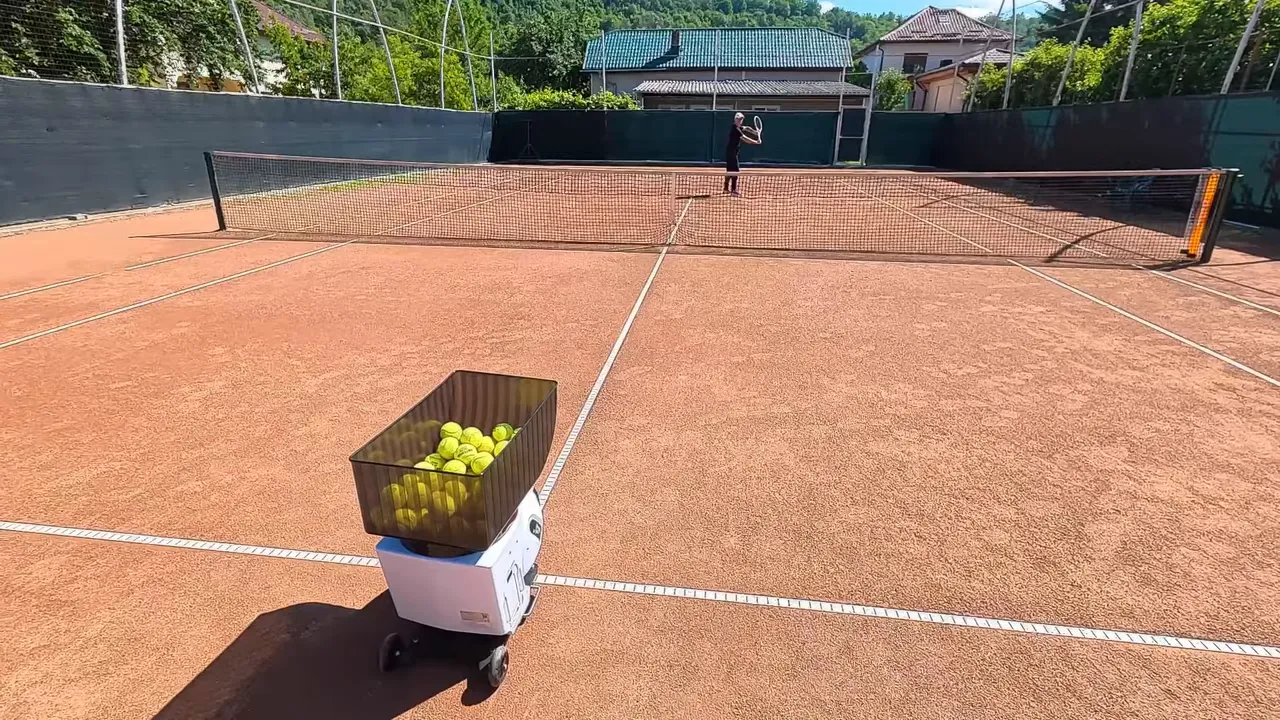
  • Feed: We used a ball machine to feed at the same pace every 5 seconds so each attempt feels consistent.
  • Attempts: 10 lobs per person. Count how many times the lob clears the defender and lands in play.
  • Scoring: One point for each successful lob. Short shots that don’t clear the racket or land beyond the baseline count as misses.

Why this tennis lob game works

This drill isolates three key elements of the lob: depth, height, and timing.
Because the defender cannot step past the service line, the lob has to be accurate enough to clear a raised racket but still deep enough to push the opponent back.
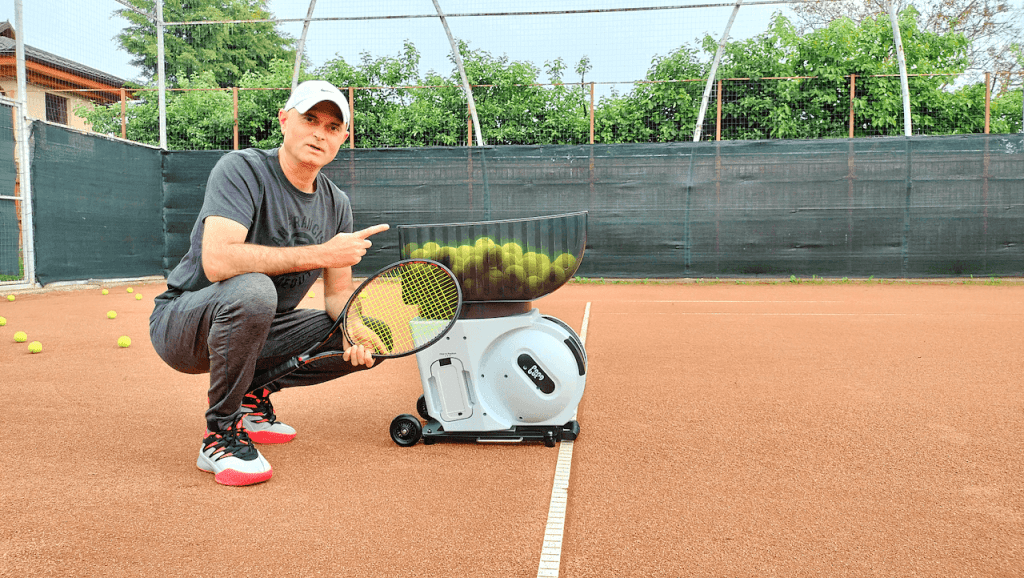
Using a ball machine, such as the Pongbot Pace S Pro, or consistent feeds keeps the challenge fair and repeatable.

Practical lob tips I used during the challenge

  • Hit with topspin: A topspin lob gives better margin over the opponent and helps the ball drop faster into the court, reducing the chance of it sailing long.
  • Aim deep: Lobs that land near the baseline force the defender to retreat and buy you time to recover.
  • Open racket face slightly: For controlled height without sacrificing depth, open your face just enough to lift the ball but still brush up for spin.
  • Watch the racket: Read the defender’s racket position. If they’re reaching up on tiptoes, a higher lob is necessary; if they’re flat, go for a deeper, lower lob.

Making it a fun family or coaching drill

The competitive element keeps everyone engaged. Here are a few ways to vary the tennis lob game for coaches, parents, or practice partners:

  1. Play best-of-three rounds to determine a champion.
  2. Change the defender zone: force them to start on the service line or at different depths.
  3. Add movement: have the defender walk laterally after each feed to simulate a more dynamic volleyer.
  4. Use handicaps: give the younger or less experienced player extra attempts or require the adult at the net to start a few steps inside the service line.

What I learned playing against Bianca

After our first ten-ball series, we were tied, so we went another round.
The drill revealed small technical differences that made a big impact: a few lobs were clearly off-center or too short, while others landed cleanly on the baseline.
Friendly competition highlighted consistency over one-off power shots. It also reminded me how motivating it is to practice when there’s a scoreboard and someone cheering on the other side of the net.

Quick checklist before you start

  • Warm up with a few groundstrokes and overheads.
  • Set consistent feeds so each attempt is comparable.
  • Agree on scoring and boundaries before you begin.
  • Keep it short – ten balls are enough to force focus and reveal form errors.

tennis lob game

FAQ

How should the defender position themselves during the tennis lob game?

Start inside the ad service box and do not cross the service line. Focus on keeping your racket up and ready. Move only within the box to challenge the lobber to control height and depth.

What counts as a successful lob?

A successful lob clears the defender’s racket and lands in the court within bounds. Lobs that hit the racket, are too short, or go long do not count.

Can I use a ball machine for this drill?

Yes. A ball machine with consistent timing helps standardize the feed so each player gets the same challenge, making the competition fairer and the practice more effective.

Any tips for the lobber under pressure?

Breathe between shots, focus on one technical element per round (height, depth, or spin), and aim for consistency rather than trying to outdo the opponent with power.

Final thought

The tennis lob game is a simple, competitive way to practice a shot that often gets neglected.
Playing against my daughter Bianca made it fun and revealing – and that tie we ended up with was a perfect reminder that practice can be both serious and joyful.
Try it next time you’re on court; ten balls will tell you more about your lob than a hundred comfort-zone rallies.


Cosmin Miholca

Cosmin Miholca

Certified Tennis Coach

Ready to improve your tennis further?
Let’s get started!

How to Recover Faster After Hitting Wide Balls in Tennis

How to Recover Faster After Hitting Wide Balls in Tennis

Tennis Footwork Technique: Recover Faster After Wide Balls

To stop getting caught out of position after a wide shot, focus on a single tennis footwork technique that blends crossover steps and shuffle steps. This combination gives you explosive initial speed to close the gap and a balanced finish to prepare for the next direction change.

Why most players get recovery wrong

Many players chase a wide ball, make the hit, then use only shuffle steps to get back to the center. Shuffling keeps you balanced, but it is not the quickest way to recover when the court you left open.
The missing link is using one or a couple of crossover steps right after the shot to generate immediate lateral speed, then switching to shuffles to stabilize and be ready for the opponent’s next shot.

What crossover steps are, and why they matter

Crossover steps are a footwork pattern where the outside foot – the one closer to the ball you just hit – crosses in front of the inside foot, allowing you to push off and accelerate laterally.
The sequence looks like this: outside foot crosses over in front, inside foot slides out, outside crosses again, inside slides, and so on.
The power of crossover steps is their ability to create a fast initial burst. When you need to cover extra distance to return to a neutral court position, that burst is what gets you into place quickly. For recovering after wide balls, one or two crossover steps give you the speed you need without overcommitting.

What shuffle steps are good for

Shuffle steps involve keeping your feet at roughly the same stagger while stepping laterally, with one foot sliding close to the other and then the next foot moving.
This footwork keeps your hips square and your balance steady, making it easier to change direction at the last moment.
While shuffling is excellent for controlled lateral movement and quick directional changes, it is slower than crossover steps for covering larger distances. That is why the best recovery uses both patterns in sequence.

Combine crossover and shuffle for the fastest recovery

The principle is simple and repeatable: after hitting a wide ball, use one or two crossover steps to get momentum and then switch immediately into shuffle steps to stabilize and prepare.
How many crossover steps you take depends on how far you have to travel. If the ball forced you wide but not extremely wide, one crossover step followed by shuffles often does the trick. If you were stretched much farther, two crossover steps before shuffling is a reasonable choice.
This hybrid approach gives you the best of both worlds: speed immediately after contact and balance to react if your opponent fires a ball behind you or down the line.

How to practice this tennis footwork technique

  1. Shadow step drill: Without a ball, simulate hitting a wide forehand or backhand. Take one or two crossover steps away from the contact point, then tap into three shuffle steps back toward the middle. Repeat 10 times per side.
  2. Cone recovery drill: Place cones to mark wide positions. Start at the center, sprint to the cone, perform the hit movement, then execute the crossover-shuffle recovery back to center. Time each rep and try to reduce your recovery time.
  3. Partner feed: Have a partner feed wide balls while you practice the crossover plus shuffle sequence. Focus on clean footwork mechanics – cross, slide, then short, balanced shuffles.
  4. On-court sequence: During point play or drills, intentionally force yourself to use the crossover steps on wide balls instead of defaulting to shuffles. Muscle memory develops quickly when repeated under pressure.

Common mistakes and how to fix them

  • Over-crossover: Taking too many crossover steps pushes you off balance and makes it harder to change direction. Fix it by limiting crossover steps to one or two, then immediately switch to shuffles.
  • No finish position: Recovering with only crossovers can leave you reaching for balance. Finish with two or three controlled shuffle steps so your knees are bent and your shoulders are square.
  • Slow first step: Hesitation kills recovery. Train explosive crossovers so your first step is a decisive push rather than a tentative shuffle.

Gear and setup: why shoes matter

Lateral movement and quick pushes off during crossover steps require a stable, comfortable shoe.
A wide toe box helps your foot spread and grip during those explosive pushes. Shoes that feel springy but supportive aid fatigue management during long practices.
Comfortable, stable shoes let you focus on executing the tennis footwork technique without worrying about foot slippage or discomfort.

Quick checklist to run through before you hit

  • Ready stance: knees slightly bent, weight on the balls of your feet.
  • First step: decisive crossover toward the target if the distance is large.
  • Recovery finish: two or three shuffle steps to get balanced and square.
  • Eyes up: track the opponent immediately after recovery.

Why does this work in match play

In match situations, you rarely have the luxury of perfect balance immediately after a wide stretch.
A practical tennis footwork technique that starts with crossovers and ends with shuffles buys you time and adaptability. It is faster than shuffling alone and safer than overcommitting to crossovers.
Combined, the movement pattern improves your ability to return the next ball and reduces the chances of being passed or out of position.

Final thoughts

The next time you find yourself scrambling wide, try one or two crossover steps straight after the hit and transition into controlled shuffles.
Spend a few practice sessions drilling the sequence until it becomes automatic. You will notice cleaner recoveries, quicker preparedness for the opponent’s reply, and fewer running-around awkward stances.

recovery footwork tennis technique

FAQ

How many crossover steps should I take when recovering from a wide ball?

One or two crossover steps are usually enough. One if you only need a short burst of speed, two if you were pulled much wider. Follow them immediately with shuffle steps to regain balance.

Is shuffling ever better than a crossover for recovery?

Yes. Shuffling is superior for short, controlled movements and when you are already close to the center. Use shuffles if you only need small adjustments or if you must be ready to change direction quickly.

Will practicing this tennis footwork technique make me slower in other movements?

No. Practicing crossovers followed by shuffles builds speed and balance. It enhances your lateral acceleration and improves your ability to react rather than slow you down.

Any tips for avoiding injury while practicing these steps?

Warm up thoroughly, focus on knee alignment when crossing over, avoid overstriding, and wear stable shoes with good lateral support. Gradually increase intensity rather than forcing maximum speed immediately.


Cosmin Miholca

Cosmin Miholca

Certified Tennis Coach

Ready to improve your tennis further?
Let’s get started!

Train Your Put-Away Shots with This Advanced 3-Shot Pattern 🎾

Train Your Put-Away Shots with This Advanced 3-Shot Pattern 🎾

Tennis Drill for Advanced Players: 3-Shot Put-Away

This tennis drill for advanced players trains three decisive put-away shots in sequence: a topspin lob, a short-ball drive, and an aggressive drive volley.
The goal is simple and ruthless – move from defense to offense in three strikes and finish the point with intention. Use it to sharpen timing, footwork, and the mental habit of attacking when the opportunity appears.

Why this drill matters

At higher levels, points are rarely won by pure consistency alone.
Winners come from a combination of smart defense, instant transition to offense, and clean execution at the net.
This tennis drill for advanced players replicates a common rally pattern: set up with an offensive lob, seize a short ball, and close with a put-away volley.
Practicing this chain builds muscle memory for moving forward, striking with purpose, and finishing points under pressure.

What you need

  • A ball machine or a committed feeding partner who can deliver three-shot sequences: deep, short, then high into the net area.
  • Full court so you can practice both cross-court and down-the-line patterns.
  • Focus on intent – this drill is about winning the rally, not just getting shots back.

A programmable machine like the Pongbot Pace S Pro works particularly well because you can set realistic shot sequencing and pace.
If you train alone, a machine removes inconsistencies in the feed and lets you repeat specific patterns until they become automatic.

Drill setup and sequence

  1. Start at the baseline.
  2. The machine or feeder sends three shots: deep to your forehand/backhand (topspin lob), then a short ball into the service box, and finally a high feed for a drive volley near the net.
  3. On the first shot, play an aggressive topspin lob that forces the opponent back or gives you time to approach.
  4. Move forward quickly for the short ball and hit a hard, flat, or topspin drive aimed to end the point – treat it like a put-away groundstroke.
  5. Close the sequence by charging the net and taking the high ball with a drive forehand volley – again with put-away intent.
  6. Repeat the sequence on the forehand and backhand sides to develop both-wing competence.

Technical cues for each shot

Topspin lob

The lob can both reset your point and create a new point. Concentrate on hitting the ball up and through with a low-to-high path of the swing.
To generate spin, you will need to brush up the ball. Move your weight onto your back foot and aim a little bit deeper to get the opponent to push back.
It is not a defensive moonball but an aggressive, looping tosser that carries you forward.

Short-ball drive

Approach the ball with a load on your legs and step through it.
Your objective is to hit the ball so hard and so flat that it is almost impossible for the opponent to catch it.
If you have to, give preference to the placement rather than just the strength: a steep cross-court angle or an inside-out drive to the weaker side of the opponent are the perfect options.

Drive volley

On the volley, get your racket out early and punch through the ball with a firm wrist and forward momentum.
Keep your racquet face slightly closed to avoid popping up.
Move your feet aggressively so the shot is taken out in front.
The line of attack should be low to medium with a decisive follow-through, aiming to end the point either with depth or an angle.

Footwork and movement patterns

Footwork is the glue that makes these three shots work as a sequence.
From the baseline, use small, quick steps to set up for the lob.
After the lob, explode forward into the court to reach the short ball.
After the drive, close the distance to the net with controlled steps and set your base for the volley.

Alternating between cross-court and down-the-line patterns, you should practice approaches. Changing the path of your approach not only tests your balance but also enhances your real-match adaptability.

Practice structure and progressions

  1. Warm up with simple feed-and-return drills for 10 minutes.
  2. Run the 3-shot put-away sequence for 8 to 12 reps per side, alternating cross-court and down-the-line targets.
  3. Take a short rest, then repeat 3 to 4 sets total. Focus on quality over quantity.
  4. Progress by increasing ball pace, adding unpredictability in feed depth, or having the feeder sometimes mix in a low-skidding short ball to force quicker adjustments.
  5. Advanced variation: have the final ball come slightly higher or deeper to simulate a real opponent’s defensive reset – this tests volley timing under different trajectories.

Common mistakes and fixes

  • Too passive on the lob – Fix: hit a penetrating topspin lob, not a passive moonball. Use weight transfer to make the lob a weapon.
  • Rushing the short ball – Fix: ensure your base is set before you swing. Take one compact preparation step and then explode through the shot.
  • Late racket preparation for the volley – Fix: read the short ball early and get your racket ready while moving forward. Take the volley out in front.
  • Poor footwork closing to the net – Fix: practice split-step timing and short explosive steps; never leap awkwardly into the volley.

Coaching checklist

  • Topspin lob: contact point early, low-to-high swing, depth over height.
  • Short-ball drive: step in, shoulders turn, hit with intent.
  • Drive volley: racket out early, take ball in front, compact punch.
  • Movement: aggressive forward momentum, controlled approach steps, and recover quickly after each rep.

Sample 60-minute practice plan using this tennis drill for advanced players

  1. 10 minutes of dynamic warm-up and groundstroke warm-up.
  2. 10 minutes of technical practice focusing on the topspin lob mechanics.
  3. 20 minutes 3-shot put-away drill (4 sets of 8-12 reps) alternating sides and directions.
  4. 10 minutes of volley-only practice to reinforce drive volley mechanics.
  5. 10 minutes match-play points starting from lob-to-short transitions.

Equipment note

If training alone, a programmable machine that reproduces realistic rally sequences makes this drill far more effective.
A ball machine that can send deep, short, and high balls in controlled sequences lets you repeat the pattern until your timing and footwork are automatic.

tennis player transitioning from baseline to net

FAQ

How should I set the ball machine for this drill?

Program three-shot sequences: a deep topspin feed to push you back, a short ball into the service box, and a higher feed around the net height for the drive volley. Adjust pace to your level and gradually increase speed as you improve.

Can a lower-level player use this drill?

Of course, but make the drill easier. Begin with a slower feed and instead of emphasizing aggressive shots, focus on the proper footwork and technique right away. In the initial stage, change the direct shot placement to a more controlled shot without poor execution.

What is the main tactical takeaway?

The exercise is designed to cultivate the ability to shift from defensive to offensive and score points with intent. It trains players to immediately identify and make use of short balls, thereby inhibiting a moment of doubt at the time when a put-away chance surfaces.

How do I practice the backhand side?

Perform the same sequence on the backhand wing where you practice both the topspin backhand lobs and the short backhand drives, followed by a backhand volley or a forehand volley if you choose to redirect. Change the feed direction to concentrate on the inside-out and down-the-line patterns.

Final note

This tennis drill for advanced players is the one that links the recovery approach to the finishing of the point. So train it with the right focus, keep it aggressive, and consider it primarily the correct footwork and early racket preparation.
For a drill that is customized for a specific technical or tactical deficiency, you identify the problem and then create a direct development that is solely intended to remedy that problem.

Ready to take it to the next level? Check out our Ball Machine Tennis Course – packed with practical drills and tips:


Cosmin Miholca

Cosmin Miholca

Certified Tennis Coach

Ready to improve your tennis further?
Let’s get started!

Tennis Drill Most Players Never Practice – Drive.Moon.Slice.Drop.

Tennis Drill Most Players Never Practice – Drive.Moon.Slice.Drop.

Ball Machine Tennis Drill for Advanced Players

If you’re looking for a tennis drill for advanced players that builds shot variety rather than relying on mindless repetition, this will change the way you practice.
It forces you to move, change grips, and shift mindset every few balls so you practice aggression, defense, spin, and touch all in one go.

Why this drill works

Most practice sessions focus on one shot until it feels comfortable. That helps technique, but does not train match-like variety.
This tennis drill for advanced players combines four distinct strokes in a fixed pattern, allowing you to learn both transitions and individual mechanics.

By alternating drives, moonballs, slices, and drop shots, you train footwork, timing, and spin control under pressure. It also forces you to adjust where you take the ball and how much racket speed you use from rally to rally.

How to set up

Use a ball machine that feeds side to side or have a partner feed alternating to your forehand and backhand. Set the machine to medium pace so you can move and recover between shots. Start by directing the sequence down the line, then repeat crosscourt.

Step-by-step sequence

  1. Drive (forehand/backhand) – Attack from the baseline with an aggressive, compact swing.
  2. Moonball (forehand/backhand) – Hit a high, topspin lob that buys recovery time and pushes the opponent back during a match.
  3. Slice (forehand/backhand) – Stay down, slice through the ball to produce backspin and a low, skidding bounce.
  4. Drop shot (forehand/backhand) – Use soft hands and step in; the goal is a short ball that lands just over the net.

Key practice variations

  • Start down the line for a set of repetitions, then repeat the pattern cross-court.
  • Change the order once you’ve done the basic sequence to simulate different point scenarios.
  • Adjust machine speed to work on footwork at faster paces, or slow it down to focus on touch for certain shots.

Tips for each shot

  • Drive: Turn your shoulders early, step into the ball, brush up on the ball, and follow through.
  • Moonball: Use an upward swing to create safe clearance and send the ball as close as possible to the baseline.
  • Slice: Open the racket face slightly, contact out in front, and brush down and through to keep the ball low after the bounce.
  • Drop shot: Shorten your backswing, soften through the ball with low grip pressure.

advanced forehand tennis technique

How long should a practice set last?

Aim for 6 to 12 full sequences per set, resting 60 seconds between sets. Quality beats quantity – focus on clean transitions and realistic placement.

Can I do this drill without a ball machine?

Yes. A partner can feed alternating balls, or you can use live rally patterns that mimic the sequence. A machine simply makes the repetitions more consistent.

When should I add this to my weekly routine?

Use this tennis drill for advanced players once or twice a week as a variety session. Combine it with a focused technical session and a match-play day for a balanced training plan.

Pick one technical or tactical detail you want to improve and make it the focus for your next set. This drill trains your ability to shift gears quickly, and that skill wins points.

The drill shown in this article was practiced using a Pongbot tennis ball machine. If you’d like to check it out, you can find more details here.

Cosmin Miholca

Cosmin Miholca

Certified Tennis Coach

Ready to improve your tennis further?
Let’s get started!

Faster Footwork & Early Setup: Tennis Drills for Advanced Players

Faster Footwork & Early Setup: Tennis Drills for Advanced Players

Pro-Level Tennis Training Drills to Move Faster and Set Up Quicker

Moving quickly and setting up early for the next shot is what separates good players from great ones. These three simple, repeatable drills focus on footwork, timing, and early preparation so that every rally feels easier and more controlled.
You can run them with a partner feeding balls or with a ball machine. I practiced them with my daughter Bianca, but they work for juniors, adults, and coaches looking for efficient court time.

How these drills are structured

Each drill uses short, intense sequences (typically 10 balls per player) to force quicker movement and faster recovery. The idea is to limit the time between shots so the player must prepare early and move with purpose. That pressure builds match-like footwork habits without long rallies that mask technical issues.

What you need

  • Tennis racquet and proper footwear for quick starts and stops.
  • Balls and either a partner to feed, or a ball machine like a Pongbot Pace S Pro.
  • A clear focus — decide targets (down the line or crosscourt) before each 10-ball series.

Drill 1 — Inside Forehand & Inside Backhand

This drill emphasizes setting up early and stepping into the court to take the ball on the rise. It is perfect for practicing aggressive, inside-the-court ball striking on both wings.

Setup and execution

  • The machine or feeder alternates side-to-side feeds along the baseline.
  • Start with 10 balls aimed down the line only. Player A hits the first ten, then Player B takes the next ten.
  • Second series: aim crosscourt for another 10-shot cycle.

Coaching cues: set up early, weight on the front foot, shorten the backswing when on the run, and use a decisive forward step into the ball. The short time between feeds (about 1 to 1.5 seconds when using a machine) forces you to recover quickly and prepare for the next shot.

Drill 2 — Inside-Out Forehand & Crosscourt Backhand

This drill trains two high-value patterns: stepping around to hit an inside-out forehand and recovering to hit a solid crosscourt backhand. It teaches court geometry and efficient footwork transitions.

Setup and execution

  • Alternate between inside-out forehands and crosscourt backhands.
  • Do sequences of 10 balls: first cycle aims crosscourt, next cycle goes down the line. Switch players after each 10-ball set.
  • Keep the feed rhythm tight to simulate match pressure.

Coaching cues: when you have a short ball or a ball to your backhand side, make the decision quickly to step around and take it inside-out. Use small explosive steps instead of big, wasteful lunges. Maintain a low center of gravity on recovery so you can react to the opponent’s next placement.

Drill 3 — Inside Volleys

Volleys demand quick reaction, compact swing, and confident footwork. This drill concentrates on early preparation and punching volleys with control.

Setup and execution

  • The ball machine or feeder sends balls to the center near the service line.
  • Alternate volleys: backhand volley then forehand volley, working on quick lateral movement and split-step timing.
  • Do two blocks of 10: first aimed to deuce side, second to ad side. Switch players after each 10-shot block.

Coaching cues: keep the racquet up and compact, take a firm step into the volley, and control the follow-through. Focus on recovering immediately to the ready position after each punch. Efficient, small steps win here; overreaching kills balance.

Why these drills work

Three simple reasons these sequences translate into better match movement:

  • Repetition under pressure — short time between feeds forces faster setup and reinforces correct footwork patterns.
  • Targeted patterns — each drill isolates a frequent match situation: down-the-line aggression, inside-out creation, and volley control.
  • Coachable moments — doing sets of 10 makes it easy for a coach or parent to give focused feedback between cycles without interrupting flow.

Common mistakes and how to fix them

  • Waiting late — if you react instead of prepare, you will be off balance. Fix this by calling out the target before the ball arrives and getting your racket up early.
  • Overreaching — big lunges compromise recovery. Replace them with quick, small steps and a strong push from the back leg.
  • Long, swingy volleys — shorten the swing and focus on placement. Punch the ball and recover to the ready position.

How to incorporate these drills into a practice session

Here is a simple 45-minute practice plan using these drills.

  1. Warm-up: 8 minutes of light hitting and dynamic movement drills.
  2. Drill 1: 2 sets of 10 balls per player (down the line), rest 60 seconds between sets.
  3. Drill 2: 3 sets of 10 balls per player (alternate rounds crosscourt and down-the-line).
  4. Drill 3: 2 sets of 10 volleys per player, both sides.
  5. Cool down: 5 minutes of controlled hitting, focus on footwork recovery and breathing.

Progressions and variations

  • Increase the feed speed or reduce the time between balls to raise intensity.
  • Change targets mid-set to force readjustment and improve anticipation.
  • Introduce a live player to return after a fixed number of feeds to bring variability and unpredictability.

Equipment note

These drills are highly effective with a ball machine because you can control feed speed, placement, and rhythm. A machine that allows short intervals between balls simulates match-like pressure and makes footwork habits more reliable. They also translate directly when done with a feeder who keeps the same tempo.

Final thoughts

Focus on early preparation, compact strokes, and efficient recovery. Short, intense sequences push you to move smarter and quicker, not just harder. Consistent practice of these three patterns will make rallies feel easier and increase your ability to take control during matches.

two-player tennis training practice with ball machine, pongbot

Frequently asked questions

How often should I do these drills to see improvement?
Two to three times per week is a good starting point. Focus each session on quality over quantity: accurate footwork, early preparation, and clean technique. Consistency across several weeks will yield noticeable gains.

Can I do these drills alone, or do I need a partner?
You can do them alone with a ball machine or with a partner feeding balls. A machine gives precise timing and repeatability. With a partner, emphasize consistent feeds and keep the same tempo to preserve the drill’s training effect.

What should I prioritize: speed or technique?
Prioritize the technique first. Move quickly but maintain balance and compact swings. Speed without control will reinforce bad habits. Once the movement pattern is sound, gradually increase feed speed.

How long should each 10-ball sequence be?
Each sequence should be fast enough to require quick recovery, but not so fast that form breaks down. Around 1.5-2 seconds between balls is effective. Adjust based on skill level to keep the challenge appropriate.

Train smart: prepare early, move with intent, recover immediately.


Cosmin Miholca

Cosmin Miholca

Certified Tennis Coach

Ready to improve your tennis further?
Let’s get started!

Tennis Volley Tips: How to Move Up to the Net with Confidence

Tennis Volley Tips: How to Move Up to the Net with Confidence

7 Ways to Move Up to the Net with Confidence

Moving forward to the net changes the game. Use these tennis volley tips to control the first volley, set up the winner, and feel composed when the ball comes fast.
Focus on approach quality, compact technique, and timing rather than trying to finish the point immediately.

Seven practical tips for better net play

  1. Approach intelligently
    Your approach shot determines whether you are attacking or defending on the first volley. Aim to move in behind a low slice or a heavy topspin into your opponent’s weaker side.
  2. Don’t try to win the first volley
    Treat the first volley as a setup. Most often, it will be blocked back or returned weakly, giving you a chance to finish on the second or third volley.
  3. Punch, do not swing
    Volleying is a punch shot. Keep your backswing minimal so you make contact out in front and earlier. Let the punch create control and depth.
  4. Split-step timing
    Make your split step the instant you see your opponent about to hit. It is about when you do it, not where. That small hop keeps you balanced and ready to push in any direction.
  5. Lock the wrist, relax the hand
    Aim for a roughly 90-degree angle between the forearm and the racket at contact, while maintaining a relaxed grip to preserve feel and control.
  6. Use slice to stay low
    Set your racket high and drive down through the ball to create underspin. That keeps the ball low and often produces high, hittable volleys for you.
  7. Hands work together
    For forehand volleys, keep the hands close together; for backhands, let them separate to maintain balance and control.

Conclusion

Consistent practice of these seven points will make your net game calmer and more effective. Remember: approach quality, compact punches, precise timing, and smart use of underspin are the keys. Rinse and repeat.

backhand tennis volley tips

FAQ

When exactly should I perform the split step?

Perform the split step the moment your opponent is about to strike the ball. That timing gives you balance and the ability to push off in any direction.

Should I ever try to finish the point on the first volley?

Rarely. Use the first volley to create a weak reply or open angle. Plan to finish on the second or third volley unless you have a clear, low-percentage opportunity.


Cosmin Miholca

Cosmin Miholca

Certified Tennis Coach

Ready to improve your tennis further?
Let’s get started!

World Traveler, Court Lover: Your Guide to Playing Tennis Anywhere

World Traveler, Court Lover: Your Guide to Playing Tennis Anywhere

Traveling the world is one of life’s greatest joys—new cultures, new food, new landscapes, and for many of us, new tennis courts waiting to be discovered. Whether you’re a seasoned player or someone who loves picking up a racquet on vacation, tennis is one of the easiest sports to enjoy wherever you go. It doesn’t require bulky equipment, it fits well into any itinerary, and it offers a unique way to meet locals and connect with communities across the globe.

If you’re a traveler who hates missing a hitting session, this guide is your all-in-one resource for finding courts, planning playtime, and keeping your tennis game sharp—no matter where you land. It also helps you understand how to stay consistent with practice, even when you don’t have your usual tennis partner around.

tennis coaching on clay court

Why Tennis Is the Perfect Global Sport

Tennis is a universal language. From tucked-away neighborhood courts in small European towns to high-end resorts in Southeast Asia, the sport truly exists everywhere. Unlike activities that require specialized terrain or large teams, tennis is simple: one court, two racquets, and a ball. That convenience makes it an ideal sport for travelers.

But beyond its accessibility, tennis is also a fantastic travel habit. It keeps you fit during long trips where food is tempting and routines are unpredictable. It helps you stay productive, structured, and energized. And most importantly, it gives you a meaningful way to bond with people, even when you don’t share a language.

Packing Smart: What You Really Need

A major advantage of tennis while traveling is that you don’t need to pack much. A lightweight racquet, a pair of tennis shoes, and a few pieces of quick-dry clothing are usually enough. Many players prefer to bring their own racquet for comfort, but almost every destination has sports shops or clubs where you can rent one if needed.

Here’s a minimalist packing checklist:

  • 1–2 racquets
  • 2 sets of tennis-friendly outfits
  • Tennis shoes
  • Overgrips
  • Portable sunscreen
  • A few extra tennis balls

Traveling light? Swap out balls and buy fresh ones locally. They’re affordable and easy to find.

How to Find Tennis Courts Anywhere in the World

You don’t need to guess where courts are located. Thanks to modern apps and travel tools, finding a place to play is easier than booking a hotel.

1. Google Maps
Search “tennis courts near me” upon arrival—simple and effective.

2. Local Sports Clubs & Community Centers
Most clubs welcome visitors for a reasonable hourly fee.

3. Hotels & Resorts
Many allow non-guests to book courts.

4. Parks & Recreational Areas
Urban cities usually offer multiple public courts, often budget-friendly.

Making Tennis Social While Traveling

Playing alone is fine, but traveling gives you a great opportunity to make tennis more social. You can join local groups, meet other travelers, or connect with players online. It’s one of the easiest sports for networking, especially because many locals love welcoming foreign players.

Level Up Your Game Abroad

If you want a structured way to improve while exploring new destinations, consider booking tennis lessons during your trip. Whether you’re fixing your serve or learning to rally on a clay court for the first time, coaching abroad is fun, affordable in many regions, and an enriching addition to any travel itinerary.

Top Tennis Destinations Around the World

1. Spain
Home to clay courts and tennis academies, Spain is a dream destination for players. Even small towns offer community courts, and the tennis scene is active year-round thanks to the weather.

2. United States
From New York’s iconic public courts to Florida’s tennis resorts and California’s beachside clubs, the U.S. has something for every type of traveler.

3. Australia
Cities like Melbourne, Sydney, and Brisbane are packed with tennis facilities. The country has a deeply established tennis culture, making it incredibly easy to find courts and partners.

4. Thailand
Many beach resorts offer stunning tennis courts overlooking the ocean. Tennis here feels like a luxury experience, often at budget-friendly prices.

5. France
Walking into a French tennis club is like stepping into tennis history. Clay courts dominate, and outdoor play is especially popular in the summer.

Tips for Keeping Your Game Sharp While Traveling

Travel can disrupt your rhythm, but these tips can help you stay consistent:

1. Stay flexible.
Courts may be busier in the evenings or weekends. Try early morning sessions.

2. Adapt to different surfaces.
Clay, hard court, grass—each country may surprise you.

3. Warm up well.
Long flights stiffen your body; mobility is key before hitting.

4. Stay hydrated.
Weather changes drastically across regions and can impact performance.

5. Keep an open mind.
Level differences, cultural styles of play, and court rules vary—embrace the diversity.

Tennis is Your Global Companion

No matter your destination, tennis can travel with you. It is more than a sport—it’s a global bridge to new friendships, fitness, and unforgettable memories. From city courts to resort terraces overlooking the ocean, tennis gives every journey a new rhythm. Pack your racquet, stay curious, and enjoy the world—one rally at a time.