
5-Step Backhand Volley Tennis Lesson: Simple, Practical, Effective
This backhand volley tennis lesson breaks the shot into five clear steps so you can develop a compact, reliable backhand volley. The focus is on ready position, preparation, contact, and quick recovery. Use these steps to build muscle memory and turn a shaky net game into a weapon.
Why this backhand volley lesson matters
The backhand volley is an important shot. Players who master it can control the net, cut off angles, and finish points earlier.
Unlike groundstrokes, volleys demand split-second preparation and a short, decisive action.
This backhand volley tennis lesson keeps technique simple so you can react, punch, and recover without overthinking.
Step 1: Split step and ready position
Start from a balanced, low athletic stance. The split step times your movement to the incoming ball. As the opponent makes contact, perform a small hop and land on slightly bent knees. This primes your legs to move in any direction.
Key points for this backhand volley tennis lesson step:
- Weight slightly forward: Keep your weight on the balls of your feet so you can step forward into the shot.
- Racket up: Hold the racket out front at chest level with a continental grip.
- Eyes on the ball: Track the ball early so you can adjust quickly.
Step 2: Backhand volley preparation
Preparation starts as soon as you commit to the ball. Turn your shoulders slightly and bring your racket out to the side. The goal is a short, efficient setup rather than a big backswing.
Preparation cues:
- Short takeaway: Keep the racket head steady and close to your body.
- Elbow soft: Maintain a slight bend in the dominant elbow to absorb pace and control direction.
- Step toward the ball: A small forward step closes the distance and helps control depth.
Step 3: Backhand volley contact
Contact is where control happens. Aim to meet the ball out in front of your body with a stable wrist and a firm, but not rigid, grip. Think punch more than swing.
Contact checklist for this backhand volley tennis lesson:
- Racket face slightly open: This helps keep the ball low and prevents pop-ups.
- Contact point: Make contact out in front, roughly at waist to chest height, depending on ball trajectory.
- Short follow-through: A compact high-to-low push through the ball keeps the volley crisp and accurate.
Step 4: Push off the front foot and recover
After contact, push off the front foot to regain balance and prepare for the next ball. This forward push prevents you from leaning back and losing court position.
Recovery details:
- Explosive but brief: Push backward just enough to reposition, not to lunge.
- Return to neutral: Bring the racket back to the ready position quickly.
- Anticipate next shot: Use split-step timing again as the opponent prepares to hit.
Step 5: Repetition and technique checks
Repetition builds consistency. Use a ball machine or a practice partner who feeds, drills, and shadow practice to ingrain the pattern: split step, prep, contact, push, recover. End each drill with a quick technique check to correct small errors before they become habits.
Technique checkpoints to include in every practice session of this backhand volley tennis lesson:
- Grip: Continental grip allows quick transition between forehand and backhand volleys.
- Racket position: Keep the racket out in front and at chest height.
- Body alignment: Face slightly sideways with shoulders aligned to the target.
- Minimal backswing: Too much swing creates timing problems and weakens the shot.
Side view reminders: posture and arm path
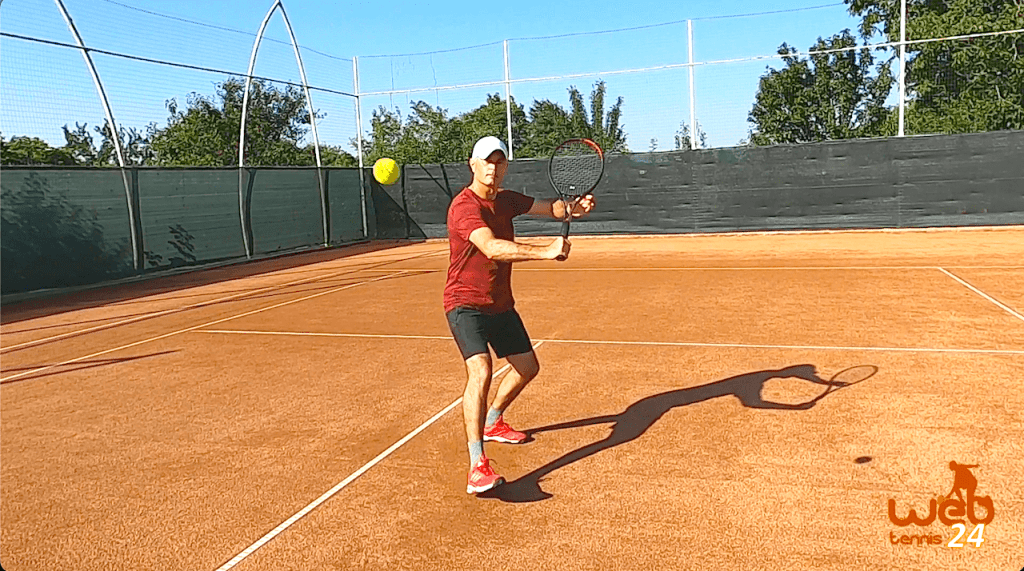
Viewed from the side, the backhand volley should show a compact arm path, contact in front of the torso, and a short push through the ball. Avoid leaning back at contact; instead, transfer weight forward through the front leg.
Simple drills to accelerate progress
- Shadow volleys: Without balls, practice the five-step sequence slowly, then increase speed. Repeat 2 minutes per session.
- Feed and block: Have a partner feed low-paced balls and focus on blocking the ball back with a short punch.
- Target boxes: Place cones in the service box and aim volleys to specific targets. This trains control under pressure.
- Short-court rally: Play points from the service line to force quick volleys and reinforce recovery.
Common errors and quick fixes
Mistakes happen. Here are the most common ones and immediate corrections for this backhand volley tennis lesson.
- Too big a backswing: Fix by rehearsing the split-step to racket-out sequence. Keep the swing to a short push.
- Leaning back: Step forward into the shot and push off the front foot at contact.
- Late preparation: Watch the opponent’s contact and practice split-step timing until preparation starts earlier.
- Floppy wrist: Maintain a firm wrist at contact; practice punching a small target to build stability.
Putting it into match play
Start using this backhand volley tennis lesson in low-pressure situations. Begin points where you know a volley will come, like serve-and-volley drills or doubles practice. As confidence grows, use it in regular points. The goal is automatic, low-effort control at the net.
Quick practice template (30 minutes)
- 5 minutes warm-up and shadow volleys.
- 10 minutes of feed-and-block drills focusing on contact and racket control.
- 10 minutes target volleys and recovery work.
- 5 minutes short-court points or cool-down shadow reps.
FAQ
What grip should I use for the backhand volley?
Use a continental grip. It allows quick adjustments and keeps the racket face versatile for both forehand and backhand volleys. Avoid switching grips at the last moment; keep the continental grip as your default at the net.
How do I time the split step correctly?
Time the split step to the opponent’s contact. The hop readies your legs to move in any direction and prevents late reactions. Practice by having a partner strike the ball repeatedly while you focus only on landing the split step as they make contact.
Should the backhand volley have a full swing?
No. The backhand volley is a short, decisive action. A full swing increases the chance of errors and makes timing harder. Think punch, not swing.
How can I practice alone?
Use a ball machine (our favorite is the Pongbot Pace S Pro) to feed volleys. Shadow practice and target drills without a ball are also effective. Focused repetition of the five steps will transfer to live situations.
How long until I see improvement?
Consistent practice – short daily sessions focusing on these five steps – can lead to noticeable improvement in a few weeks. Quality beats quantity: focused reps with deliberate technique checks accelerate progress.

0 Comments