
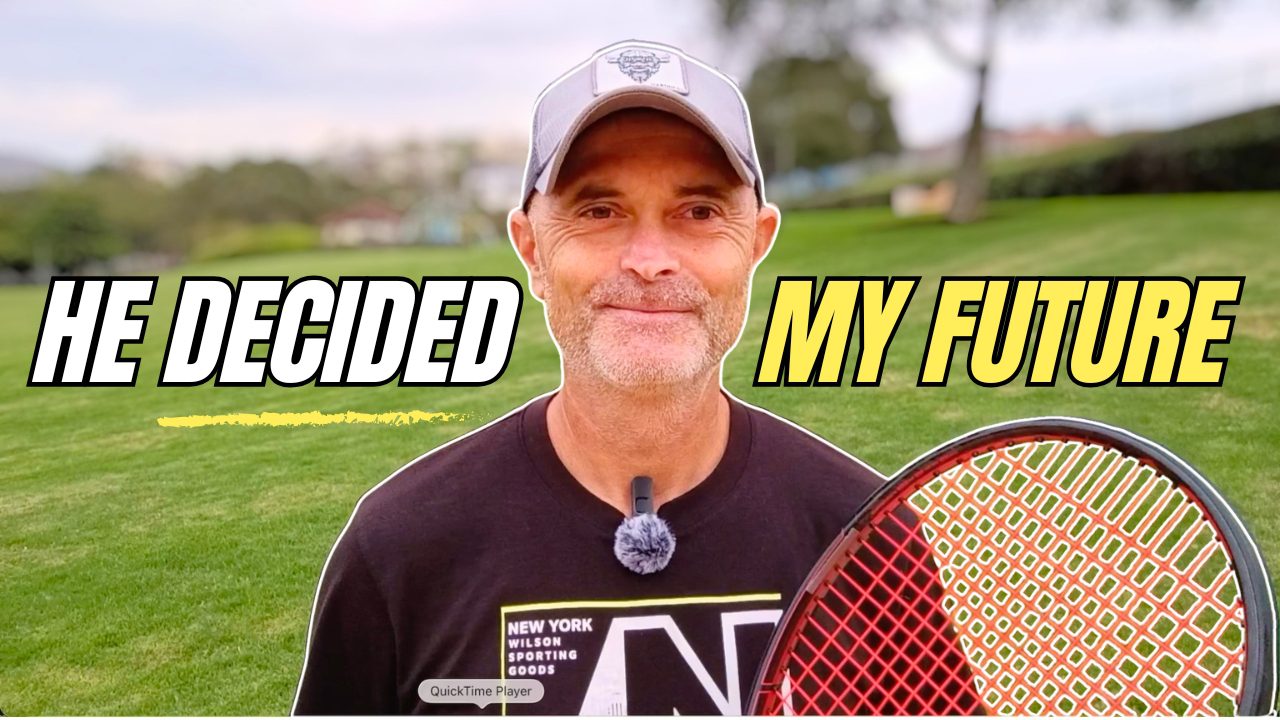
What 23 Years of Tennis Coaching Actually Taught Me
If you are thinking about tennis coaching, you probably have one of two feelings. Either you are excited, but overwhelmed, or you have the skills and the passion, yet you are worried you do not “know enough” to coach.
I get that question constantly. People email me asking where to start, what it takes to become a tennis coach, and what coaches actually learn after 20 plus years on court, off court, and now online.
Here is my story and the lessons that stuck. Not the theory you find in certification manuals. The real lessons you only get by teaching, failing, adjusting, and helping different kinds of players day after day.
How It Started: “You are going to be a tennis coach”
When I was 12, my father put a racket in my hand and told me: you are going to be a tennis coach.
I did not ask what that meant. I just did what kids do when someone believes in them. Tennis became our daily routine, and my father’s teaching method was simple, even rough. No big technical explanations. Warm up a little, then play matches, again and again. Most days, we played two or three sets. Often, I was beating my brother, even though we were not being taught technique the way you would expect today.
At the time, I did not understand what my father was building. He was training competitiveness, rhythm, and confidence. He was also giving us something that looked like freedom compared to office life. He had a vision that one day we would work outside in fresh air, stay active, and teach people who wanted to learn.
In his mind, that was one of the best jobs you could have.
What I Learned About Coaching Kids: Start in groups, not privates
One of the clearest tennis coaching lessons I learned over the years is about how kids should start. Parents often think: if my child is serious, they need private lessons.
My advice is the opposite.
Do not start tennis lessons with privates.
Start in a group environment where kids see their peers competing, rallying, and enjoying tennis. Group lessons matter because kids learn faster when they feel part of something. They also become more motivated when they are not the only beginner on the court.
Here is my general guideline:
- For every private lesson, the player should have at least two group lessons.
- Bring them to the coach once or twice when you need specific technical corrections.
That is how you combine the best of both worlds: social learning and real feedback.
My Coaching Philosophy: Teach fun immediately, then build the fundamentals
When I teach beginners, I do not delay fun.
I like to introduce game-based learning and rallies as soon as possible. Even in the first lesson, I include at least one fun game. The goal is not to “avoid technique.” The goal is to prevent the technique from becoming boring and fragile.
Kids do not need lectures. They need experiences that make them want to repeat the movement correctly.
The 5-Step Learning Order: Technique, Consistency, Placement, Spin, Power
As a tennis coach, I developed a simple framework that helps me structure learning. It goes like this:
- Technique
- Consistency
- Placement
- Spin
- Power
Technique comes first because a player needs a foundation. But technique is not everything. After that, consistency is what keeps improvement alive. Then placement gives the player control. Spin adds variety and a modern tennis identity. Finally, power is built on top of the skills that already work.
Even when I was learning as a teenager, I learned a lot “by feel.” Hitting with friends taught me what it feels like to struggle. That matters. Coaching is easier when you remember what it felt like to be a beginner.
Starting a Coaching Career: I had passion, but I did not know how to coach
By the time I was 14, I was already helping friends learn. But the real “coach moment” came when I was 19.
After high school, I tried to enter a sports college and failed two times. One part of the test was a 100-meter sprint, and I was terrible at sprinting. It hurt to fail, but it forced me into a new path. I studied kinesiology, and while I waited for another attempt, I started coaching tennis.
We approached schools, got permission to announce a tennis program, and recruited kids ages 7 to 12. I had no idea how many kids would show up. I had one indoor court, and it was cold, so we played indoors. About 20 to 25 kids showed up.
My father asked me, “Do you know what you are doing?” I did not. I did something practical instead. I went to the library and borrowed two books. I studied for only a few days, focusing heavily on the first lesson.
And this is a key coaching insight:
The first lesson is the first impression. If you want tennis coaching to “stick,” make the first session fun. Do not talk too much. Do not overload beginners. Prepare two or three beginner-friendly games and let them feel successful quickly.
That experience also taught me something important. Kids will forgive a lot, as long as you respect their energy and make tennis feel safe and enjoyable.
Moving to the USA Changed Everything: Skill opens doors
After studying kinesiology, I moved to the United States. I had coaching experience, but I still did not imagine I would become a full-time tennis coach. I thought I was mainly there to train and enjoy tennis.
Then I played at local clubs, networked, and kept improving. I learned one major lesson that applies to any career:
Every person needs at least one skill they are good at.
Do not settle for “okay.” Being above average or great creates opportunities. In my case, being a strong tennis player helped me connect with wealthy and educated doubles partners. They invited me to lunches and conversations where I could listen and learn about business and life.
That is not only a tennis lesson. It is a coaching lesson too. When coaches are credible, doors open. When coaches genuinely improve players, relationships become long-term.
Certification and the “American way” of coaching
After my early opportunities, I realized I needed to coach professionally in the American way. In Romania, my background was different. Coaching often had a tough, even harsh mentality. Yelling was common. Coaches did not always behave respectfully or gently.
In the US, that approach does not work the same way. So I pursued certification. At around 27, I became certified.
Certification helped, but the biggest change still came from mentors and daily teaching experience. For me, one of the most valuable steps was this: learn by volunteering.
How to learn tennis coaching faster: volunteer and shadow great coaches
When I wanted to learn the best coaching style around me, I did not sit and wait. I went to a large tennis club and spoke to an established coach.
I asked to watch him teach and offer assistance with junior groups. I volunteered at first, and later he offered to pay me because he saw I was dependable and serious.
If you are starting in tennis coaching, volunteering is the shortcut.
- Find the best coach in your area.
- Ask if they need help or if you can observe.
- Show up early, be respectful, and learn their communication style.
- Pay attention to how they explain, demonstrate, feed balls, and manage energy.
Money is useful later. Early on, time and attention are worth more.
What truly makes a great tennis coach: people, knowledge, and adaptability
After 23 years coaching on court, off court, and online, my list of what matters most is consistent:
1) Be a people person
You can be the best technician in the world and still fail if you cannot connect with students.
- Smile when students arrive.
- Make them feel welcome immediately.
- Dress well and smell nice.
- Respect people’s time and families.
- Avoid gossip.
- Learn the right balance of talking. Too much is bad, too little is also bad.
People trust coaches who feel safe, respected, and organized.
2) Know your stuff, then keep studying
Read, research, and practice. Early on, you focus on explaining and demonstrating technique. Later, you teach footwork, tactics, strategy, and the mental side of tennis.
But also test what you teach. If you cannot execute a shot yourself, you will struggle to diagnose your students.
3) You do not have to be a superstar, but you should be a tennis player
Being a good player helps a lot, but it does not have to mean you are top-tier professionally. Knowing how shots feel, where they break down, and what “struggle” looks like makes you a better coach.
4) Structure your lessons and adapt to the individual
One of the biggest coaching mistakes beginners make is teaching everyone the same way and at the same pace.
Players are unique. Some kids are naturally athletic. Some have strong hand-eye coordination from other sports. Some have never played sports much at all, and they struggle simply with contact and timing.
A great tennis coaching approach adapts the method, pace, and drills. You can still follow a structured path, but you must adjust the delivery.
Why coaching became online for me (and why groups still matter)
Eventually, I moved back to Romania and built a platform to share drills and coaching structure online. Coaching one-on-one or in small groups is great, but online allows you to reach more players and coaches at scale.
I still believe in group structure, though. Even with groups, I do not like too many players. I prefer small groups, because coaching details get lost when the group is too large.
Essential tips to start with tennis coaching today
- Start in groups, for kids, whenever possible.
- Introduce games early so beginners feel success from day one.
- Use a clear progression: technique, consistency, placement, spin, power.
- Volunteer to learn by shadowing a stronger coach.
- Do not wait until you feel prepared. You will never feel fully ready. Improvement happens on the court, with students.
- Adapt your pace to each learner’s coordination and athletic base.
FAQ
Do I need certification to start tennis coaching?
Certification is helpful, especially if you want to coach in clubs that require it. But you can still start learning by volunteering, assisting, shadowing, and teaching informal group sessions while you pursue credentials. The key is gaining real teaching experience, not only studying.
What should I do for my first lesson with beginner kids?
Keep it fun and simple. Prepare two or three beginner games, introduce a basic rally concept quickly, and avoid overwhelming technical talk. Focus on confidence first, then build technique and consistency gradually.
Is it better to coach kids privately or in groups?
In most cases, groups work better for beginners because kids learn by seeing peers and staying motivated. A good approach is group lessons first, and then private sessions occasionally to correct specific technique issues.
How do I structure progress as a tennis coach?
Use a foundation order: technique, consistency, placement, spin, and power. Within that structure, adapt drills and pacing to the student’s coordination and athletic background.
Do I need to be an excellent tennis player to teach well?
You should be able to execute the skills you teach, and you should understand the struggle of learning. You do not need to be a top professional, but you need enough playing experience to demonstrate and troubleshoot effectively.
Closing thoughts: start anyway
If you are serious about tennis coaching, here is the truth I learned the hard way: you will never feel fully prepared. There is always more to learn.
So start with what you have. Volunteer. Teach small groups. Use games. Study and adapt. Let your students’ needs guide your coaching process.
That is how you become good. Not by waiting for confidence. By earning it, one lesson at a time.
My Tennis Coaching Courses |
|
|
| How to Teach Tennis >> |
0 Comments