pongbot-official-partner-webtennis24

First AI Tennis Robot

use code WT24 for a 5% discount
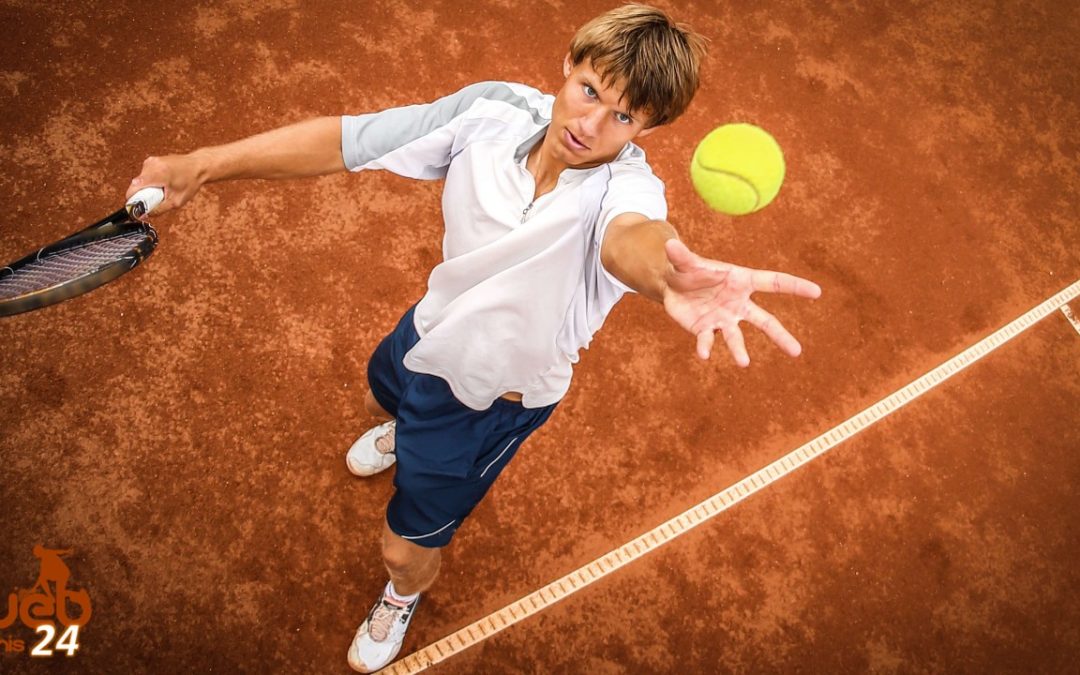
How to Avoid Choking… When Serving

How to Avoid Choking… When Serving

One of my fellow coaches recently shared a story with me.

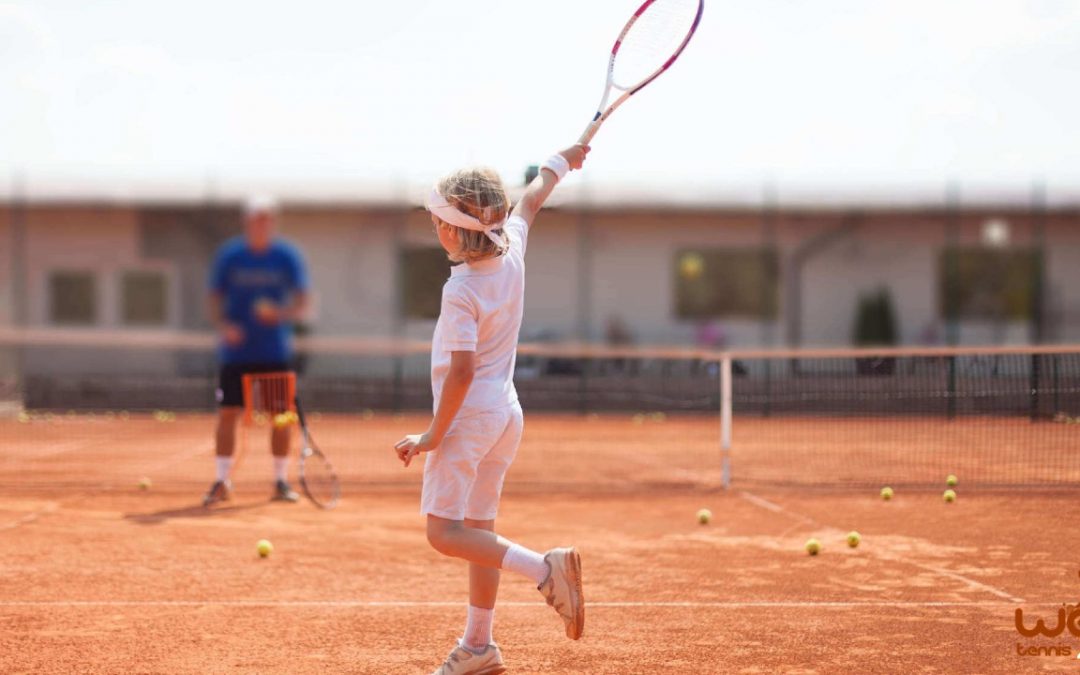
He told me how he is teaching a young man, whose serve is great during his lessons when there is no receiver at the other end. During the tennis matches though, when there is the pressure of having somebody return the serve, his student often chokes (misses a lot).
He wanted to know what he could do to help him…

My advice (which I’m hoping you will find useful too) was the following:

  • His student is probably too concerned with what the opponent’s reply will be. He’s anxious about the return and therefore he cannot relax when serving. Therefore, he must be taught to focus (when serving) on things like breathing, spin, and visualization (seeing the ball go to a certain spot inside the service box, etc.) – this would help him take his mind off of his opponent.
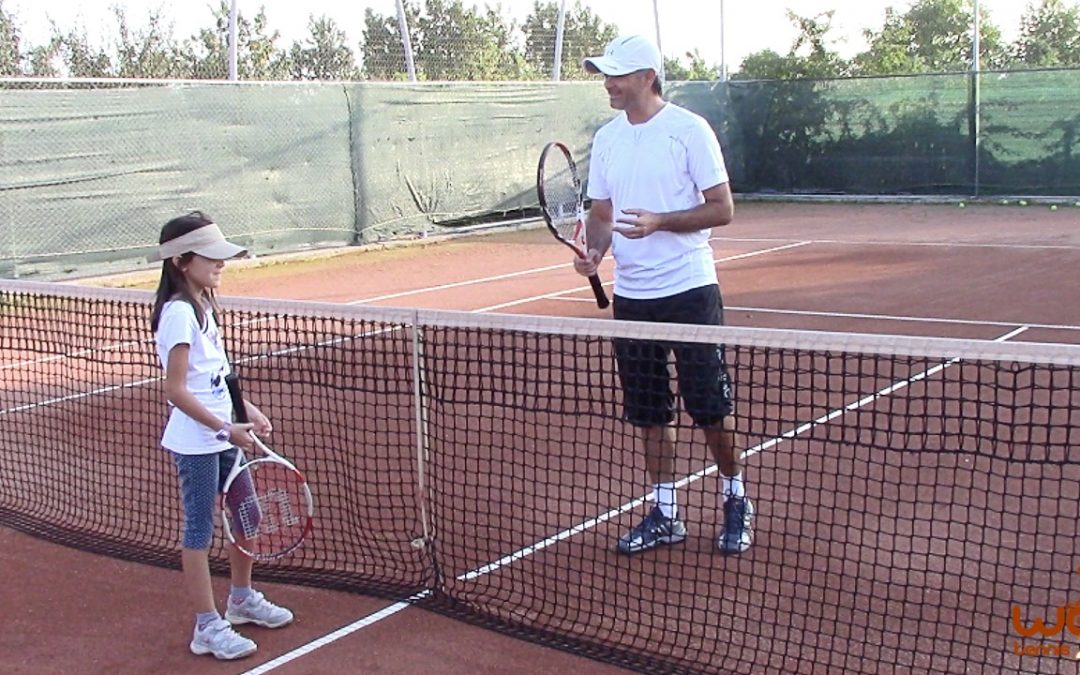
  • He should also have somebody return his serve (e.g. his coach, or practice partner) most of the time he practices it. Of course, his coach will have to stay next to him and correct the serve technique most of the time, but they should change it up sometimes. For example, the student can hit 20 serves with the coach next to him, then 20 serves with the coach returning the serves – in that case, the student should be doing it until the coach/practice partner returns 20 balls; and so on. My overall point is that every time someone works on their serve, they should do some pressure practice of it too.

Set and achieve your tennis goals with our comprehensive training. Join Ultimate Training for Tennis Players and unlock your success!

Cosmin Miholca

Cosmin Miholca

Certified Tennis Coach

Check out my work at WebTennis24 where I share with you my best video tennis lessons, drills and tips for players, coaches and tennis parents.

Outcome-Oriented Tennis Practice

Outcome-Oriented Tennis Practice

“Whatever you do, don’t say anything to me about my serve. If I think about it, I’m in trouble.” Andy Roddick said this when he first met Patrick McEnroe, his Davis Cup coach.

In a tennis world where the emphasis is on the technical aspect, there is one area that very few tennis players dare to adopt – and it pays off big time for their game. That is… letting things happen naturally. 

What I’m about to tell you is directed to your tennis improvement by getting you out of the normal and popular tennis culture. 

As a tennis player and coach, I have been experiencing many frustrations and successes in my own lessons with all kinds of players. 

One thing that’s certain is that all players are different and you cannot teach the same technical aspect to everyone. I have to pay very much attention to what works for each of my students individually.

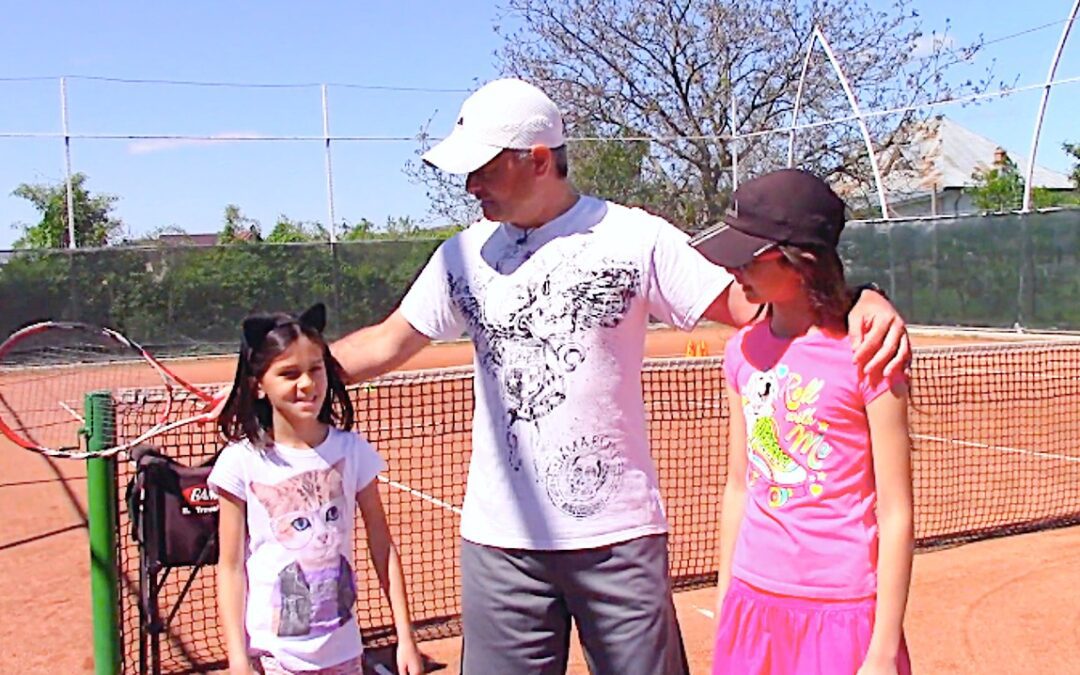
For example, in teaching my two daughters, Cezara (8 years old) and Bianca (6 years old)…

Cezara, on the serve, prefers the pinpoint stance (when during the toss the back foot joins up with the front foot) whereas Bianca likes the more traditional platform stance (when both feet are not moving during the toss and stand fairly close to each other). 

Cezara’s dominant elbow must elevate during the forehand ground-stroke preparation to avoid opening her racquet too much during contact; Bianca has a natural way of controlling the racquet face at contact without having to focus on the set-up. And so forth…

But my ultimate point for this letter is that players should be allowed to forget about all the technical overload and focus on the outcome. 

When serving, the outcome could be just getting the ball in (for beginning players), sending the ball with lots of slice or topspin, or placing it powerfully in the corner of the service box. 

As Andy Roddick did when he was a junior – he got fed up with all the technique that was imposed on him when serving and then one day he just threw the ball up and hit it as hard as he naturally felt. And it worked great. 
Just imagine if someone would have tried to change his serve technique!
Or if some coach would have told Nadal to not hit his forehands with that looping finish! (he was so fortunate to have such an open-minded coach like his uncle Toni)

You can only imagine what damage you can do when you want to impose one kind of technique on every single player that you coach. 

We should always be paying attention to what works for each player. 

As a tennis player, you should listen to your body and how it reacts to every stroke you execute…

In my teachings, I get the best results when I give my kids tasks that are goal-oriented. Examples:
– hit 40 serves in
– send 25 forehands cross-court
– rally 50 balls over the net with your partner
– etc.

When goal-oriented tasks are given, the mind and body work together to accomplish them successfully.

Next time you go to practice, forget about the technique. Instead, focus on what you want to accomplish: is it more slice on your serve? is it more power on your backhand? more penetrating volleys?

Then here’s what you need to do: 
– before you start hitting the balls visualize (or tell yourself) what you want: more power, more spin or to get it in
– let your body loose and the racquet do its work
– clear your mind of any technical thoughts and keep in there only the outcome you aim for (more power, spin, placement, etc.)

When you practice without the technical details cluttering your mind you will see better things happening.

Tailor your training to your specific needs with our customizable ball machine drills. Join the Best Ball Machine Tennis Drills program and create your perfect practice!

Cosmin Miholca

Cosmin Miholca

Certified Tennis Coach

Check out my work at WebTennis24 where I share with you my best video tennis lessons, drills and tips for players, coaches and tennis parents.

Try Serving With a Backhand Grip. Here’s Why…

Try Serving With a Backhand Grip. Here’s Why…

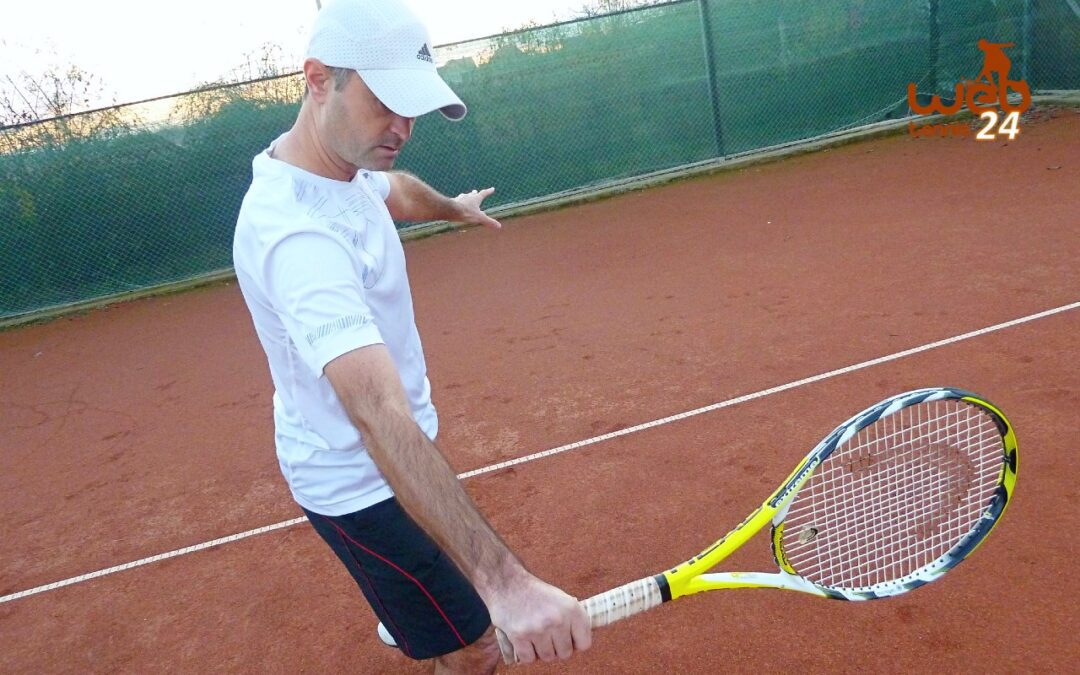
Most teaching resources tell you to serve with a continental grip but if you want to add more spin to your serves try moving your hand on the grip slightly to the left (if you are a right-handed player)…

This type of grip (also called Eastern backhand) will allow you to hit better kick serves. Of course, you will have some trouble with the flat serve and you might lose some pace, but you will gain the necessary spin to improve your serve consistency.

Many players choose to hold the racquet with a continental grip on the first serve (for power) and then switch to the backhand grip for their second serve.

Note: A continental grip is holding the racquet (bottom towards you, tip points away) so that it feels like you could hammer a nail with the edge of your racquet. Your hand is on top of the bevel 1 of your racquet (the side that extends the racquet edge).

Personally, I prefer to use an Eastern backhand grip (pictured above) on both my first and second serves. On the power serves, I let my hand be loose and on top of bevels 8-1 for more penetrating contact through the ball; but on the second attempt, my hand is more toward bevels 7-8, which helps me with brushing over and/or the side of the ball for extra spin.

I recently watched an instructional tennis course with Patrick Rafter where he mentioned he used to kick serve on both – first and second. Obviously, as a serve-and-volley player as he was, this kind of serve was necessary. For many players though, when they apply this tactic (heavy spin on both serves), their first serve consistency is greater and as a result, they don’t have to go through the pressure of hitting second serves too often.

This Eastern backhand grip approach on the serve will give you peace of mind that your consistency will be greater. Your opponents will have to worry about controlling your heavy spin and, mentally, you will be more relaxed knowing you don’t have to deal with too many second serves.

Learn tennis techniques with crystal-clear explanations and visual aids. Join Visual Tennis Lessons program and simplify your learning journey!

Cosmin Miholca

Cosmin Miholca

Certified Tennis Coach

Check out my work at WebTennis24 where I share with you my best video tennis lessons, drills and tips for players, coaches and tennis parents.

A Fatherly Advice

A Fatherly Advice

I’d like to address one of the things that have happened to me (I’d say, often) and I am sure you could relate to this as well…

You watch a tennis match between two players and think that they are playing great: long rallies, a nice variety of shots, etc. You can’t help but get the feeling that those guys are so much better than you. Then one day you meet one of them in a tournament match… And you beat them! That makes you wonder: “What has happened? I was certain that this guy was much better than me based on how they looked playing against somebody else.”

One thing is for sure: only because somebody plays very well against a certain opponent does not mean they will play well against you too!
We are all different and our style of play can either help or impede our opponents.

We often tend to underestimate our own potential and therefore we think others are better players when, in fact, they are not.

My father once told me this before a match I was nervous about: “Don’t worry about how good he is, let him worry about how good YOU are!”

Now, THAT is one attitude you should step on the court with.

Cosmin Miholca

Cosmin Miholca

Certified Tennis Coach

Check out my work at WebTennis24 where I share with you my best video tennis lessons, drills and tips for players, coaches and tennis parents.

I Am a “Pushy” Parent

I Am a “Pushy” Parent

The idea to write this article came to me as I was watching a YouTube video of a 9-year-old tennis “prodigy” girl
This particular video was the last drop in the bucket for me regarding a debate that is kind of taboo for a lot of parents and coaches.
If you are a tennis parent or coach you might want to stick with me and read this article all the way.

For those who don’t know me, I am a tennis coach and I have been teaching tennis since… I was a kid. I have always loved teaching and sharing my knowledge with anyone willing to learn and improve.
But this is not about me. This is about a debate that seems to be a sensitive subject for many. It is about whether parents should PUSH their kids to pursue a certain sport…

It’s a great scenario when your child loves a sport, let’s say tennis, and they are motivated to improve and cannot wait to get on the tennis court.
But there is also a scenario in which you, a parent, love a certain sport, let’s say tennis :), and you see your child has no drive, no desire to practice the sport, even though they have talent and you know that by practicing the sport they will benefit tremendously later on in life.

During my tennis teaching career, I have met and taught countless adults who confessed that they wish their parents would have “pushed” them to stick with tennis when they were kids. They are aware that when they were young they had other hobbies that were more comfortable for them like hanging out with friends, watching TV, playing video games, etc. Those distractions did not account for a more enjoyable life later on.

Now, as a parent myself, I am put in a situation where I have to guide my two daughters (7 and 5 years old) on whether they should pick up tennis or not.
As a tennis coach, I would hate to have any of my daughters 20 years from now ask me why I did not teach them the sport I am so knowledgeable about.
I would hate to know that I have the necessary skills to give my children the gift of a healthy habit (playing tennis) and not do it.

My problem is the following (and I am sure a lot of parents and coaches have this dilemma): my kids are not “crazy” about playing tennis!
My kids would rather just hang around with their friends all day, watch TV, and/or indulge in short-term fun activities like playing online video games… As a parent, I am aware that a few years from now they will find these activities do not provide a healthy lifestyle for them.

So the BIG question is should I, as a parent and a coach, step up and “push” my kids into playing the sport I am very proficient in?

Before I give you MY answer I would like to give YOU some arguments:

– I’ve seen and heard the opinion of many parents stating that kids should be given options and let them choose.
I think it is a very wise decision. But what if… while you give your child the many options, you and your child, actually focus on at least one sport that you are sure your kid will benefit from in the future? Something like running, swimming, basketball, tennis, surfing, ice skating… These are sports that they can practice for the rest of their life. These are sports that will allow them to stay in shape even after the age of 30, 40 or older. What if we “push” our kids to learn a sport they can practice for the rest of their lives?
As much as I think playing American football, soccer, or baseball is great and teaches them discipline, hard work, and team play, these sports are kind of “dead” for them (as far as the possibility of continuing practicing them) after the age of 25…
On the other side, if we just let kids experiment with all the sports hoping that one day they will stick with one, they might end up knowing a little bit of every sport but not be good at any one…

– Think about how you were at the age of 7, 8, or 9… Were you aware of what would be good for you in ten, twenty, thirty years later? No, of course not. Therefore we, as parents, must present the future to our kids and describe the importance of doing sports and activities that could have an impact on them later on.
Even though Johnny loves to play online games, that will not help him be more sociable, driven, and outgoing in the future.

Having said that here are my opinions in regard to providing our children with skills that would help them become successful later on in life:

  • Every kid should be given the opportunity to learn at least one foreign language.
  • Kids should also learn how to dance (how many times have you gone to parties or social gatherings and envied the ones who were able to move gracefully to the music?).
  • Every kid should, at some point, know how to defend themselves – get them into some self-defense classes.
  • Children should be given the opportunity to learn how to play at least one musical instrument (piano, violin, guitar, etc.).
  • Every kid should practice and be good at one sport. Why? Because in order to be good it takes dedication and perseverance. It is easy to begin a sport or anything else and… quit. But if we, as parents, encourage the kids to stick to a sport, they will learn that whatever they do and work hard at will become a habit and great things happen when we persevere.

With this said, I think that I should “push” my kids to learn tennis and have them learn from my knowledge to become as good tennis players as they can be. I am sure that whether they decide to stick with tennis or not, the skills they will learn from practicing and persevering in tennis will help them in life later on.
And I am sure of one thing: my kids will not tell me “Hey Dad, how come you did not teach us tennis?”
As I do this, I want to make sure that my kids learn a foreign language, play the piano (or guitar), take self-defense classes, and take dance lessons too.
Everything else… is up to them.

I would love your opinion on this. Please share this article and contribute with your feedback… Thank you.

Spend quality time with your child while teaching them a valuable sport. Enroll today in My Daddy / My Coach program!

Cosmin Miholca

Cosmin Miholca

Certified Tennis Coach

Check out my work at WebTennis24 where I share with you my best video tennis lessons, drills and tips for players, coaches and tennis parents.

Tennis Tips: Focus On the Finish

Tennis Tips: Focus On the Finish

The tennis stroke techniques can be divided into three major elements: preparation, contact with the ball, and finish (follow-through).

The last part (the finish) can give you a lot of clues about somebody’s stroke: the spin imparted on the ball, acceleration (power), the tension in the arm, the direction of the ball, etc.
Coaches tell you to finish in a certain way for deeper ball penetration, cleaner contact, or relaxation of the arm through the stroke. But what is the stroke finish all about?

In my teaching lessons, I have noticed that many consistency-related issues can be solved just by fixing the finish on the stroke.
You see, so often coaches or players look at contact or body movement to solve tennis problems, but according to my observations, tennis can be a lot easier if we fix one very simple area of our strokes: the way we finish.

Here are my arguments for this statement:

1. Since contact with the ball is done in such a short period of time, our mind is not capable of controlling the body and racquet during that time (it is our ingrained muscle memory or subconscious mind that takes over the contact). What we can control is the way we finish the stroke: “holding the finish”.

There is a strong connection between the contact and follow-through – if contact is done right, the proper finish follows or vice versa: if we focus on a long, relaxed follow-through (the part we can control) then we’ll have a clean, smooth contact before it happens.

2. A long follow-through shows a relaxed arm done at contact with the ball. A relaxed arm during the swing translates into power and control of the ball.

We all know that we play our best tennis when we are relaxed.
So focusing on a long follow-through on the strokes will help us loosen up through the stroke.

3. When we play a match and feel tense or have “one of those days” when nothing good comes out of our strokes, there is a very easy fix to those: exhale at contact and finish your strokes.

When we are mentally tense (e.g. fear of losing the match, somebody important to us is watching the match, egos, etc.) our body muscles contract too; that makes our stroke swing shorter which, as a result, slows down the racquet head speed and affects the ball depth.

I have noticed remarkable progress in my students’ strokes only when I adjusted their follow-through:
– a kick serve cannot be done without taking into consideration the racquet path on the same side of the body with the dominant arm after contact, or…
– the slice serve to have the hitting face more or less facing the opposite court after the contact adds to the spin effect even after the impact has been made;
– a forehand ground-stroke finish with the hand knuckles close to the non-dominant side’s ear can make the contact a lot smoother and cleaner when teaching young or beginning players.

Take these tips with you next time you go on the tennis court to practice or use them to relax in a tennis match.

Cosmin Miholca

Cosmin Miholca

Certified Tennis Coach

Check out my work at WebTennis24 where I share with you my best video tennis lessons, drills and tips for players, coaches and tennis parents.

“Silly Balls” Tennis Drill

“Silly Balls” Tennis Drill

Here is an exercise idea that I call Silly Balls, which is great for developing ball tracking, quick reaction, and feel…

As a coach, I sometimes carry with me a basket containing mixed types of balls: some bouncy (new or old), some “dead” (that lost their inside air), some “spongy” (the oversized sponge ones for little kids), etc. This basket I take out on the court when I want to work with my students on the quick reaction, footwork, and feel.

I feed those mixed balls to my students and challenge them to hit all the balls over the net. The benefit of this drill is making the player get out of their comfort zone by not having to deal with the same bounce and speed of the ball all the time. They also develop a quick first-step reaction by having to adjust quickly to the bounce and depth of the different types of balls.

If you are a coach or parent of a tennis player, try doing this drill at times, but make sure they warm up very well beforehand.

Foster a love for tennis in young players with our engaging and enjoyable drills. Join Best Tennis Drills and Games for Kids and create a positive and lasting experience!

Cosmin Miholca

Cosmin Miholca

Certified Tennis Coach

Check out my work at WebTennis24 where I share with you my best video tennis lessons, drills and tips for players, coaches and tennis parents.