pongbot-official-partner-webtennis24

First AI Tennis Robot

use code WT24 for a 5% discount
Kids Tennis Guide: Ball Types & Court Sizes by Age

Kids Tennis Guide: Ball Types & Court Sizes by Age

The Complete Guide to Kids Tennis Balls and Court Sizes

This is a subject that tennis parents ask me sometimes: what type of tennis balls should their child play with and whether they should play on a full-size court or a smaller one.
I personally encourage the idea of children to progress from slower to faster balls for the following reasons:
– slower balls let them swing harder without being afraid of missing deep (biggest fear)
– they have more time to prepare for the shot (good technique)
– promotes longer rallies.

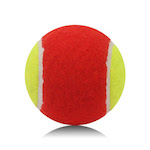
tennis ball for red level kids play1. Red Balls – these are the slowest and largest of the balls and are recommended for little children aged 4-7. Along with the red balls, players can also use sponge balls which are both oversized, and about 75% slower than a regular adult tennis ball, giving beginning players time to prepare for the shot and add a big swing without being afraid of missing deep.
The court size that the red balls should be used is a small one (36 feet long). Beginning players using red balls or playing red ball tournaments have the net placed along the center service line or between the service line and baseline and the points are played between the doubles lines.

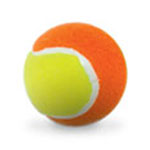
orange ball for kids tennis2. Orange Balls – are about 50% slower than regular tennis balls and are recommended for children between the ages of 7-9. Used on 60×21 feet tennis court (show how the lines are positioned: baseline is 9 feet / 3 meters inside the regular baseline; singles sidelines are 3 feet / 1 meter inside the regular sideline)

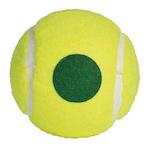
ball for green level kids tennis3. Green Dot Balls – are about 25% slower than regular tennis balls and are recommended for kids who are 9 or 10 years old.
Those who play green ball tournaments use a full-court, are fast enough to cover larger areas and are almost ready to move up to a regular yellow tennis ball which bounces higher and moves faster.
They are also called transition tennis balls.

adult tennis ball4. Yellow (Adult) Tennis Balls – should be used by children who are at least 11 years old and my recommendation is that the transition should be done gradually using practice balls that are slower and lower bounce than tournament balls.

It is important to not start the beginning players with balls that the child finds difficult to control in regard to speed and height because they can develop bad habits in order to adjust to the new ball, such as a western grip (to hit high bouncing balls), tight arm (being afraid to not lose control of the ball), poor footwork, etc.
Transitioning from one ball type and court size should be done under careful supervision and the before-mentioned technical aspects should be monitored so that the child’s technique and footwork are not affected.

Are you tired of struggling to teach tennis effectively? Sign up to 10 Lesson Plans / How to Teach Tennis and gain the knowledge and skills you need to succeed!

START BROWSING JUNIOR COURSES

Cosmin Miholca

Cosmin Miholca

Certified Tennis Coach

Check out my work at WebTennis24 where I share with you my best video tennis lessons, drills and tips for players, coaches and tennis parents.

10 Tips to Become a Successful Tennis Coach

10 Tips to Become a Successful Tennis Coach

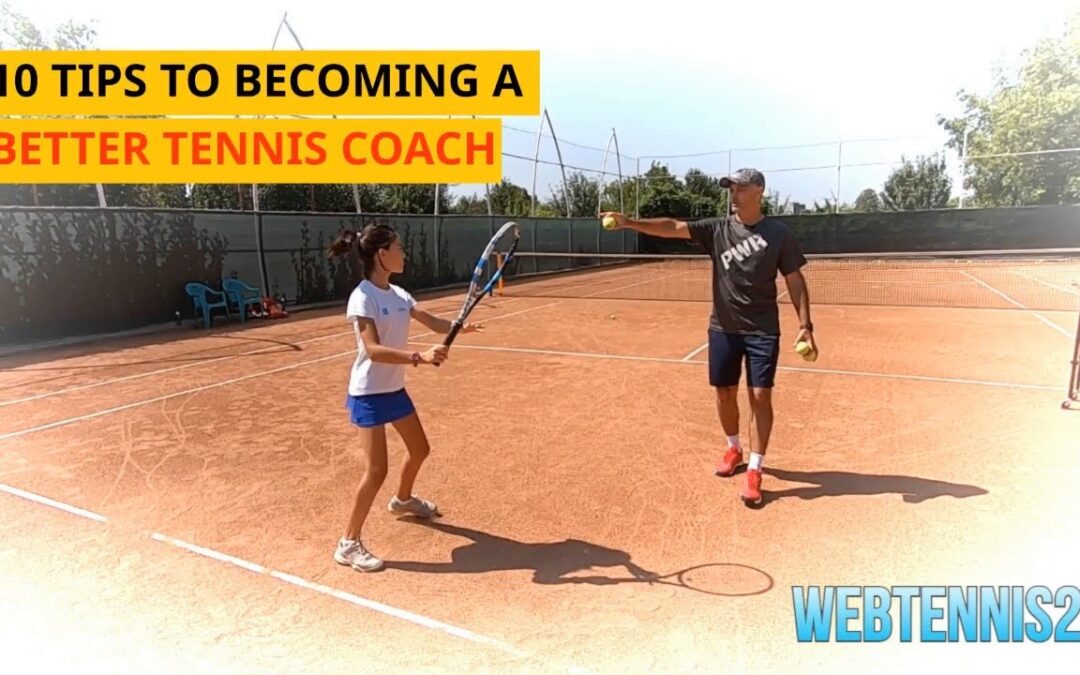
As a tennis coach, your success depends on your ability to connect with your students, earn their respect, and attract more clients. In this article, we will discuss ten tips that will help you achieve these goals and become a better tennis coach.

1. Make eye contact and be approachable
When meeting your students for the first time, or greeting them as they come to your classes, do not wear sunglasses. You should be able to see their eyes, and they should be able to see yours. By taking off your sunglasses and showing your eyes, you will create a good connection with them.

2. Maintain a positive attitude
Your students should not know that you had a sleepless night because of your newborn baby or had a tough lesson with another client. Always reset and put on a smiling face for the next student or class. Keep your attitude positive and show that you are excited to see them every time.

3. Remember and use your students’ names
Learn your students’ names and say them a few times during their lessons. Everyone enjoys hearing their name mentioned, and it shows that you respect and value them.

4. Stay focused during lessons
Never pick up or talk on the phone during your tennis lessons. Imagine that you are a parent who is paying for their child’s lesson, and you see the coach talking on the phone instead of interacting with and instructing your child. Always give your undivided attention to your students during the time they employ your services.

5. Be punctual and respectful of your students’ time
Never be late for your lesson; otherwise, it should be free for your client. If you know you will be late, find a way to let your student know ahead of time. Always arrive at the court at least 15 minutes before your lesson to get the court and any teaching aids that you will be using for the class ready.

6. Avoid negative talk
Do not gossip or talk negatively about your other clients, fellow coaches, or competing tennis clubs/organizations. Negative talk will reflect on you, and your clients will associate what you say with the feeling they have toward you. Keep your actions and words as positive as possible.

7. Show appreciation
Show respect for your tennis students, even those who have stopped taking lessons with you. They can be great ambassadors to promote your services to their friends and families.

8. Organize get-togethers
Offer free lessons to those who cannot afford them, and organize weekly get-togethers where your students and their friends can play together. It is an excellent way to meet their families and spread the word about you and your services.

9. Present yourself professionally
Always look clean and smell nice. As a coach, you may need to rally with your students, so it is important to have spare clothes and a way to take care of your appearance before and after each lesson.

10. Keep learning and sharing knowledge
Find ways to constantly improve your tennis knowledge about the latest teaching techniques and share what you know with your younger fellow coaches. Be available to share your experience, not only with your students but with their parents or anyone who is willing to learn.
Knowledge should not be kept a secret. It should be shared so that others benefit from it.

By following these ten tips, you can improve your coaching skills, connect with your students, gain their respect, and attract more clients. Keep these tips in mind, and you will become a better tennis coach.

Are you tired of struggling to teach tennis effectively? Sign up to 10 Lesson Plans / How to Teach Tennis and gain the knowledge and skills you need to succeed!

Cosmin Miholca

Cosmin Miholca

Certified Tennis Coach

Check out my work at WebTennis24 where I share with you my best video tennis lessons, drills and tips for players, coaches and tennis parents.

Avoid THIS if You Want to Teach Tennis to Your Child

Avoid THIS if You Want to Teach Tennis to Your Child

When I decided to teach my (then) 4, respectively 5-year-old daughters how to play tennis I was both excited and terrified at the same time.

I had already enough experience playing and teaching tennis for almost 30 years, but putting all my knowledge on the line to help my two daughters fall in love with the sport was a major job for me.

As a tennis coach, you can encounter a lot of pressure when it comes to teaching your own children.

Despite that, after a serious discussion with my wife, we have decided that nobody would ever put more passion into teaching our daughters as much as I would as a parent and tennis coach.

BUT… there was one step that had to be carefully planned:

How to make my kids take me seriously as a coach and change their perception toward me from the “fun daddy” to… “coach daddy”?

Up to that point, I was the daddy who was coming home and they would jump on his back, go for bike rides, go to the beach, read with them, and have fun.

That was all good in the beginning when we began to transfer those fun activities onto the tennis court, but at some point we had to ease into the technical aspects of the tennis strokes and learn that tennis requires some serious moments when repetition and certain focused activities are not as entertaining as the games my daughters were used to playing with me.

Something had to be done. Something that would get my daughters to ask me to teach them how to play tennis and allow me to introduce them to the mechanical aspects of tennis strokes and footwork.

After careful analysis and long discussions with my wife, we both agreed that the best solution to have our daughters be willing to learn tennis from me would be to enroll them into group classes under the guidance of another tennis coach.

Why?​

We figured that by being enrolled in group classes, our two daughters would see other children playing and enjoying tennis.
They will see other children learning, executing the strokes technique, and paying attention to a coach’s instructions.

My daughters, in this way, got introduced to tennis by joining other children of their age and observing how others behave in a tennis class.

That was a turning point! ​

My daughters, soon, decided to allow me to teach them not only the technical aspects, but they wanted to excel by practicing more only to get better and eventually participate in competitions.

Conclusion:​

If you are a tennis parent, don’t try to teach your children yourself… in the beginning!
Allow them to learn by participating and observing other kids of their age, first.
Only after they get introduced to tennis together with other children will they be more open to learning and working hard… just like they saw other kids doing.

If you want to learn a step-by-step method and see how I taught my two daughters to play tennis from the ages of 5, respectively 6, up to junior years, check out the My Daddy / My Coach video series.
You’ll see live and full tennis lessons (each about 45-65 minutes) in which I share all my tennis knowledge in teaching my daughters how to play and fall in love with the sport.

Have fun teaching tennis to your children! 🙂

Cosmin Miholca

Cosmin Miholca

Certified Tennis Coach

Check out my work at WebTennis24 where I share with you my best video tennis lessons, drills and tips for players, coaches and tennis parents.

Easy Way to Teach the Volley / Fun Tennis Lesson

Easy Way to Teach the Volley / Fun Tennis Lesson

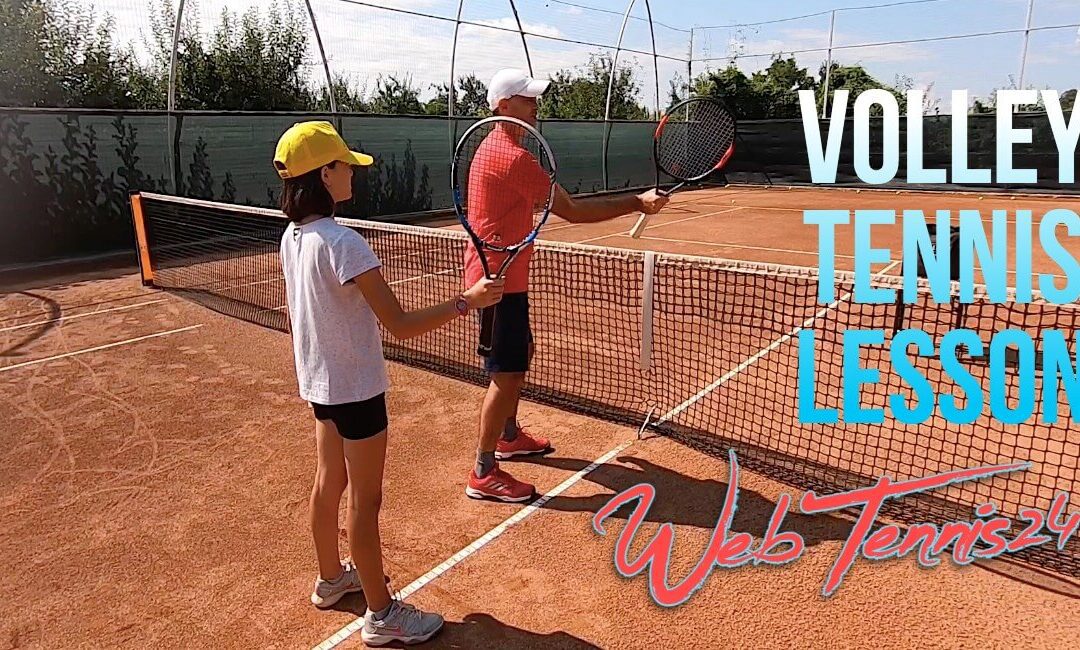
The volley is my favourite tennis stroke to teach (see the video below), and that’s because I follow a progression that is both educational and fun for my students to learn.

It all begins by presenting the volley as a “catch” and imagining that the racquet is an extension of the player’s hand.

Here are the steps that I follow (see the video below for visual demonstration):

1. I toss a few balls towards my student’s dominant side and ask them to catch. While they do that, I emphasize the fact that they do not take the hand back before catching the ball, nor do they follow through after catching it. So the volley should not have a backswing or a follow-through.
It is a catch and a push. The pushing should come from stepping forward toward the ball or getting the body weight into it.

2. After getting comfortable catching the ball (by the way, to take some pressure away you can use soft balls such as kids’ balls for the student to not be afraid of being hit in the face), proceed to catching the ball using the racquet.
Help the player imagine that the racquet is a bigger hand and that they should attempt to once again catch the balls, this time on the strings. Tell them that they should not be swinging, just tapping the ball so that it goes over the net (by the way, the player should be no more than 6 feet away from the net, at this stage; later on, we’ll show them where to position and how to cover the court).

3. Continue the same drill while the player slides, gradually, the hand lower towards the bottom of the grip. All this time, the student is taught to hold the racquet with a “hammer” grip (like they would be hammering a nail with the edge of it).

4. Once the player feels more comfortable catching and tapping the ball with the strings holding the racquet with a hammer grip, the next step would be to learn the basic footwork. Explain to them that power, when volleying, comes from catching the ball out in front and moving the body weight into it.
For that, as they prepare to catch the ball on the strings, they have to take a step in the direction of the ball.
(Note: Keep in mind that we are at the beginning stages of learning the volley, therefore the footwork that the player learns is a basic one, keeping it simple and not overwhelming them with too much information. Later on, we’ll add the more complex movement that requires covering the court and getting to the ball in balance).

Some of the technical aspects, that a coach should pay attention to:

  • don’t let the racquet head drop below the hand level; keep the racquet cocked so that there is a 90 degrees angle between the forearm and handle;
  • no backswing – racquet stays in front of the line of shoulders;
  • no follow-through – after catching the ball, the racquet comes to a stop and is brought back to the ready position;
  • remind the player that power comes from catching the ball early and stepping into the shot;
  • the racquet head is slightly open (facing up) so that later on, combined with a high to low push (or punch), it will create an under-spin which is essential to control the ball. 

For a visual presentation of this lesson, see the video below.

To learn how to teach tennis to children or any beginning player, visit the My Daddy / My Coach section or 10 Lesson Plans / How to Teach Beginning Tennis Players from WebTennis24.


Cosmin Miholca

Cosmin Miholca

Certified Tennis Coach

Check out my work at WebTennis24 where I share with you my best video tennis lessons, drills and tips for players, coaches and tennis parents.

How to Choose a Racquet for Your Child

How to Choose a Racquet for Your Child

One of the questions I frequently receive from tennis parents is: “What racquet should I buy for my son/daughter?”

Before we dive into the details of choosing a tennis racquet, I would like to mention that there are certain recommended racquet specs according to a child’s age. But that does not mean children and parents should strictly follow those recommendations…

We know that children develop differently – some (let’s say) seven-year-olds are taller, some are shorter; some are stronger…

If a child is ready to play with a heavier racquet than the standard recommended, they can do so.

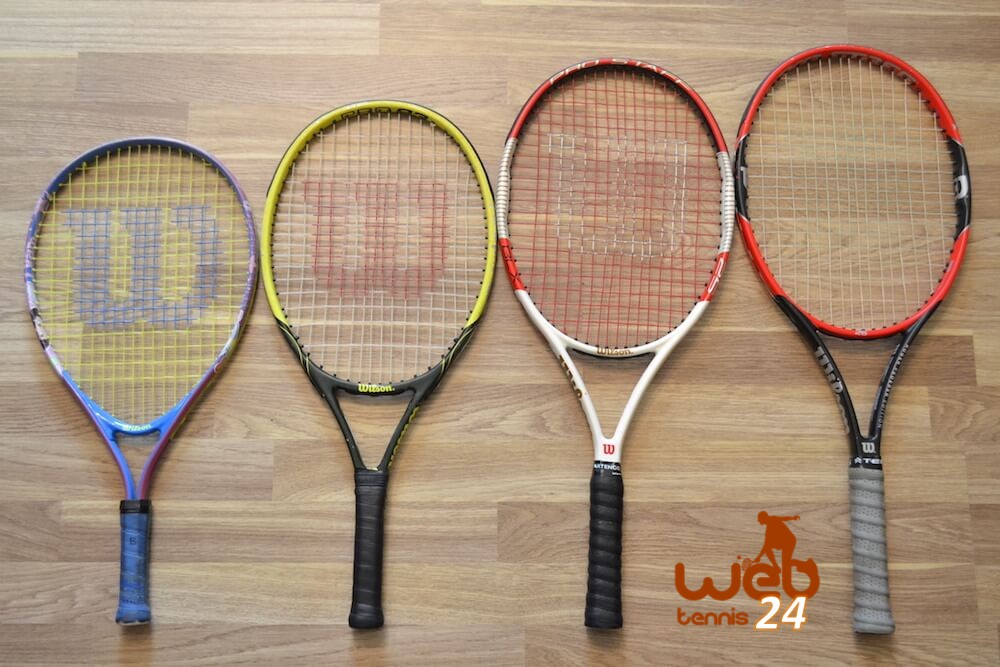
Having said that, here are the recommended racquet lengths according to the children’s age:

  • 21” racquet would be best for 4-5 year olds;
  • 23” long racquet can be used by children of 6-8 years;
  • 25” long racquet would be preferred by 9-10 year olds;
  • 26” racquets are recommended for 10-11 years;
  • 27” can be used by any child that is 12 and older. 

My suggestion for children who are ready to move up to a 27” adult racquet is to choose a light version, under 10 ounces.

But again, if a child is strong and ready to benefit from a heavier racquet (more power, control) while avoiding injuries, they can demo/try and eventually purchase one that is above the standard recommendations.

I would like to present in the following a few details that not only children but adults as well should consider when choosing a new tennis racquet.

Being the most important piece of equipment for any tennis player, the racquet should be carefully analyzed so that it matches the player’s style of play and/or level of performance:

1. Racquet Weight – should be chosen according to the child’s strength.
There is an easy exercise you can do with your child: have them hold the racquet by the handle, take it behind their back with the elbow bent over the dominant shoulder; from there on ask them to swing up like they would be serving; observe how hard it is for them to do that; if it is too heavy, their face will tell you; if it is too light, they’ll also tell you.
Find a racquet that they feel is not too heavy but not too light. If the player should be in doubt, always opt for a slightly heavier frame than a lighter. More weight will help in absorbing the shock that is created at the contact with the ball, thus saving the arm.

2. Grip Size – the child should be able to wrap their hand around the handle (gently) and there should be space enough to put the index finger (of the non-dominant hand) between the fingers tips and heel of the dominant palm; if it is too small or too large they’ll grip it too hard to not lose the racquet from their hand.

3. Racquet Head – this is a debatable subject because some coaches say that a small head (somewhere around 95-98 square inches) forces the child to make a clean contact with the ball, while others suggest that a larger head (105-110) can help the player achieve good contact with the ball easier, thus making it easy to learn or practice their skills.
In my opinion, a racquet that has a circumference of 100 square inches is just about right for most players.

4. Racquet Strings – they’re the most important element of every tennis racquet. That does not mean the others are not important, it is just that no matter how good the racquet is, the strings must be suited to the player’s style of play.
Therefore, here are a few factors related to strings tension, composition, and thickness:

  • Tension – if you want more power, opt for a lower tension; for more control, string it tighter; you can find the specifications of the recommended string tension on the side of the racquet.
  • String composition – can be nylon, polyester, or natural gut – the nylon is the cheapest, the gut is more expensive – you might think that the more expensive the string the better feel; you are not far from the truth but it all depends on what you need: if you break strings a lot you might be ok with playing with thick nylon, for more feel and control you can find some good polyester strings (my favorite choice), or if you can afford to spend more then go for natural gut.
  • There is also the consideration of the thickness of the string: the thinner it is the more it bites into the ball, favoring spin and control, but it breaks sooner.

As you can see, there are quite a few factors you should consider when settling for a particular racquet. But the important part is that the racquet is only as good as the string (composition, tension) you put on.

My recommendation would be to either experiment with a few racquets by enrolling in your nearest pro shop demo program (even online tennis stores have demo programs through which they send you racquets to try before you decide to buy one) or ask a coach’s help in choosing one. A tennis professional stringer can take a look at your swing and style of play before advising you on which path to take in choosing your new tennis racquet.

I wish there would be an easy way, but in fact, the racquet is the most important piece of tennis equipment you will have. That’s why you should not make this decision in a hurry.

For a video presentation of this material (how to choose a tennis racquet for your child) visit the My Daddy / My Coach section or the 10 Lesson Plans program for teaching tennis to beginner players.

Cosmin Miholca

Cosmin Miholca

Certified Tennis Coach

Check out my work at WebTennis24 where I share with you my best video tennis lessons, drills and tips for players, coaches and tennis parents.

What Should Coaches Teach in the First Tennis Lesson

What Should Coaches Teach in the First Tennis Lesson

As a tennis coach, the first lesson with a new student is crucial for establishing a connection and setting the tone for future lessons.

I have found that incorporating a mix of fun and technique-based activities in the first lesson helps to engage the student and lay a strong foundation for their future progress.

Before beginning the lesson, take the time to get to know your new student. Ask questions such as:

  • Why do they want to learn tennis?
  • What do they already know about tennis?
  • Have they ever played tennis before?
  • Do they have a favorite pro player?

The answers to these questions will provide insight into the student’s motivation and level of experience and will help you tailor the lesson accordingly.

When introducing yourself to the student, keep it simple but enthusiastic.
Let them know your name and how long you have been playing and teaching tennis.
Express how excited you are to have the opportunity to introduce them to this sport.

To structure the lesson, here are a few key elements to include:

  1. Court dimensions and line names
    It is important for new players to learn the names of the lines, such as the baseline, singles side lines, and service lines. This will help them navigate the court and follow instructions.
  2. Racquet basics
    Explain the different parts of the racquet, including the head, neck, and handle. You can also introduce basic grips without getting into too much detail.
  3. Hand-eye coordination drills
    These will test the student’s physical skills and help them become more comfortable with the racquet.
  4. Forehand groundstroke technique
    This is one of the most basic strokes in tennis and is a good starting point for beginners. Demonstrate the proper technique and then have the student practice the stroke through drills and fun games.

Throughout the lesson, it is important to keep it fun and engaging while also focusing on technique.
Encourage your student, regardless of age, and praise their efforts.

For children, consider providing a small gift at the end of the lesson, such as stickers or candy, to show your appreciation and encourage them to continue coming to lessons.
For adults, pay attention to their needs and interests, and incorporate drills that challenge them and provide a good workout.

By focusing on both technique and fun in the first lesson, you can establish a strong connection with your new students and set them on a path toward success in the sport of tennis.

Watch the video(s) below for more…

Cosmin Miholca

Cosmin Miholca

Certified Tennis Coach

Check out my work at WebTennis24 where I share with you my best video tennis lessons, drills and tips for players, coaches and tennis parents.

Tennis Coaching: How to Engage Students to Practice More Often

Tennis Coaching: How to Engage Students to Practice More Often

We all love playing tennis, but we may not enjoy practicing as much.

Often, coaches find it frustrating to see their players not dedicating enough time to practice the skills they learn.

Playing the game is obviously more fun than the repetition required to hone skills like the forehand down the line, kick serve, or drop shot.

So, what can coaches or tennis parents do to engage players in practicing their skills more often?

It all depends on the players: are they beginners, intermediate, or advanced?

If they are beginners, give them ideas for fun tennis drills and games they can practice alone, with a friend, or with a family member. Let them know that you would like to hear about the games or drills they tried before the next lesson. Show interest and give them tasks to accomplish, such as hitting 50 backhands down the line, serving 100 times, playing two sets with a friend, rallying 200 balls over the net, and so on.

If they are intermediate or advanced players, remind them about the benefits of practicing, such as consistency under pressure, better shot placement, winning more matches, more power, and foot speed. For these players, give them tasks to accomplish before the next lesson, such as hitting 100 serves down the T, hitting 50 drop shots, hitting 200 forehands cross-court, serving 50 kick serves to the ad court, and so on.

On or off the court, when it comes to explaining to your students the benefits of practicing and playing more tennis, some will pay attention and follow your advice, while others may need more reminding. People are all different, so it’s important to test what works and what doesn’t.

The bottom line is that self-motivation is a rare thing among most people. This is where the coach or parent must step in. We all need a little push sometimes.

To learn more about how to create exciting practice drills and lesson plans for tennis, check out the Lesson Plans section at WebTennis24.

Cosmin Miholca

Cosmin Miholca

Certified Tennis Coach

Check out my work at WebTennis24 where I share with you my best video tennis lessons, drills and tips for players, coaches and tennis parents.