

In more than 20 years of coaching tennis, I’ve used hundreds of drills and games in my lessons. In fact, there are more than 900 tennis drills and games published here at WebTennis24.
But some drills stand out.
These are the tennis drills and games that players ask for again and again because they are fun, competitive, and help players improve their skills at the same time.
Below you’ll find 32 of my favorite tennis drills and games, organized for:
- Kids
- Singles players
- Doubles teams
Many of these games work perfectly for group tennis lessons, team practices, or junior development programs.
Try a few of them in your next practice and see how much energy and engagement they bring to the court.
KIDS TENNIS DRILLS & GAMES
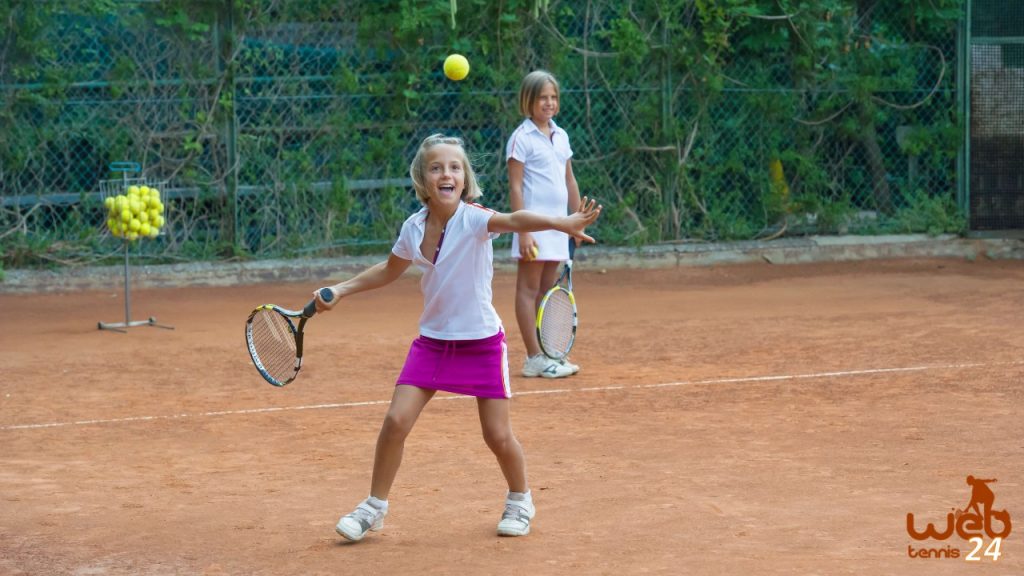
1. Jail Breaker – friendly competition for groups (practice groundstrokes, ball catching, hand-eye coordination). In this game, the players line up behind the service line or baseline and they must hit their groundstrokes (forehand or backhand) in, otherwise, they go to ‘jail’ which is the court from where the balls are fed by the coach. The only way for them to get back in line is if they catch a ball that someone in the line hits over the net. This game is fun and has the kids cheering for each other.
2. Clean the Court – speed; conditioning. Another exciting game that can be a good workout because players must throw balls over the net as many as they can within a time frame.
3. Potato Race – team race; speed; dynamic balance; racquet and ball control.
4. High Five – fun way to introduce kids to playing at the net.
The young player stands about 3 feet from the net with her racquet up. The coach is just inside the service line, on the other side. The coach will feed a ball gently towards the young player’s racquet; she will tap it back, contacting the ball in the air. The two will rally back and forth with the coach hitting the ball after the bounce, and the player volleying. They can count how many balls they hit back and forth.
It is a good way to get beginning players accustomed to playing at the net.
5. Dodgeball – kids love this game: teaches them quick feet, reaction, and dynamic balance. For this game, the kids move only inside one of the service boxes (with no rackets) while the coach feeds balls toward them from the other side. The young players must dodge the balls, otherwise, they are out of the game, until one remains.
6. Royal Court – we use it mostly as a warm-up: hand-eye coordination, ball tracking, and movement.
7. Caterpillar – loved by kids; lateral movement, ball tracking. This is a game played mostly at the end of the class because it produces a lot of giggles and excitement. For this, the players line up single file line (no rackets) behind the baseline; the coach will roll balls, one at a time, while the players, maintaining the line, will have to shuffle sideways so that the rolling balls pass between their feet.
8. Popcorn – hand-eye coordination; fun. This is another favorite game but you, as a coach, must be careful and watch players to not run while the balls are rolling on the ground. For this game, the players must catch balls inside a cone (held upside-down) which the coach throws in the air many at a time (20-30). The kids will try to catch the balls in the cone while they still bounce.
9. Bounce It – racquet and ball control; competitive game for beginning players. This is one of my favorite tennis games, as a coach, because it teaches players ball tracking and eventually leads to rally the ball over the net. Here’s how it works: the coach will feed a ball to any of the players (one vs one, or two teams), each on opposite sides of the net. They must use only their racket to bounce the ball (up or down) and send it over the net as soon as they can. If the ball rolls on their side of the court, the other player receives a point.
10. O-U-T – teaches the kids consistent serving under pressure; fun competitive game. For this, the players line up behind the baseline and take turns serving following a certain order. If one of them hits the serve in, the next one in line must also get it in, otherwise, the particular player receives the letter O. Next time it happens, he or she will get the letter U, and so on until they spell OUT. The last player who does not spell OUT wins the game.
11. My Invisible Opponent – great game to teach beginning players how to keep score while practicing their serve. The beginner player practices the serve from behind the baseline. They get 2 tries to hit the ball over the net and inside the proper service box. If they do it, they receive 15-0; if they miss, it is 0-15. Player(s) continue serving and alternating sides (left and right) until they either win or lose a tennis game. It can continue until they win or lose a set.
12. Cat and Mouse – loved game by kids: speed, quick change of direction, dynamic balance. This is a “chase” game that is done only inside the singles court and can be a good way to end a tennis lesson.
SINGLES TENNIS DRILLS & GAMES
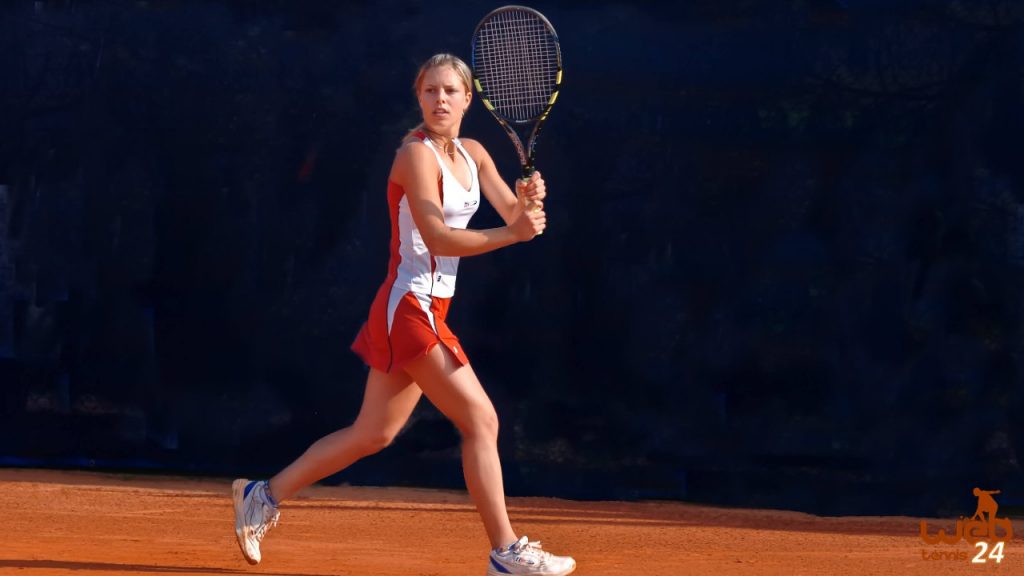
1. Three for Air – aggressive play; moving up to the net to win more points. This is a singles game in which there is one player on each side of the court, the coach feeds balls alternating to the players to start the point. They are encouraged to move up to the net where every point they win with a ball taken in the air (volley, overhead) is worth three points.
2. 100 / One Hundred – favorite tennis game for groundstroke consistency from the baseline.
3. In and Out – competitive game for 3+ players. This game can be played with at least three players: two competing and one waiting for their turn. The coach puts the ball in play for the two players. Whoever wins, stays; the one who loses gets replaced by the player waiting. Accumulate every point won and as soon as a player gets to a certain score (7, 10, etc.) wins the game.
4. Ninety Seconds – rally competition; good cardio.
Two players (A and B) begin this drill at the baseline, on opposite sides. The coach is at one of the net posts, having a basket of balls ready to feed from.
For a minute and a half, the coach will feed balls to start the points only to player A, who will rally every ball against her opponent B.
The points are counted only for the player to whom the coach feeds (A), who will try to win as many as she can during the 90 seconds.
After the time is up (90 seconds), the players switch sides, having the coach feed, this time, only to player B, who will attempt to win a higher number of points than player A previously accumulated.
The player with the highest number of points earned during the 90 seconds wins the game.
5. Ping-Pong Tennis – teamwork; ground strokes consistency. Even though this is a team game, the play is done on a singles court, with players taking turns hitting one shot and then moving out to make room for another teammate.
6. Around the World – I usually do it at the end of a large group class – conditioning, groundstrokes consistency, fun. For this game, the players each start with 3 points (or ‘lives’). They hit the ball and then run to the other side to play the next shot while players that follow do the same. If a player misses a shot, he or she loses a ‘life’, until they are out of the game. It is an excellent drill to get players to run a lot and have lots of fun.
7. Court Defender – one of the best games for large groups. The coach needs at least two tennis courts for this particular game, to separate players into two teams. Each team designates a ‘court defender’ which they send to the other court to stop the opposing team from winning a certain number of points.
8. Cross Fire – competitive game for large groups. This is one of my favorite games for teaching players court coverage and singles tactics. I recommend it for players who are ready to develop their strategic thinking.
9. Wipe Out – tennis game for large groups; one vs. many.
One line of players behind the baseline, another line of players on the opposite side, baseline also.
A coach (or a feeder) is at the net with a basket of balls, ready to feed to start the points.
The first player in one line will play against the first player from the other line. Whoever wins stays and brings another player on the court (the next in line). Whoever loses moves out to the end of the line, and the next player in line steps up to play.
As long as the players keep winning, they keep bringing a new player on the court. Once they lose, they all go to the end of the line (wipe out).
The game continues until there is a team with all its players on the court playing against the other team’s remaining player
Note: this is a fun game for groups of 6 or more players.
10. Kings & Queens – kids love this game; individual competitiveness. There is one group lined up on one side, and one single player on the other side. The coach begins every point by feeding to the first player in the group line. The two players play the point out and, as long as the single player (king/queen) wins, he/she stays put and accumulates points. But as soon as the king/queen loses, they get replaced by the player who beat them. The first player to accumulate a certain number of points playing in the ‘royal’ position wins the game.
DOUBLES TENNIS DRILLS & GAMES
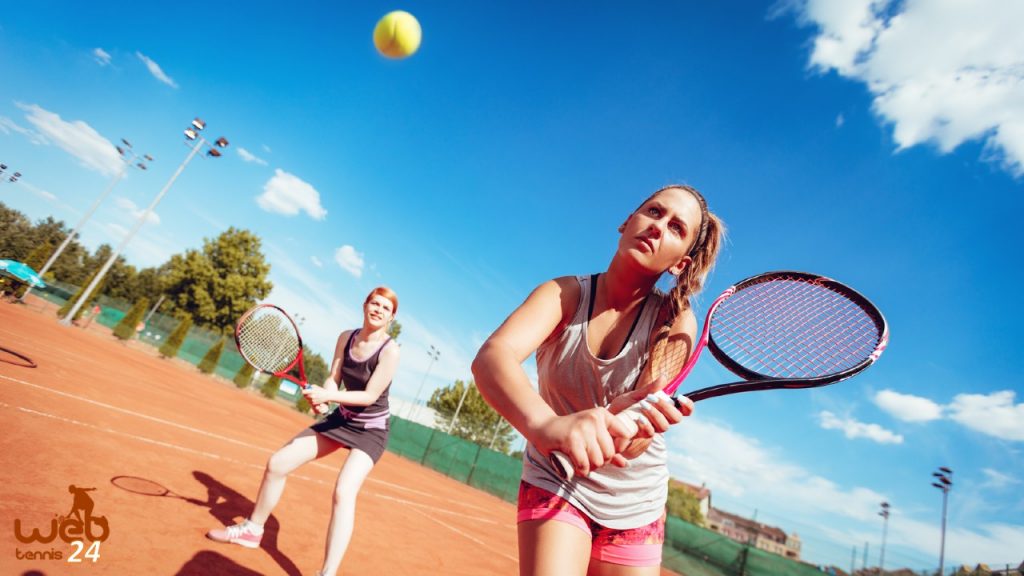
1. Three for Three – transition to the net; net play; defending from baseline – a player’s favorite.
2. Reflex Volleys – great net play game; quick reaction and volley control. For this drill, all players are up at the net, inside the service court. The coach feeds the ball to start the point to the opposite team. Play it at a fast pace while the two teams develop quick reflexes and volley control. Excellent for competitive doubles teams.
3. Three for Air – aggressive play; transition to the net; competitive game.
Both teams begin the point from the baseline, but they are encouraged to move up to the net where, if they win the point and their last shot was taken in the air (volley, overhead), they get three points instead.
4. Win at the Net – loved by the players: playing/winning at the net; teamwork. There is one team at the net, one team at the baseline, on opposite sides. The coach feeds only to the baseline team. The two teams play the point out. If the net team wins, they stay put for another play and get a point. If the baseline team wins, they move up to the net while the opposite team backs up to the baseline. Teams count the points only when they win while playing at the net.
5. Two Minutes – pressure play; net vs. baseline; conditioning for doubles. For this game, there is one team at the net, while the other team is at the baseline, on opposite sides. The coach feeds only to the baseline team. The team at the baseline has two minutes to win as many points as they can against the net team. Then they switch sides and roles with the new team at the baseline, trying to beat the opposing team’s score.
6. One-Up-One-Back – classic doubles formation, competitive game.
This game is a good practice for the teams that prefer the classic one-up-one-back formation (one player at the net, their partner at baseline).
The coach feeds the ball, and the teams play it out.
After a team wins 7 points, players move one spot clockwise so that everyone practices and plays on every doubles position (net & baseline).
7. Battle of Rackets – teamwork; court coverage for doubles.
This game teaches the net team to work together and make quick decisions while playing against a team at the baseline.
8. Olympics – net vs. baseline game; best played with large groups (6+ players).
Two players at the baseline on one side, as a team. Two lines of players close to the net on the other side (one line on the left, one on the right).
The coach is on the same side as the baseline team.
The first player from each line will step up to the net, forming a team that will challenge the baseline team. The coach will send courtesy feeds for the baseline team to start the point.
Players play the point out.
Scoring:
If the net team wins the first two points, they will automatically take the place of the baseline team. If not, the teams will compete until one of them wins three points.
If the net team wins, they become the baseline team. If the baseline team wins, the net team will move out to the end of the opposite line, and another team will step up to the net to challenge the baseline one.
9. Lob Over the Net Player – tactical and court positioning drill/game. There are two teams in the one-up-one-back formation, opposite sides; one will receive a lob from the coach. They have to retrieve the lob (must let the ball bounce first) and play the point out against the opposite team, which starts at the baseline and can come up if they want.
10. Moving Up and Down – the role of players in doubles; court coverage and competitive play. This is a very dynamic tennis game in which the teams start in the one-up-one-back formation and one of the net players receives a lob from the coach; that particular team will have to re-position with the baseline player retrieving the lob and the net player backing up ready to play the point from a new position. This is an excellent drill to teach players how to communicate in doubles.
The above drills and games are just some of my students’ favorites but there are so many more that you might love. Check them all out at WebTennis24.com.

Cosmin Miholca
Certified Tennis Coach
Check out my work at WebTennis24 where I share with you my best video tennis lessons, drills and tips for players, coaches and tennis parents.
2 comments
Hi Kaye, please use the contact/support links on the website to get in touch with me; I would be glad to help you by suggesting some drills. Or you can visit the Tennis Drills and Lessons Plans for Coaches (link: https://www.webtennis24.com/tennis-coaching-courses/) program that we have as part of the WebTennis24 platform.
Questions or comments?
Enjoyed these lessons?
Some of the lessons are free. If they helped you, you can buy me a coffee. It keeps new lessons and drills coming every week.
I work with junior players and would greatly appreciate assistance with drills and games