
My Daddy / My Coach – Lesson no. 34 | How I prepared my 9-year-old daughter for the next competition
A tennis tournament can tell you exactly what to practice next.
The important thing is to notice more than the score.
Which balls created trouble?
Which opportunities went unused?
What did the opponents do that your child was not ready for?
Two days after Bianca’s competition, those questions shaped our lesson. She was almost ten, playing in a 10-and-under format where boys and girls competed in groups against several opponents.
I liked that variety.
Some children hit hard, others played slowly, and some used clever drop shots and spins.
With matches played first to seven or ten points, she had to adjust quickly.
Another tournament was coming that Saturday, so we had specific work to do: attack easy balls, develop touch, recognize drop-shot returns, and improve movement.
Start With Preparation, Not Power
After some running and dynamic stretching, we began with shadow strokes.
Before asking Bianca to attack, I wanted to remind her to keep her backswing compact.
One simple drill uses a ball basket behind the player.
Bianca turned for a forehand without taking the racket so far back that it touched the basket, then let the racket drop and swung forward.
We repeated the same exercise on the backhand.
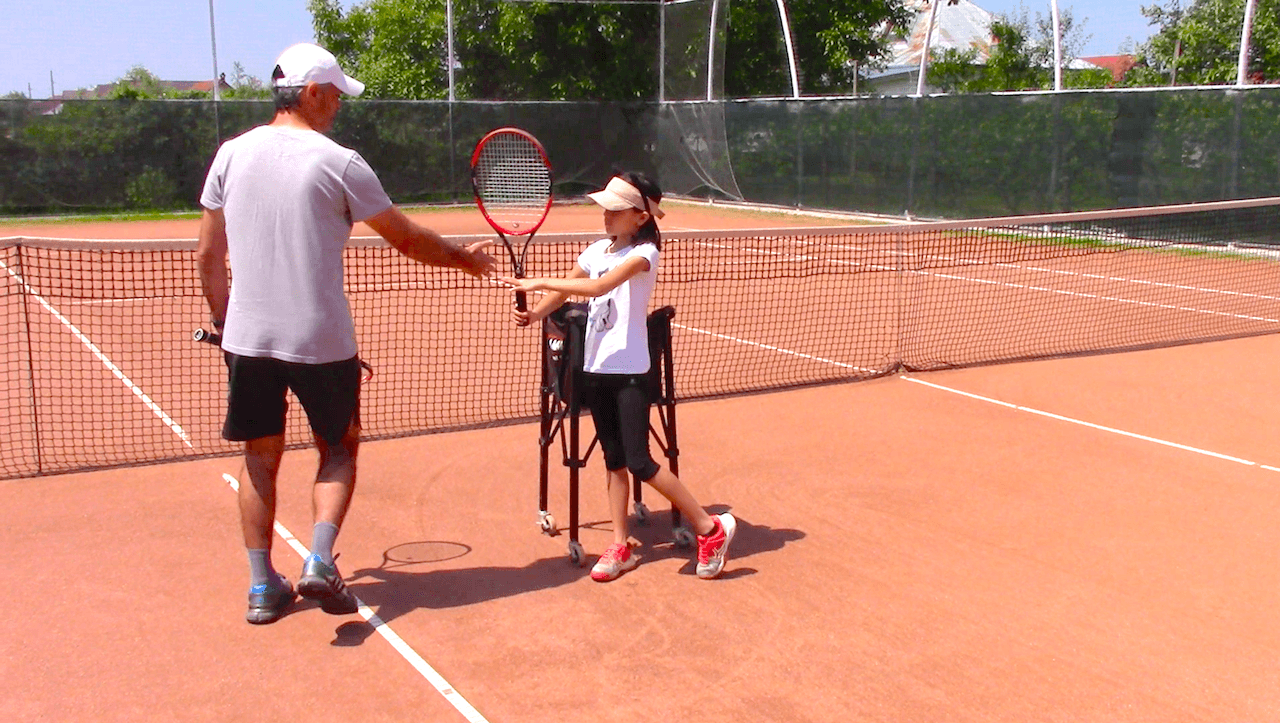 The basket gives Bianca a physical reminder to keep her backswing short.
My reminders were simple: turn, drop, swing.
I also checked her backhand grip because she sometimes closed the racket face too much, and encouraged a little space between her elbow and body.
Next, we added movement.
She prepared the racket, followed me with her feet, and swung on my cue.
A compact backswing should work while moving, not only while standing still.
Our rally warm-up progressed from the service line to halfway back, then to the baseline.
We kept the early balls inside the service boxes and later rallied at about 70 percent power.
This was cooperative hitting, not a contest to finish points.
Attack Short Balls With Spin and Margin
At the competition, I noticed opportunities that returners were not using.
Some children pushed very slow second serves over the net.
I call these “lollipop” serves.
A slow ball that sits up inside the service box should invite more than a safe reply.
The same applies to a short ball during a rally.
I wanted Bianca to recognize that she could finish the point or at least put her opponent in trouble.
But moving inside the court creates two challenges: clear the net and bring the ball down before it goes long. Hitting harder alone does not solve them.
For the high sitters we practiced, I asked her to:
- Move forward with the racket prepared.
- Contact the ball higher when possible, ideally above net level.
- Use topspin to help keep the aggressive shot inside the court.
- Begin with a crosscourt target rather than chasing the sideline.
For Bianca, that higher contact was around shoulder height.
This was a cue for these particular balls, not a requirement for every short ball.
Crosscourt gave her more court length and a route nearer the lower middle of the net.
I also asked her to aim at least a step inside the line.
We started with forehands, then practiced running around short balls on her backhand side to hit inside-out forehands.
The goal was controlled aggression using her stronger shot.
This is the same balance emphasized in the short-ball put-away: enough confidence to attack, with enough control to finish successfully.
Make the Feed Look Like the Serve She Will Face
Once Bianca had practiced attacking easy feeds, we moved to slow second-serve returns.
I placed targets crosscourt and served balls she could step in and attack.
To imitate a younger player’s serve, I held the racket higher up the handle, used a lower toss, and avoided reaching to my full height.
I wanted the practice ball to resemble the situation we were preparing for.
Some returns went long. I could still appreciate her commitment while asking for more spin or a higher contact on the next attempt.
Encourage the attacking intention, then correct the execution.
We practiced from both service sides, including inside-out forehands from the ad side. For more detail on the tactical decision, see how to attack the second serve.
Build Touch Before Switching to Power
The tournament also showed how useful finesse could be.
Some children played drop shots, moved forward, and became involved in short exchanges with angled slices and touch shots.
Bianca needed to feel comfortable there too.
We began with gentle service-box rallies using the continental grip, which I also call the hammer grip.
She sometimes tried to add too much slice, so I asked for a simpler push.
Move to the ball, get balanced, and guide it over.
Then I fed a ball and moved toward the net.
I stayed mostly in place, reaching with my racket, while she tried to place the ball past either side of me.
The task was not to overpower me or play a tiny drop shot. It was to find space with touch.
Finally, we combined the two modes.
We rallied softly with the hammer grip.
On my cue, she changed to her regular forehand grip and attacked away from me.
That grip change needed as much practice as the shot itself.
Read the Drop-Shot Return Early
Some opponents revealed their drop-shot returns well before contact.
I wanted Bianca to start recognizing those signals instead of waiting until the ball was already short.
For our exercise, I made the contrast clear.
A fuller backswing and shoulder turn signaled a drive.
Keeping the racket in front, without traveling behind my shoulders, signaled a drop shot.
After warming up her serve, we used a short sequence:
- Bianca served.
- I returned with either a drive or a drop shot.
- She read my preparation and played one more ball.
We stopped there rather than continuing the rally.
Even an out serve could be returned if it allowed us to practice the recognition task.
The response depended on her arrival.
If she reached the drop shot late, a controlled push was appropriate.
If she arrived in time, she could drive it.
And when retreating would cost too much time, she needed to consider taking the ball early or in the air instead.
Finish With Forward Movement and Recovery
Our first finishing drill followed a triangle: forehand, backhand, then a very short ball.
Bianca hit the two groundstrokes, sprinted forward, changed to the hammer grip, and pushed the short ball over.
Then she walked back to reset.
The second drill focused on wide balls.
In sets of three, she ran toward the sideline, hit crosscourt, and recovered before the next feed.
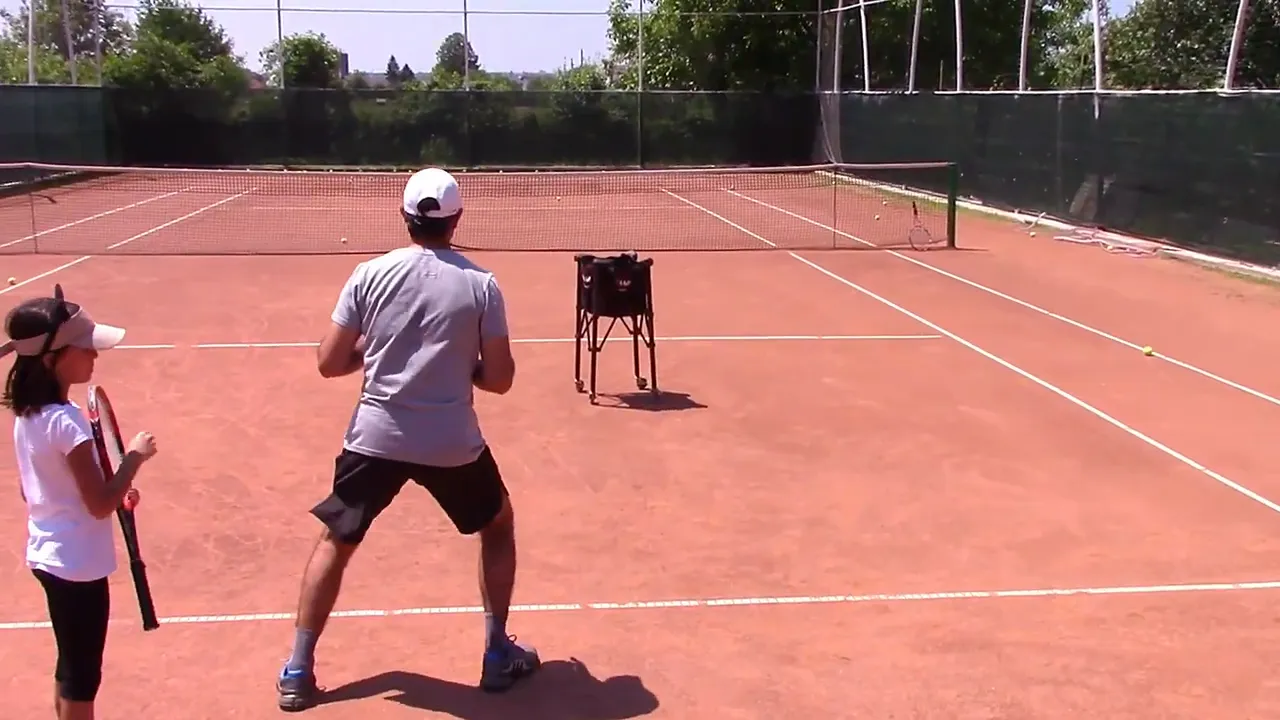
The pattern was run, hit, crossover, shuffle back.
Reaching the ball was only half the job. She also needed to regain a ready position, as explained in recovering faster after wide balls.
It was hot; we took water breaks, and toward the end Bianca was tired and hungry. Those details were part of the real lesson too; not every repetition looked sharp.
Let Competition Give Practice a Purpose
Bianca did not master everything that day.
We planned to return to these situations in the next lessons until they felt more comfortable.
That is the value of a competition-based training plan: identify what happened, recreate it, make corrections, and repeat.
The drills have a reason because the player has already met the problem in a match.
And after the hard work, Bianca brought out Sparky, our recently rescued puppy, for his first visit to the tennis court.
A good effort, a few clear lessons, and a puppy to take home.
Not a bad finish.

0 Comments