

How I Fixed My 9-Year-Old’s Western Tennis Grip: A Simple Coaching Guide
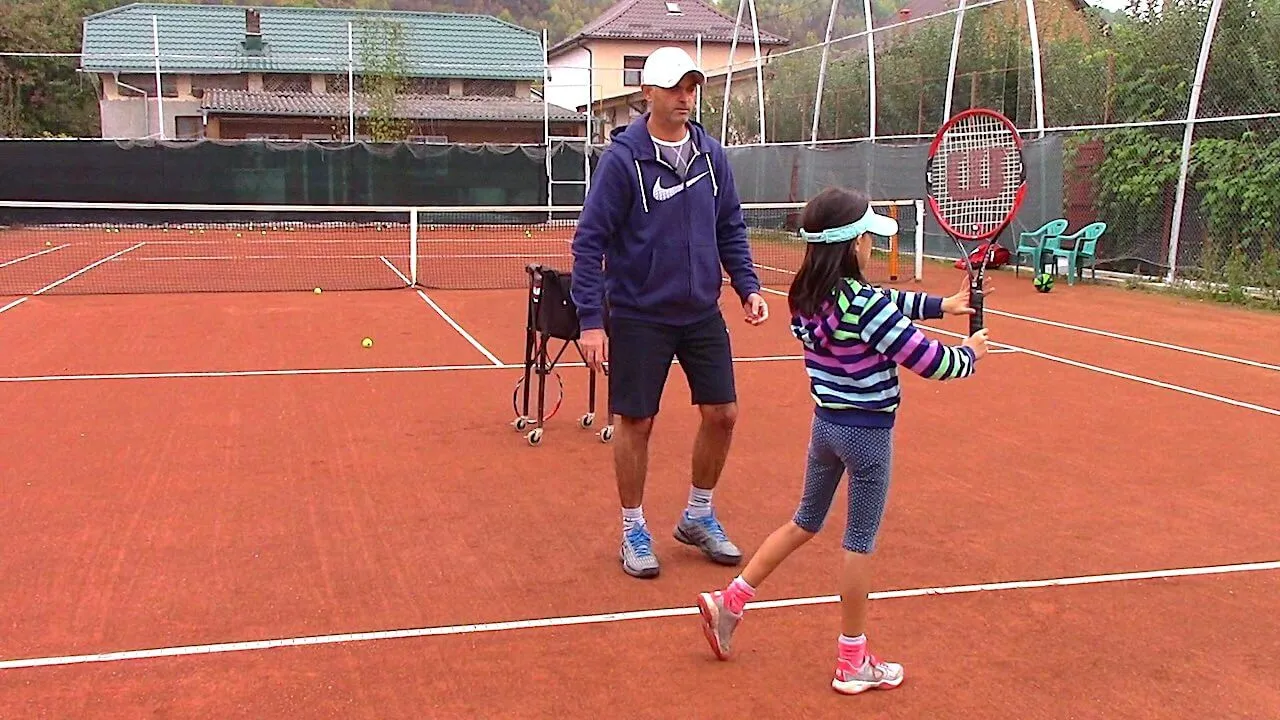
I noticed my daughter slipping into a western tennis grip and decided to correct it before it became a habit. Smaller kids often make contact with the ball higher, which pushes their hand under the racket and creates an overly extreme grip. The western tennis grip produces heavy topspin but can cost power, control, and a smooth transition between forehand and backhand.
I want to share the practical steps I used to reprogram her hands and a reliable practice progression you can follow.
Why the Western tennis grip becomes a problem for kids
When kids are short compared to the bounce, they naturally make contact above shoulder level. To reach that high contact point, they rotate their wrist and slide the palm underneath the handle. That change becomes a Western tennis grip.
It creates excessive topspin but often loses pace and makes grip changes awkward, especially for two-handed backhand.
The earlier you correct this, the quicker the player learns a more versatile grip.
I prefer a semi-western-ish hold on the forehand and a continental for the backhand hand placement when teaching two-handed backhands.
Understanding the handle: bevels and grips
A tennis handle has eight bevels. I use the bevels to teach exact hand placement because saying “more to the right” is vague.
Think of bevel number one as the top bevel. From there, the numbers go around the handle.
Key placements I teach:
- Bevel 1: continental or hammer grip. Great for serves, volleys, overheads, and as the bottom hand for a two-handed backhand.
- Bevel 2 or 3: comfortable placement for the dominant hand on the forehand. I ask kids to be on bevel 2 or 3, never 4 or 5.
- Bevel 7 or 8: position for the non-dominant (top) hand on a two-handed backhand.
By using bevel numbers, you can be precise: a semi-western is roughly bevel 3; a full western tennis grip is more like bevel 4 or 5. That specificity speeds up correction.
Step-by-step correction drill I used
I teach this sequence in stages. The core idea is to keep the top hand fixed and only switch the bottom hand between forehand and backhand positions.
- Grip identification: Have the player hold the racket so bevel 1 is on top. Place the dominant hand on bevel 2 or 3 for forehand groundstroke. Show where bevels 4 and 5 are so they understand what to avoid. Name the numbers out loud.
- Ready position checks: Get into ready stance with the dominant hand on bevel 2 or 3 and the non-dominant on bevel 7 or 8. Open the palms slightly so the hands face each other. Repeat until it feels natural.
- Grip changes without hitting: From ready, perform a forehand turn by keeping the top hand still and moving only the bottom hand into the forehand prep. Then return to ready. Do the same for backhand: move only the bottom hand to bevel 1 while top hand stays on bevel 7 or 8.
- Shadow swings: Execute slow forehand and backhand swings while focusing on the hands. Check elbow height and weight transfer. The dominant elbow should be slightly elevated during preparation, and strings should point down a bit at ready.
- Tossed ball reps: Once the grip change feels consistent, have someone toss slow balls. The player should step in, keep the top hand static, and swing through with the bottom hand switching only as needed.
- Repetition with feedback: Watch closely and correct the bottom hand when it drifts under the handle toward a western tennis grip. Encourage dozens of short repetitions rather than long hitting sessions.
Technical points to reinforce power and control
Correcting the grip is necessary but not sufficient. Reinforce these technical elements while practicing grips:
- Weight transfer: Start weight on the outside foot during preparation, then step through the ball.
- Elbow position: Slightly elevated dominant elbow helps get the racket into a good swing path.
- Strings orientation: At prep, the strings should point slightly downward so the swing travels low-to-high without forcing the wrist into a western tennis grip.
- Cradle the racket: Use the non-dominant hand to cradle the throat when preparing – this stabilizes the top hand and prevents it from moving under the handle.
Common problems and quick fixes
Problem 1: The top hand moves under the handle and creates a western tennis grip.
Fix: Freeze the top hand during drills and only allow the bottom hand to move. Use the cue “top stays.” Add exaggerated slow-motion reps.
Problem 2: Too much topspin and lack of pace.
Fix: Move the dominant hand to bevel 2 or 3 and emphasize a full body turn and step-through. Power comes from weight and rotation as much as wrist action.
Problem 3: Grip changes are slow during rallies.
Fix: Practice rapid grip-change drills from the ready position without hitting. Make it a game: how fast can you switch and still be ready?
Final thoughts
A western tennis grip is tempting for young players because it produces visible topspin, but it can limit development if it becomes the default. By using bevels, precise cues, and a focused drill progression that keeps the top hand fixed, I corrected the habit quickly and set my daughter up for more consistent, powerful strokes.
Keep drills simple, watch the hands, and celebrate small wins. Grip habits change with repetition and patience.
FAQ
How can I tell if my child has a western tennis grip?
Look at the dominant hand: if the palm is underneath the handle and your player contacts the ball very high with extreme wrist closure, that is a sign of a western tennis grip. Check the bevel: a full western is around bevel 4 or 5.
Is the Western tennis grip always bad?
Not always. Advanced players who generate massive topspin can use a western grip effectively. For developing players, however, it limits versatility and makes grip changes harder. I recommend semi-western (bevel 3) for most juniors.
How long does it take to change a grip habit?
It depends on frequency and focus. With daily or thrice-weekly short drills, many kids show improvement in a few weeks. Expect occasional relapses; consistent feedback and repetition are the cure.

good article, we need to eradicate the western grip
Ha ha, yes, we do 🙂