
What Makes Some Tennis Shots Easier to Learn Than Others?
Some tennis shots make sense almost immediately. Imagine catching a ball with your palm, put a racket in your hand, and suddenly the forehand volley feels much simpler.
Other shots ask you to coordinate a precise toss, an upward swing, and a particular contact point. That is a very different learning challenge.
When I consider which tennis shots are easiest or hardest to learn, I look at what the player must control. Does the movement feel familiar? Do two hands help stabilize the racket? How demanding is the timing?
Here are the five tennis shots I consider easiest to learn and four that require more patience, with the key feeling or technical challenge behind each one.
Key Takeaways
- Familiar hand movements make the forehand and forehand volley easier to understand.
- Two hands provide stability that makes the two-handed backhand easier for many players to learn.
- The drive volley adapts a forehand swing, while the drop volley emphasizes absorption.
- Harder shots demand more precise timing, toss coordination, or one-handed racket control.
Why Some Tennis Strokes Feel More Natural
A simple mental picture can make a big difference. Thinking of the racket face as an extension of your palm gives you something familiar to work with.
Instead of trying to manage a complicated piece of equipment, you are meeting the ball with your hand.
Stability helps, too. Two hands on the racket can make controlling it easier than relying on one hand alone.
The more difficult shots tend to combine several demands: an exact contact point, unfamiliar racket control, or a movement that offers little power. Understanding that difference helps you identify what needs attention rather than simply trying harder.
The Five Easiest Tennis Shots to Learn
1. Forehand Volley: Think Catch, Not Swing
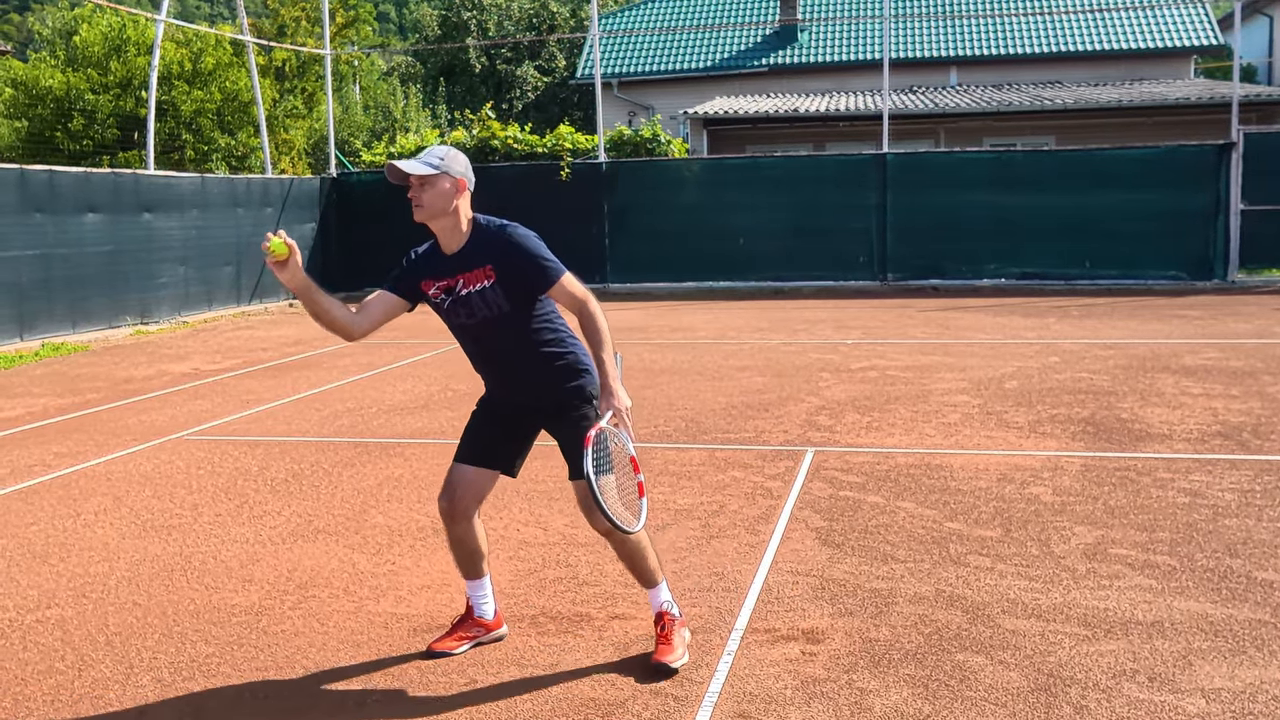
The forehand volley becomes easier when you stop treating it like a full groundstroke. Think of catching the incoming ball rather than swinging at it.
Imagine the racket face is your palm. If someone sends a ball toward your forehand side, you can reach out and catch it. That is the basic feeling I want you to bring to the volley.
You can even try the catching movement without the racket first. Then put the racket back in your hand and keep that same simple intention. The point is not to make a large swing. It is to meet the ball with control.
2. Two-Handed Backhand: Let Both Hands Help
The two-handed backhand has a useful advantage: you have two hands controlling the racket.
For a right-handed player, the dominant right hand provides stability while the left hand helps drive the swing. Those roles make the movement easier to manage than a backhand supported by only one hand. Reverse the hands if you play left-handed.
This is why I consider the two-handed backhand easier to learn than the one-handed version for many players. You are not asking one arm and wrist to provide all the control at contact.
3. Forehand: Swing With Your Palm
The forehand uses another familiar image. Picture meeting the incoming ball with your palm, then imagine the racket as an extension of your arm.
Unlike the compact catching action of the forehand volley, here you are making a swinging movement. But the palm still gives you a clear sense of how to meet the ball.
That is what makes this cue useful: it simplifies the relationship between your hand and the racket face. Rather than thinking of the racket as something separate, feel that your arm and racket are working together.
4. Drive Volley: Use Your Forehand Before the Bounce
I consider the forehand drive volley easy to learn because it builds on a movement you already use. It is essentially a forehand groundstroke played before the ball bounces.
The important adjustments are straightforward:
- Meet the ball around chest or shoulder height.
- Use a shorter backswing.
- Keep the familiar forehand grip and swinging feeling.
The same image of swinging with your palm still applies. You are adapting your forehand, not learning an entirely unrelated stroke.
Do not confuse the drive volley with the regular forehand volley. One uses a forehand-style swing; the other is built around that compact catching action.
5. Drop Volley: Absorb Instead of Punching
The drop volley also grows out of a familiar shot. Start with the idea of a regular volley, then change what happens at contact.
Instead of punching through the ball, imagine receiving it softly on the strings. You are absorbing its energy rather than sending it firmly forward.
The goal is to make the ball pass barely over the net, leaving your opponent a difficult ball to reach.
Soft hands and absorption are the central ideas. The challenge is not to produce more power, but to take power away.
The Four Hardest Tennis Shots to Learn
1. Half Volley: Control the Ball Immediately After the Bounce
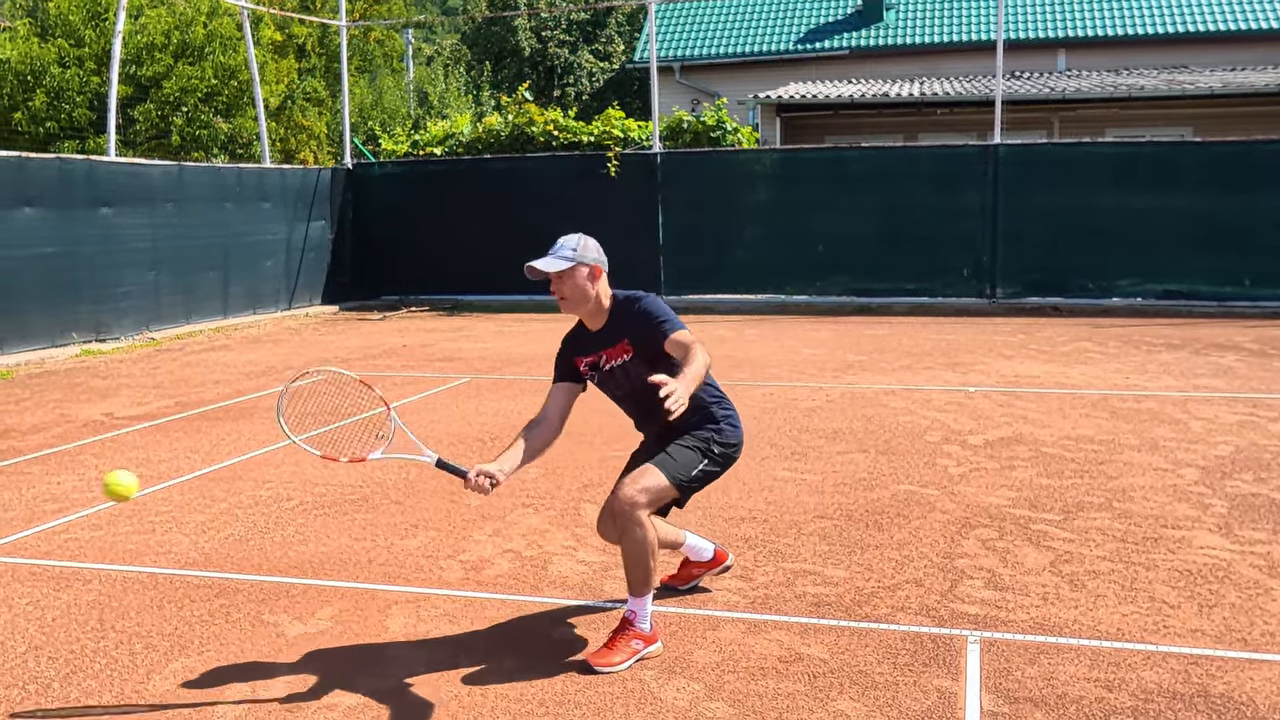
The half volley asks you to meet the ball just as it comes off the court. That makes the timing much more demanding than the name might suggest.
You must control the racket at that very early moment after the bounce while using a continental grip, also called a hammer grip. For many players, combining that grip with such precise timing is difficult.
The key distinction is the bounce. A regular volley meets the ball in the air; a half volley meets it immediately after it touches the ground.
2. Kick Serve: Coordinate the Toss and Upward Swing
The kick serve is one of the most challenging strokes to learn because the toss and contact must work together precisely.
The toss needs to arc over the non-dominant shoulder, and the racket must swing upward into contact. Placing the ball correctly is only part of the job. You must also coordinate the racket’s movement with that placement.
That combination explains much of the difficulty. A precise toss alone is not enough, and an upward swing alone is not enough. The two must come together in a very particular contact.
3. One-Handed Backhand: Timing and Wrist Stability
With the one-handed backhand, I focus on two challenges: meeting the ball out in front and maintaining a stable wrist at contact.
The timing must allow you to reach that forward contact point. At the same time, your forearm must help control the racket without the support of a second hand.
A useful image is to swing with the back of your hand, rather than your palm.
Developing forearm strength and learning that movement can make the stroke easier to manage. The goal is not merely to swing through, but to arrive at contact with stability.
4. Backhand Overhead: A High Contact With Limited Power
I consider the backhand overhead one of the hardest shots because it combines a high, one-handed backhand action with limited power.
The contact position itself is demanding. You are controlling the racket high on the backhand side, and producing power from there is difficult. That lack of power is why I regard it as a particularly weak shot.
It is a very different task from swinging comfortably with your palm on the forehand side. Both the position and the one-handed control make it challenging.
Use the Difficulty to Guide Your Focus
This list is not a reason to avoid difficult tennis shots. It is a way to understand them.
For the easier strokes, keep the movement simple: catch, swing with your palm, use two hands for support, or absorb the ball. For the harder strokes, identify the specific demand: timing after the bounce, toss coordination, wrist stability, or high backhand contact.
For broader technique resources alongside these cues, the WebTennis24 programs offer additional learning material.
Whatever shot you are developing, ask yourself one question: What exactly am I trying to control? A clear answer gives your practice a clearer purpose.



0 Comments