

Pro-Level Tennis Training Drills to Move Faster and Set Up Quicker
Moving quickly and setting up early for the next shot is what separates good players from great ones. These three simple, repeatable drills focus on footwork, timing, and early preparation so that every rally feels easier and more controlled.
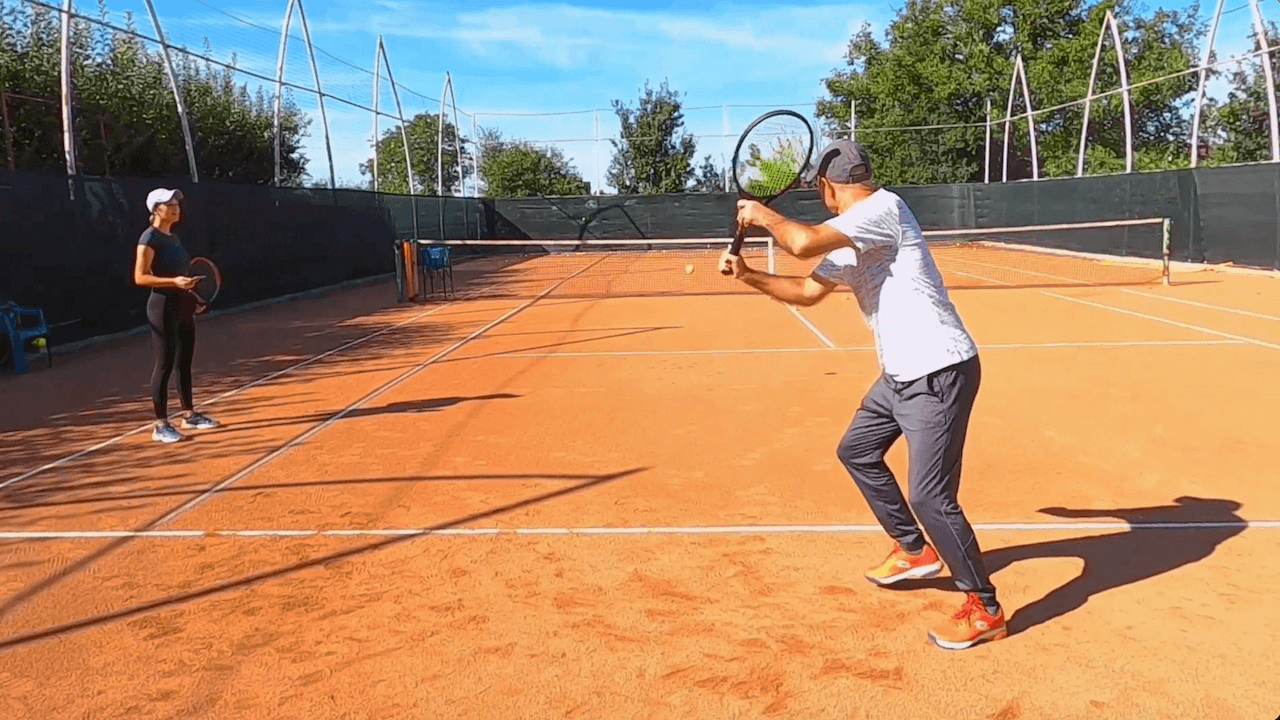
You can run them with a partner feeding balls or with a ball machine. I practiced them with my daughter Bianca, but they work for juniors, adults, and coaches looking for efficient court time.
How these drills are structured
Each drill uses short, intense sequences (typically 10 balls per player) to force quicker movement and faster recovery. The idea is to limit the time between shots so the player must prepare early and move with purpose. That pressure builds match-like footwork habits without long rallies that mask technical issues.
What you need
- Tennis racquet and proper footwear for quick starts and stops.
- Balls and either a partner to feed, or a ball machine like a Pongbot Pace S Pro.
- A clear focus — decide targets (down the line or crosscourt) before each 10-ball series.
Drill 1 — Inside Forehand & Inside Backhand
This drill emphasizes setting up early and stepping into the court to take the ball on the rise. It is perfect for practicing aggressive, inside-the-court ball striking on both wings.
Setup and execution
- The machine or feeder alternates side-to-side feeds along the baseline.
- Start with 10 balls aimed down the line only. Player A hits the first ten, then Player B takes the next ten.
- Second series: aim crosscourt for another 10-shot cycle.
Coaching cues: set up early, weight on the front foot, shorten the backswing when on the run, and use a decisive forward step into the ball. The short time between feeds (about 1 to 1.5 seconds when using a machine) forces you to recover quickly and prepare for the next shot.
Drill 2 — Inside-Out Forehand & Crosscourt Backhand
This drill trains two high-value patterns: stepping around to hit an inside-out forehand and recovering to hit a solid crosscourt backhand. It teaches court geometry and efficient footwork transitions.
Setup and execution
- Alternate between inside-out forehands and crosscourt backhands.
- Do sequences of 10 balls: first cycle aims crosscourt, next cycle goes down the line. Switch players after each 10-ball set.
- Keep the feed rhythm tight to simulate match pressure.
Coaching cues: when you have a short ball or a ball to your backhand side, make the decision quickly to step around and take it inside-out. Use small explosive steps instead of big, wasteful lunges. Maintain a low center of gravity on recovery so you can react to the opponent’s next placement.
Drill 3 — Inside Volleys
Volleys demand quick reaction, compact swing, and confident footwork. This drill concentrates on early preparation and punching volleys with control.
Setup and execution
- The ball machine or feeder sends balls to the center near the service line.
- Alternate volleys: backhand volley then forehand volley, working on quick lateral movement and split-step timing.
- Do two blocks of 10: first aimed to deuce side, second to ad side. Switch players after each 10-shot block.
Coaching cues: keep the racquet up and compact, take a firm step into the volley, and control the follow-through. Focus on recovering immediately to the ready position after each punch. Efficient, small steps win here; overreaching kills balance.
Why these drills work
Three simple reasons these sequences translate into better match movement:
- Repetition under pressure — short time between feeds forces faster setup and reinforces correct footwork patterns.
- Targeted patterns — each drill isolates a frequent match situation: down-the-line aggression, inside-out creation, and volley control.
- Coachable moments — doing sets of 10 makes it easy for a coach or parent to give focused feedback between cycles without interrupting flow.
Common mistakes and how to fix them
- Waiting late — if you react instead of prepare, you will be off balance. Fix this by calling out the target before the ball arrives and getting your racket up early.
- Overreaching — big lunges compromise recovery. Replace them with quick, small steps and a strong push from the back leg.
- Long, swingy volleys — shorten the swing and focus on placement. Punch the ball and recover to the ready position.
How to incorporate these drills into a practice session
Here is a simple 45-minute practice plan using these drills.
- Warm-up: 8 minutes of light hitting and dynamic movement drills.
- Drill 1: 2 sets of 10 balls per player (down the line), rest 60 seconds between sets.
- Drill 2: 3 sets of 10 balls per player (alternate rounds crosscourt and down-the-line).
- Drill 3: 2 sets of 10 volleys per player, both sides.
- Cool down: 5 minutes of controlled hitting, focus on footwork recovery and breathing.
Progressions and variations
- Increase the feed speed or reduce the time between balls to raise intensity.
- Change targets mid-set to force readjustment and improve anticipation.
- Introduce a live player to return after a fixed number of feeds to bring variability and unpredictability.
Equipment note
These drills are highly effective with a ball machine because you can control feed speed, placement, and rhythm. A machine that allows short intervals between balls simulates match-like pressure and makes footwork habits more reliable. They also translate directly when done with a feeder who keeps the same tempo.
Final thoughts
Focus on early preparation, compact strokes, and efficient recovery. Short, intense sequences push you to move smarter and quicker, not just harder. Consistent practice of these three patterns will make rallies feel easier and increase your ability to take control during matches.
Frequently asked questions
How often should I do these drills to see improvement?
Two to three times per week is a good starting point. Focus each session on quality over quantity: accurate footwork, early preparation, and clean technique. Consistency across several weeks will yield noticeable gains.
Can I do these drills alone, or do I need a partner?
You can do them alone with a ball machine or with a partner feeding balls. A machine gives precise timing and repeatability. With a partner, emphasize consistent feeds and keep the same tempo to preserve the drill’s training effect.
What should I prioritize: speed or technique?
Prioritize the technique first. Move quickly but maintain balance and compact swings. Speed without control will reinforce bad habits. Once the movement pattern is sound, gradually increase feed speed.
How long should each 10-ball sequence be?
Each sequence should be fast enough to require quick recovery, but not so fast that form breaks down. Around 1.5-2 seconds between balls is effective. Adjust based on skill level to keep the challenge appropriate.
Train smart: prepare early, move with intent, recover immediately.

0 Comments